


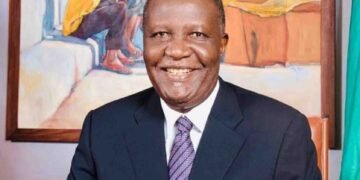




Greedy leaders to blame for Zambia’s poverty-Dr Silumbe
By Tony Nkhoma
GREED among African leaders, including in Zambia, is driving poverty and hardship for citizens, Zambia Research and Development Centre (ZRDC) board chairperson Dr Richard Silumbe has warned.
Speaking during the official opening of the 2025 International Multi-Disciplinary Conference in Lusaka yesterday, Dr Silumbe said many citizens in Africa, including Zambia, were wallowing in extreme poverty as a result of putting greedy leaders into power.
He said the suffering of many Africans today was not a result of bad people but greedy leaders who only thought about themselves and not others.
“In trying to understand the root cause of poverty in Africa, let us go back 1,000 years ago, when most Africans were affluent. The conclusion is that greed in African leaders is the source of all evil and pain among our people,” Dr Silumbe said.
He said corruption in Africa and Zambia in particular was another form of institutionalised greed among African leaders.
Dr Silumbe urged Africa as a whole and Zambia in particular to change the way they addressed and looked at evil in governance by electing leaders whose interests should people-centred and not self.
” If the 21st century is to become truly an African century, we must begin to nurture a new type of leadership, selfless and visionary leadership, to take us to the promised land. A leadership culture with four I’s, intuition, imagination, innovation, and invasion,” he said.
Dr Silumbe said for such leadership to be in place, it required everyone’s latent power fueled by curiosity and creativity to solve problems, create value, and build a better future.
He said true leaders must create change and leave a legacy once they died, and not pain.
“True leaders dare to challenge norms, embrace diverse perspectives and foster open environments where experimentation, even with failure, leads to breakthroughs that redefine possibilities,” Dr Silumbe said.
He said the ZRDC was working tirelessly to make the 21st century an African century.