



Copper, campaign cash, and tax breaks: The stakes for Zambia’s constitutional democracy
By
Prof. Cephas Lumina
Recent claims about foreign companies funding politics, mining tax breaks, and public policy in Zambia raise important questions about who holds power, how parties are funded, and whether public money is managed responsibly. These concerns need independent investigations in both Zambia and Canada, where First Quantum Minerals is incorporated. There is also an urgent need for political finance reform and public oversight to see if mining tax deals truly serve the public interest.
Allegations too serious to dismiss
A people cannot meaningfully exercise their sovereignty if elections are financed in the shadows by foreign corporations whose commercial interests depend on government decisions.
That is why the recently published Global Witness report on First Quantum Minerals (FQM) should not be dismissed as just election season propaganda. Global Witness is an investigative organisation that has spent over 30 years uncovering connections between environmental harm, corruption, conflict, and human rights abuses. The organisation is based in London, with offices in Brussels and Washington, D.C.
Its report alleges that FQM and associated individuals participated in a long-running covert influence campaign in Zambia, including financial support for the United Party for National Development (UPND) across several election cycles. It says interviews with members of President Hakainde Hichilema’s inner circle and former FQM employees indicated that “FQM’s resourcing of the UPND” was making it the party’s most prominent funder ahead of the 2026 election. The report records allegations that the company was willing to provide as much as US$50 million.
Global Witness says it interviewed government insiders, businesspeople close to the President, current and former FQM employees, political actors, diplomats, journalists, academics and civil-society representatives, and supported testimony with public records, data, and documents.
The report goes beyond campaign funding. It alleges a wider ecosystem involving the Brenthurst Foundation, foreign political consultants, campaign strategy, policy influence, and political communications. It also raises questions about closed door mining arrangements, abandoned disputes, media influence, and fiscal reforms from which FQM is said to have benefited substantially.
These are only allegations, not court decisions. Still, they need to be investigated, rather than just causing political anger or company denials.
FQM’s denial must be heard — and tested
FQM categorically rejects the report’s claims. It says it has never paid or authorised bribes, never engaged in illicit party funding, never funded the UPND and never promised to finance its 2026 campaign. It describes the report as based on unsubstantiated allegations from anonymous individuals and denies improperly influencing the country’s democracy or receiving preferential treatment from the government.
Global Witness itself states that it has no evidence that FQM engaged in corruption and does not allege corruption. No responsible commentator should convert contested allegations into a verdict.
But a denial cannot and should not end the matter. An independent inquiry should examine banking records, corporate approvals, payments to consultants and intermediaries, campaign invoices, in-kind support, political advertising, media placement contracts and communications between corporate executives, party officials, and public officers.
The legal vacuum is part of the scandal. Global Witness notes that it does not allege that the foreign corporate support described necessarily breached existing Zambian political donation law. If the country cannot readily determine who financed a governing party, how much was contributed and through which intermediaries, its democratic safeguards are plainly inadequate.
The UPND’s own assurances make disclosure urgent. In February 2026, party and government spokesperson Cornelius Mweetwa said President Hichilema’s campaign would be financed locally. If that remains the party’s position, it should publish a donor register and independently audited campaign accounts. Transparency would protect the party from false accusation while allowing citizens to evaluate the allegations.
The Constitution sets the standard
Article 5 declares that sovereign authority vests in the people of Zambia. However, sovereignty is meaningless if hidden corporate money can shape who governs, what policies are adopted and how public resources are taxed.
Articles 8 and 9 provide the constitutional compass. The country’s national values include morality and ethics, democracy, constitutionalism, equity, social justice, good governance, integrity, and sustainable development. These principles must guide legislation and State policy.
Article 60(4) is direct: legislation must prescribe a Political Parties’ Fund, party accounts, funding sources, and maximum campaign expenditure. Yet, nearly five years after the UPND entered government, the country still lacks a comprehensive political finance regime.
Why has a government that found time for other major legislation failed to complete this constitutional assignment? The delay leaves citizens unable to know who finances political parties and allows wealthy interests to operate without timely scrutiny.
Revive the 2017 Bill — and strengthen it
The Draft Political Parties Bill of 2017 offers a useful starting point. It proposed a Political Parties Board and Registrar, a publicly supported Political Parties’ Fund, regulation of funding sources, annual reporting, and audited accounts.
The Bill required parties to disclose all funds and resources to the Registrar. Within 90 days of each financial year’s end, parties would publish amounts received from the public fund, members, supporters, and donors, together with income, expenditure, assets, and liabilities.
It also required pre-election statements of assets and liabilities, proper accounting records, annual Auditor-General audits, submission of accounts to the Registrar and tabling in the National Assembly. The public would be entitled to inspect audited accounts.
But modern political support is not limited to cash. It may include polling, aircraft, vehicles, data analytics, consultants, influencers, advertising, accommodation, campaign staff and coordinated third-party communications.
A strengthened Bill should prohibit direct and indirect financing by foreign states, foreign corporations and companies holding or seeking mining rights, licences, concessions, tax settlements, or public contracts. It should cover subsidiaries, foundations, beneficial owners, contractors, and intermediaries.
It should impose donation and expenditure ceilings; require near-real-time online disclosure; identify beneficial owners behind corporate donors; regulate third-party campaigning and digital advertising; label paid political content; protect whistleblowers; and require major transactions to pass through traceable bank accounts.
An independent regulator must be able to compel records, conduct forensic audits, and impose meaningful sanctions. Global Witness similarly recommends mandatory disclosure, restrictions on foreign-enterprise funding, spending limits and transparency for digital campaigning and influencer payments.
Copper boom, public pain
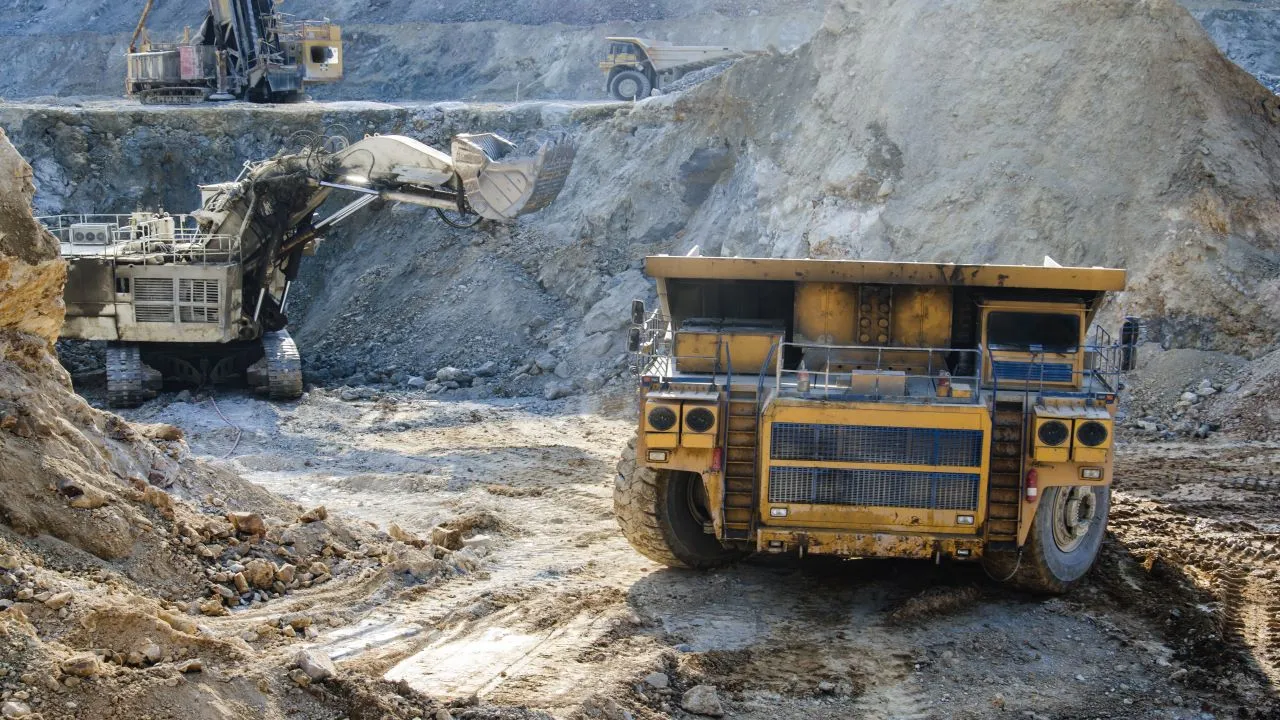
The debate over political funding is intricately linked to how mining in the country is taxed.
Global Witness’s analysis estimates that changes to the mineral royalty regime and the deductibility of royalties from corporate income tax saved FQM subsidiaries approximately US$771 million between 2022 and 2025. It estimates that mining companies collectively saved more than US$1 billion over a shorter three-year period.
According to the report, FQM says Zambia’s old taxes were too high and made the country less attractive to investors. The company argues that the new tax rules brought back investor confidence, helped fund new projects, and led to more production and payments to the government. Investment and stable finances are important.
But fair taxation is also important. Article 198 of the Constitution says public finances must be transparent and accountable, taxes should be shared fairly, development should be equal, and public resources should be used wisely. Tax breaks should not become private deals made without proper public oversight.
The government should publish the value of each major mining incentive, its intended benefits, the commitments attached to it and whether they were met. Parliament and citizens must be able to compare revenue forgone against jobs, production, local procurement, and taxes collected.
The recent rise in copper prices has changed things. Tax breaks that made sense when prices were low or mines were closing may not be justified now that profits are high. The country should review the deals given to foreign mining companies and consider a well-designed windfall tax for times when prices or profits are unusually high.
Money from these taxes should help pay down debt, improve health and education, support climate resilience, help mining communities, and grow the economy in new ways. The country’s minerals will not last forever, so the people should get a fair and lasting benefit.
Business responsibility includes democratic integrity
The United Nations Guiding Principles on Business and Human Rights require States to protect against business-related abuse through effective law, regulation, investigation, and adjudication. They also require businesses to respect human rights wherever they operate, independently of weaknesses in domestic law.
This responsibility should also mean respecting democratic institutions and the people’s right to take part in public life without secret foreign money influencing politics. The country should see hidden campaign funding, political meddling, and secret lobbying as threats to good governance, human rights, and the people’s sovereignty.
FQM should keep all relevant records and commission a truly independent review of its political spending, consultants, middlemen, and paid communications related to its work in Zambia.
Canada must investigate
Because FQM is Canadian, Canadian authorities should not treat these allegations as Zambia’s problem alone. The Royal Canadian Mounted Police and relevant federal and securities authorities should investigate whether any funds, benefits, accounting practices, or disclosures connected to the alleged conduct breached Canadian law. Canada’s foreign bribery legislation can apply to qualifying conduct abroad by Canadian companies, although the allegations themselves do not prove an offence.
Where evidence supports wrongdoing, prosecution or regulatory action should follow. Civil proceedings may also be possible, depending on the claim, evidence, jurisdiction, and causation. The immediate need is a credible Canadian investigation, full cooperation from FQM and publication of the outcome.
Sovereignty must not be negotiable
This is not about punishing anyone before the facts are clear. It is about making sure the Constitution is respected and followed.
The UPND should reveal its donors and campaign spending, and so should all political parties. FQM should make its records available for independent review. The government should pass a stronger Political Parties Act, abolish all tax incentives, and set up a fair windfall tax on extra copper profits.
The allegations may be proved, disproved or only partly substantiated. But the country cannot remain legally blind to the possibility that foreign corporate wealth may finance political power and later benefit from public policy.
Copper can be sold abroad. Companies can make profits. Investment is welcome. But Zambia’s democracy, tax policies, and national independence must never be up for sale.