






CLIMATE SMART AGRICULTURE
Dr. Oliver Kandela Bulaya, PhD
28/04/2026
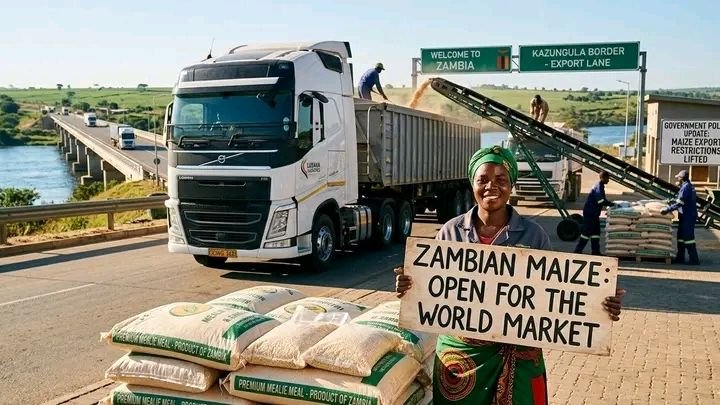
Lifting maize export restrictions: A turning point for Zambia’s smallholder farmers?
Adopt eco-friendly farming practices
Biodiversity & Environmental Protection is key to sustainable development. Stop deforestation and forest degradation
THE Government of the Republic of Zambia, through the Ministry of Agriculture, has taken a bold and timely step by removing restrictions on the export of maize grain and maize products.
This policy shift signals a progressive move toward a more market-oriented agricultural sector and reflects responsiveness to long-standing concerns raised by stakeholders.
As far back as September last year, the Agriculture Climate Action Foundation (ACAF)—advocated for the controlled liberalisation of maize exports. The rationale was clear: enabling farmers to access regional markets would improve incomes, enhance market efficiency, and stimulate broader agricultural growth.
The Government’s decision, therefore, represents not only policy alignment but also a willingness to act on constructive engagement from the sector.
From an agricultural economics perspective, the removal of export restrictions creates immediate and tangible opportunities. Farmers—particularly those with marketable surpluses—can now access more competitive regional markets where prices are often higher than domestic levels.
This has the potential to improve household incomes, incentivise increased production, and drive investment at farm level. In parallel, the policy is likely to stimulate agro-processing and contribute to national economic growth through increased export earnings and foreign exchange inflows.
However, while the opportunities are significant, the risks cannot be ignored. Maize remains Zambia’s staple food, and any policy that encourages exports must be carefully balanced against the imperative of national food security. Without proper safeguards, increased exports could lead to domestic shortages or upward pressure on mealie meal prices—an outcome that would disproportionately affect vulnerable households.
To mitigate these risks, strong and transparent monitoring systems are essential. Government must closely track maize stocks, production levels, and export volumes to ensure that national food requirements are not compromised.
yStrengthening the strategic food reserves is equally critical, providing a buffer against supply shocks and market volatility. At the same time, regulatory oversight must be enhanced to prevent hoarding, speculative trading, and market manipulation that could distort prices and undermine the intent of the policy.
Beyond macro-level safeguards, the success of this policy will largely depend on how effectively it reaches and benefits smallholder farmers. These farmers produce the bulk of Zambia’s maize, yet they often operate with limited access to information, markets, and resources. Without deliberate intervention, there is a real risk that the benefits of export liberalisation will be captured primarily by large-scale producers, millers, and grain traders.
This is where agricultural extension and market systems support become critical. There is an urgent need to strengthen extension service delivery and ensure that farmers are fully informed about the implications of the policy.
The Marketing Department of the Ministry of Agriculture, working closely with the Extension Services , must take a proactive lead in disseminating clear, practical, and timely information.
Farmers need guidance on key aspects such as market access requirements, pricing dynamics, quality standards, and cross-border trade procedures. Without this knowledge, many smallholders may be excluded from export opportunities or become vulnerable to exploitation by better-informed market actors.
Equally important is the strengthening of farmer organisations and cooperatives. Collective action remains one of the most effective ways to empower smallholder farmers in liberalised markets. Through cooperatives and aggregation models, farmers can pool produce, negotiate better prices, reduce transaction costs, and access reliable market information. These structures also provide an entry point for linking farmers to exporters and regional buyers.
In addition, Government must ensure that clear operational guidelines are developed and widely shared. Farmers need to understand not only that export opportunities exist, but also the practical steps required to participate—ranging from licensing procedures to compliance with quality and phytosanitary standards. Transparency and inclusivity in implementation will be key to building trust and ensuring broad-based participation.
Ultimately, the removal of maize export restrictions is a commendable and forward-looking policy decision. It has the potential to transform Zambia’s agricultural sector by unlocking markets, improving farmer incomes, and strengthening regional trade linkages.
However, policy success will not be determined by intent alone, but by execution. If supported by strong safeguards, effective information dissemination, and inclusive market systems, this reform can deliver meaningful benefits to farmers across all scales. If not, it risks reinforcing existing inequalities within the sector.
The goal must be clear: a liberalised maize market that works for everyone—from smallholder farmers in rural communities to consumers in urban centres. In this transition, no farmer should be left behind.
Top of Form
Bottom of Form
Top of Form
Our voice shall be heard. We live today to impact tomorrow. Stop deforestation and forest degradation. Act against climate change. Environmental and biodiversity protection key to sustainable development. Arise Zambia Agriculture A sleeping Economic Giant. Together we can!
The author is an expert in Climate-Smart Agriculture, Organisational Leadership and Project Management. He is the Projects & Communication Lead at the Conservation Farming Unit and Executive Director of the Agriculture Climate Action Foundation. For feedback, send comments to: acafoundationzambia@gmail.com or WhatsApp: +260-956-261174