






Money has hijacked our democracy – Mazoka
By George Zulu
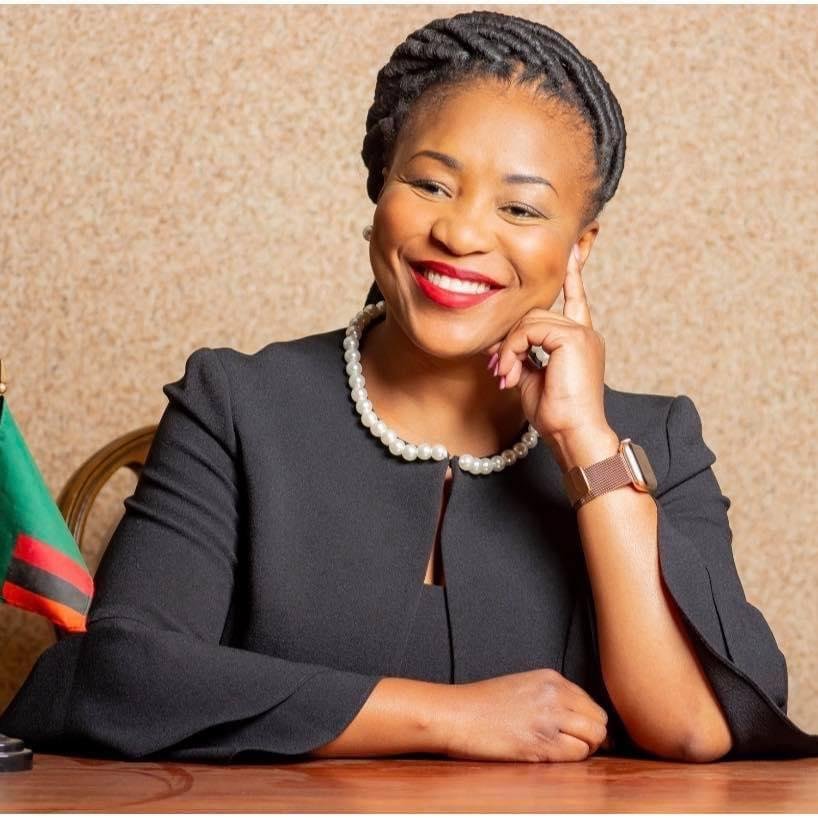
ZAMBIA’S political culture has been corrupted by the monetisation of public office, turning governance into a private investment scheme that shuts out merit, integrity and visionary leadership, Anderson Mazoka’s daughter, Mutinta Mazoka has warned.
In a widely circulated Facebook post, Mazoka, the daughter of the late founding UPND president, said over three decades of multiparty democracy, Zambia’s political competition had shifted from ideas to financial muscle, with devastating consequences for the quality of leadership the country produces.
In her write-up posted on Facebook, she said the monetisation of Zambian politics by those seeking public office had become a private investment.
“Over the past three decades, Zambia’s multiparty democracy has matured in form but grown increasingly distorted in practice. One of the most corrosive trends has been the monetisation of politics, the steady transformation of public office into a high-stakes financial enterprise, where political competition is driven less by ideas and more by money,” she said.
Mazoka said from the time of former president Frederick Chiluba to UPND’s Hakainde Hichilema, money had increasingly become the lifeblood of Zambian politics.
“From the era of Frederick Chiluba and the rise of the Movement for Multi-Party Democracy (MMD), through the dominance of the Patriotic Front (PF) under Michael Sata and Edgar Lungu, to the electoral victory of the United Party for National Development led by Hakainde Hichilema, money has increasingly become the lifeblood of political survival,” she said.
She said many took politics as a personal investment and not a service to the nation.
“In contemporary Zambia, contesting a parliamentary or local government seat requires substantial financial resources. Campaigns demand branded materials, transportation fleets, media exposure, mobilisation funds, and “allowances” for supporters. In many constituencies, candidates are expected to personally finance funerals, school fees, church donations, and community projects long before elections are announced. As a result, political office is often viewed not as public service but as an investment,” she said.
Mazoka said those seeking adoptions often spent millions before winning an election.
She said when politics becomes capital-intensive, only the wealthy or those backed by wealthy sponsors would compete effectively.
Mazoka said such politics went against merit, integrity, and the right vision to develop the country in favour of those with financial muscle.
She said political monitisation had led to costly party adoptions to contest at every electable position in Zambia.
“Within major parties, adoption as a candidate is itself often influenced by financial capacity. Campaign financing inside party structures, logistical support, mobilisation networks, and patronage relationships frequently favour those able to contribute materially,” Mazoka said.
She said monetisation in politics weakened internal democracy, while grassroots popularity tilted towards a strong financial scale.
“Monetisation does not end at elections. Once in government, procurement contracts, infrastructure deals, and public appointments can become avenues for political reward. Supporters expect returns. Business allies anticipate preferential access. Civil service appointments may reflect loyalty over competence,” she said.
Mazoka warned that nurturing such a system risked state capture where institutions served networks rather than citizens.
She said such a system produced several long-term and deadly consequences on a country’s governance.
“Zambia’s democratic journey remains resilient. Peaceful transfers of power, most recently in 2021, demonstrate institutional strength. But monetisation threatens to hollow out that progress from within,” she said.
Mazoka warned that if politics continued to operate primarily as an investment and extraction, governance would serve as capital before citizens.
“Reclaiming politics from money is not merely a legal challenge; it is a moral and cultural one. The future of Zambia’s democracy depends on whether leadership is defined by wealth or by service,” said Mazoka.