





‘Poverty hindering girls access to education’
By Ludia Ngwadzai
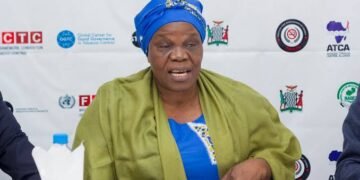
MENSTRAL poverty, particularly in rural communities, is a major barrier to girls’ access to quality education, Gender Division permanent secretary Mainga Kabika has said.
Kabika called for increased production and distribution of reusable sanitary pads.
She said many girls struggled to attend school during their menstrual periods resulting from limited access to sanitary products.
This led to increased absenteeism and disruptions to their education.
“Menstrual poverty, as you may be aware, has proved to be a challenge to the attainment of quality education, especially amongst girls in rural areas. We need more organisations to come on board and ensure that the problem is eradicated through increased production of reusable pads, among other interventions,” Kabika said.
She w as speaking when Air Power Ladies Club (APLC) paid a courtesy call on her yesterday.
Kabika called for partnerships with organisations to scale up the production of reusable sanitary pads and ensure they are readily available to girls across the country.
She urged communities to openly discuss menstruation, saying the issue should no longer be treated as a taboo because it was a natural biological process.
“Let us talk openly about menstrual issues; they are no longer a taboo because it is nature. The more we open up about these issues, the more solutions we will have to the challenges surrounding menstruation,” Kabika said.
APLC patron Nicolynn Nyoni said the club was building a K2.8 million skills centre aimed at empowering women, particularly survivors of gender-based violence (GBV) with practical skills to help them achieve financial independence.
Nyoni said the centre would offer skills training in tailoring and designing, as well as farming.
She said the initiative was intended to equip women with sustainable livelihood skills, particularly those seeking to rebuild their lives after leaving abusive marriages and relationships.
“As you may all be aware, our club focuses on women empowerment and charity work; hence we came up with the idea of constructing a skills centre for fellow women to enable them to be financially stable, especially after leaving an abusive marriage or relationship,” Nyoni said.
She said financial dependence remained one of the factors keeping some women trapped in abusive relationships, making the establishment of the centre an important intervention.
The facility would provide women with opportunities to acquire practical skills and become economically self-reliant, reducing their vulnerability to abuse and dependence on their partners.