




Hichilema’s crowd obsession: The dangerous mistake that has misled many leaders before
VIEWS FROM ROME
Crowds, crowds, crowds.
THAT appears to be the political currency of the day as Zambia steadily marches towards the August 13, 2026 general elections.
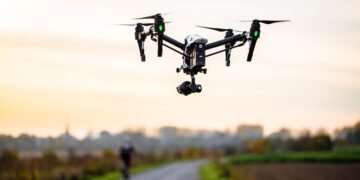
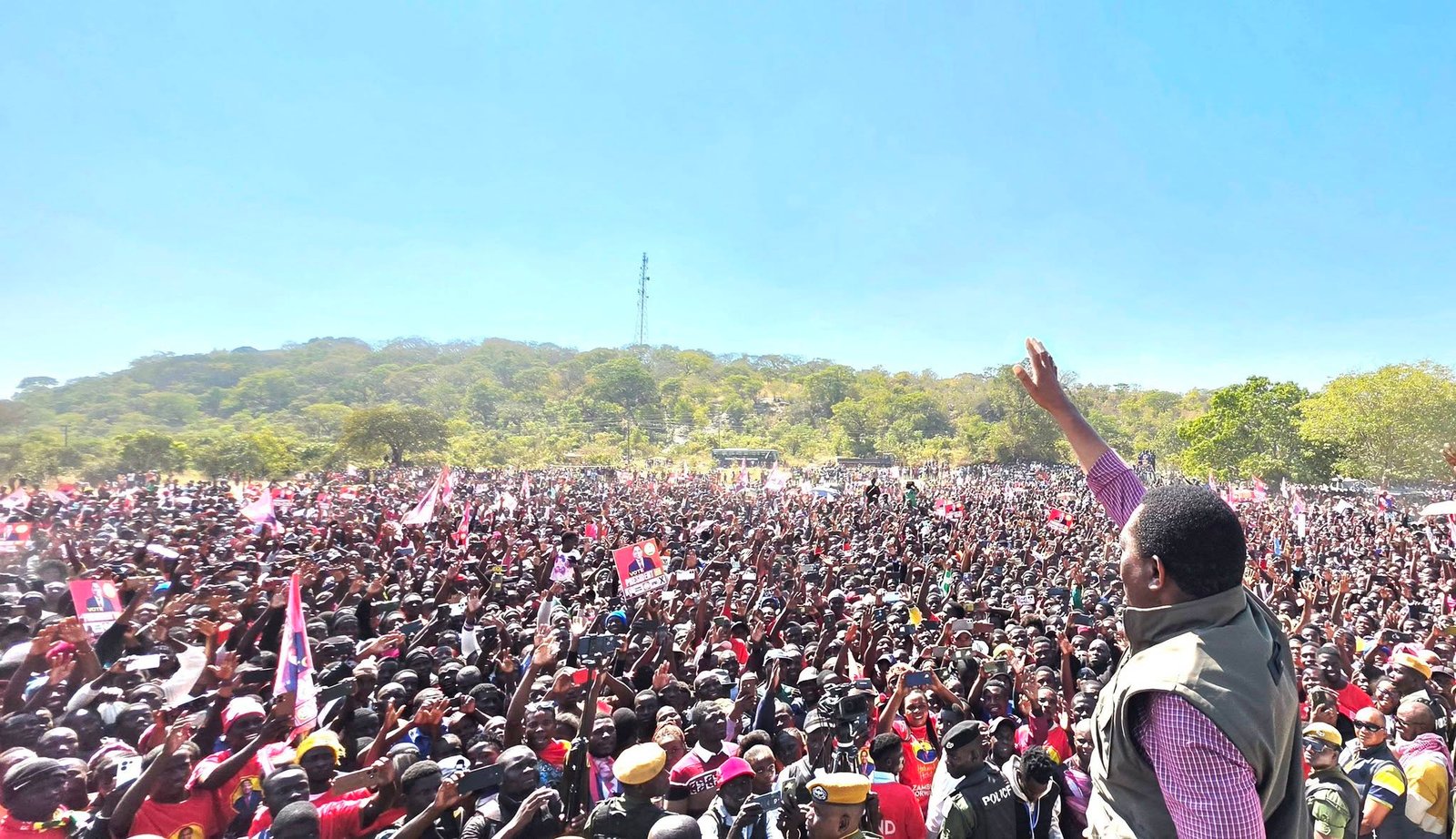
Every weekend, every roadshow, every provincial tour and almost every political gathering has become a contest of numbers. The larger the crowd, the louder the victory songs. The smaller the crowd, the faster the mockery or ridicule. It very clear that somewhere along the way, politics in this country ceased to be about ideas and increasingly became about drone pictures, aerial photographs and social media captions declaring, “The masses have spoken!” or “Game over!”
But spoken about what exactly or how is the game suddenly over?
The obsession with crowd sizes has reached extraordinary levels, particularly within the ruling United Party for National Development (UPND). Every rally appears designed to demonstrate one thing, that the party enjoys overwhelming popularity across the country. To them, the larger the gathering, the stronger the claim that President Hakainde Hichilema remains firmly in-charge of the political scene.
But one cannot help but ask a simple question: What point does the UPND want to prove, and to whom, and for what purpose?
It is evident that political rallies have become less about engaging citizens and more about staging spectacles. We have seen motor vehicle convoys snake across districts. Buses and trucks ferry supporters from one location to another. Entire communities suddenly seem to migrate whenever a rally is announced. In some instances, government vehicles have reportedly been seen transporting people to these events, raising understandable questions about the appropriate use of public resources.
Perhaps the most ironic part of it all is that the politicians spend millions gathering people together, only to spend the next week convincing those very people on social media that they attended voluntarily.
Even more unfortunate is that this obsession has not been without consequences. We have witnessed reports of road traffic accidents involving supporters travelling to and from political events. Families have been affected. Lives have been disrupted. All in pursuit of another impressive drone or aerial shot.
Surely, politics must be worth more than a drone shot.
UPND supporters have enthusiastically taken to various social media platforms to celebrate the massive crowds President Hichilema continues to attract. Every rally is presented as undeniable proof that the President enjoys unmatched popularity. Every packed venue is interpreted as evidence that victory is already secured.
But this is where my difficulty begins.
Indeed, what surprises me most is not the crowds themselves. Political parties are expected to mobilise supporters. Every serious political organisation should strive to attract people to its message.
My concern however, lies elsewhere.
What genuinely shocks me is the constant comparison between the UPND’s mobilisation capacity and that of opposition political parties such as the Socialist Party (SP), Citizens First (CF), and the Tonse Alliance.
How exactly does the UPND expect the opposition to demonstrate equal mobilisation strength after spending nearly five years operating under vastly different political conditions? This is the question that rarely receives an honest answer.
For almost the entire duration of UPND’s tenure in office, opposition parties have repeatedly complained about restrictions on public rallies, police interventions, cancelled meetings, arrests, detentions and various forms of political harassment. Whether one agrees with every complaint or not, it is difficult to deny that opposition political activity has faced considerable hindrances.
Meanwhile, President Hichilema and the UPND have travelled across the country effectively uninterrupted.
The ruling party has enjoyed the full advantages that naturally come with incumbency. Government programmes, official tours, developmental projects, state visibility and unrestricted political engagement have all combined to create an environment where mobilisation becomes significantly easier.
The opposition, on the other hand, has largely been confined to press briefings, court appearances, social media broadcasts and occasional indoor meetings.
It is certain that one side has spent years preparing for the elections. Whilst the other has not been allowed to do so.
So, on the day of the match, how can someone who blows the whistle after 90 minutes and then announce that the team that spent years preparing was obviously more talented and better organized?
Surely, that cannot be the standard by which we measure political popularity. Political competition is supposed to be relatively fair.
You cannot steadily restrict your opponent’s ability to organise, then turn around and boast about your superior organisational capacity and talent. That is not political brilliance. It is simply being delusional.
To understand this better, let’s visualise tying your neighbour to a tree, entering a marathon alone, crossing the finish line first and then declaring yourself the fastest athlete in the village. You might indeed receive the gold medal, but only from people who expediently forgot about the rope.
In the same way, one cannot blindfold a boxer, tie one hand behind his back, and then proudly celebrate a unanimous points victory after the fight. There is no way that can be regarded as competition. It is choreography.
This is precisely why I find comparisons between the UPND and opposition mobilisation efforts to be intellectually dishonest and morally bankrupt.
Politics should not always be about outcomes. It should also be about the conditions under which those outcomes are achieved. If the UPND enjoyed unrestricted access to the electorate while others constantly negotiated for administrative hurdles, police permissions and legal fears, then such comparisons become deeply misleading.
You cannot compare examination results between a student who was allowed three hours to write and another who only received 30 minutes.
Ironically, despite limited opportunities for public mobilisation, the opposition in general continue organising structures, issuing policy positions, participating in campaigns and engaging citizens wherever possible. That alone should invite serious political reflection.
If parties operating under such constraints still command visible support across different parts of the country, then perhaps dismissing them as politically irrelevant would be premature and very misleading.
History has repeatedly shown that political momentum is often difficult to measure accurately. African politics is full of examples where massive rallies failed to translate into victory at the ballot box. President Hichilema and the UPND must know that people attend rallies for many reasons. Some attend out of genuine political conviction. Others come because the President is visiting. Some come because transport has been provided. While others simply enjoy the atmosphere, the music, the speeches and the opportunity to witness a national event.
In Zambia, political rallies have almost become community festivals. Sometimes people attend because, quite frankly, there is nothing else happening that afternoon. The presence of thousands therefore tells us that people came. It does not automatically tell us how they will vote when standing alone behind the ballot box. So, the UPND should not confuse attendance with guaranteed votes.
Finally, if there is one political establishment that should resist the temptation of complacency, it is the ruling UPND itself.
If, after years of enjoying unrestricted national visibility and the considerable advantages of incumbency, the opposition is still capable of mounting meaningful campaigns through parties such as the Socialist Party, Citizens First and the Tonse Alliance, then perhaps the ruling party has more to think about than it publicly admits.
Confidence is healthy but complacency is very dangerous. History has humbled many Presidents and governments that mistook applause for permanent loyalty simply because, when the campaign music stops, when the buses have returned home, when the drone shots have been done, and the social media pictures have disappeared, only one crowd will truly matter, and that is the crowd inside the polling stations.
That is where elections are won. The UPND must manage their excitement and political theatrics. This country has seen Presidents’ cry after losing power.