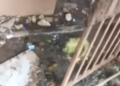







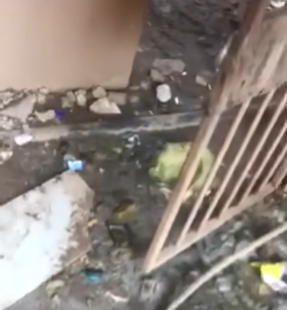
UNZA IS STINKING
…Smell from sewer spillage poses health risk – union
By Thandizo Banda
THE University of Zambia Lecturers and Researchers Union (UNZALARU) says the continuous but unattended sewer spillage on the Great East Road Campus is unacceptable.
Speaking in an interview with The Mast Thursday, UNZALARU president Professor Andrew Phiri warned that if the situation was left unattended to it would risk the lives of members of staff, students and the general university community.
Prof Phiri said the union would not stand idle while the working environment was highly compromised and had become a health risk.
“It is not normal to embrace the continued spillage of water and smelly sewer systems, particularly at the country’s highest learning institution,” he said.
Prof Phiri urged UNZA management to urgently work on the persistent sewer spillages in key sections of the institution to avoid an outbreak of a waterborne disease.
Prof Phiri expressed worry that the spillage and the foul smell from the effluent from the sewer systems had compromised the sanitation at the School of Engineering, Education and the Confucius Institute.
“This is a serious health hazard, both to students and the entire UNZA fraternity. You can get the bad smell around. It should not become normal. We need a good working and learning environment in order to enhance all the goals that we want to achieve as a university,” he said.
Prof Phiri said UNZA needs a complete overhaul of the sewer system and entire infrastructure.
He said it would be a total failure to build new infrastructure on a dilapidated sewer and water supply system, as was the current case at the institution.
“One of the things that we have complained about is the state of infrastructure. Whilst the university has thrived a little bit on infrastructure improvements, these have been built on an existing poor water and sewerage infrastructure. So new buildings have come up, but the infrastructure hasn’t had any upgrade at all and this is a serious anomaly on the part of those tasked to administer these developments,” Prof Phiri said.
He said UNZA had forgotten that it was built to only accommodate a certain number of students, thereby putting pressure on the current infrastructure.
“And this is where now you have increased student numbers, increased staff and increased movement of these people to these facilities. And you find that the sewer system has remained the same and now it’s choking. This system was built in the 1960s and for a small population,” Prof Phiri said.
He said all new structures at UNZA should have new and commensurate improvements in sewerage and water reticulation to address the increasing pressure of students, staff and community population.
“So, that’s a challenge. And these issues keep recurring. But because people have gotten used to living in this environment, it may look as if it’s normal, but it’s definitely not normal. The premises smell and you can actually see effluent freely flowing throughout the day. And students, visitors and lecturers will pass through this and others will drive through this storage. And we don’t know what microorganisms are occurring,” Prof Phiri said.
He warned that if left unattended, the continued sewer spillage would contaminate the piped and groundwater at the institution.
“As a union, we are worried because we want a safe and sound environment for lecturers. That’s our primary concern, but also for our students because we want to produce a product that has been created in a conducive environment,” Prof Phiri said.
He said he would not be shocked if UNZA was declared unsafe for habitation as a result of sewer spillage.
“We’ve been imploring management demanding for years now that they must have a plan, a maintenance plan. It has started with the problematic areas that have been identified. So, what we need is a complete overhaul. A new building, new sewer. You can’t have a new building with old sewer,” Prof Phiri said.