





Heed advice, let Judiciary be independent
WE AGREE with the advise to the Zambian government by the president of Ghana to allow the Judiciary to operate independently without interference from the Executive to safeguard democracy.
For the last four years various stakeholders, including individuals and organisations have been raising alarm at the abuse of the Judiciary to fix opposition opponents and critics of President Hakainde Hichilema and the United Party for National Development (UPND).
The courts have also played a leading role in the destabilisation if the main opposition political party, the Patriotic Front (PF).
There is a strong perception that Zambia’s Judiciary no longer serves the interest of the people but that of Hichilema and the UPND.
Many opposition leaders and government critics are languishing in correctional facilities after being convicted of trumped up charges. The Judiciary has on the other hand let off the hook or meted out ridiculously light sentences on UPND allied offenders.
This has significantly eroded public trust in our courts. Judges and magistrates, who are expected to be the gate keepers of justice, have openly exhibited bias against the opponents and critics of Hichilema and his government. For cases that are bailable, opposition leaders arrested by equally captured law enforcement institutions have been forced to rot in jail as part if their punishment for challenging or criticising the UPND’s misrule.
When those convicted appeal to higher courts the law allows the courts to free them on bail pending the appeal. But the magistrates and judges have been denying these citizens bail.
This has left people speculation that the judges and magistrates have been receiving orders from the Executive. The perception out there is that the entire Judiciary is under the control and direction of the Executive instead of enjoying and exercising its constitutional autonomy as one of the three arms of government.
We reinforde this with the following story:
The Foundation for Democratic Process (FODEP) says government should not intimidate the Judiciary and use it as a tool to punish political opponents.
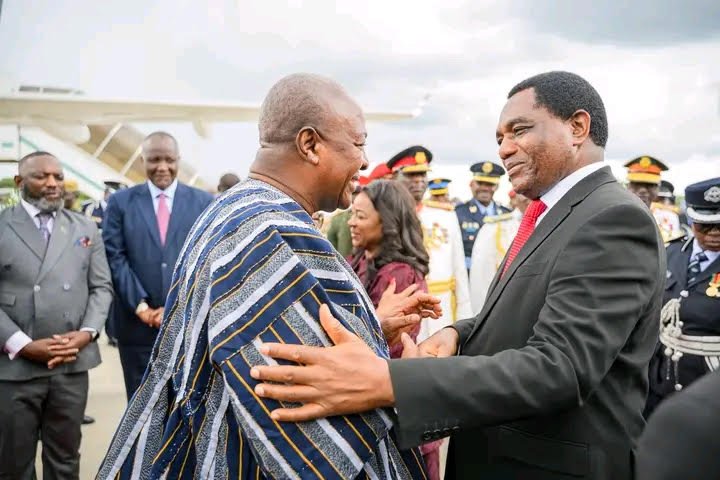
Commenting on Ghanian President John Mahama’s address to Parliament Thursday, executive director Elijah Rubvuta urged the United Party for National Development (UPND) government to lead by example by respecting the separation of powers.
Rubvuta said it was important to allow the Judiciary to operate freely without being turned into a tool meant to deal with political opponents.
“The problem is that the head of state has too much power, which makes it very difficult for judges to execute their duties diligently. It is clear that most of the judges seem frightened to be impartial in their conduct and administration of justice, especially in matters which seem political in nature,” he said.
Rubvuta said the Ghanaian president was on point when he said the Judiciary should be free from political manipulation.
He said the challenge the Zambian Judiciary faced was too much power and influence from the Executive.
Rubvuta said there was a perception that executive power was being overstretched, making it difficult for the Judiciary to work independently.
“Most judges seem to favour the ruling party because they do not have security of tenure and fear being fired anytime if their decision disadvantages the executive,” he said.
He said there was a need to stick to the separation of power principal were the legislature, judiciary and executive executed their duties without interference and in an independent manner.
Rubvuta said the UPND needed to take the sentiments of the Ghanaian President seriously as they have an impact on the governance of the nation.
“I feel the judiciary works under pressure and intimidation is the order of the day since the executive has unlimited powers,” he said.
This is timely advice which it will be risky for Hichilema and his minions to ignore. The mass transfer of magistrates and judges the nation witnessed from Lusaka and elsewhere shortly after the UPND took office was the beginning of the destruction of our Judiciary. The regime brought in “friendly” adjudicators whom it has been using to undermine democracy.
It must stop now!