




Prepare for the worst, hope for the best: why Zambia’s 2026 election is like no other before it
By Sishuwa Sishuwa
Voters in Zambia head to the ballot box on 13 August this year to choose political leaders in a general election that might see Hakainde Hichilema becoming the latest casualty of the anti-incumbent election wave that has recently seen the defeat of sitting presidents in other African countries such as Botswana and Malawi. Unlike previous ones, the 2026 election is unique for five major reasons.
The absence of a former president
This will be the first election in over thirty years of multiparty democracy in which no former president would play an active role in deciding its outcome. Following the death of Edgar Lungu in June 2025 and Rupiah Banda in March 2022, Zambia has no ex-president who is alive. In nearly all previous polls since 1996, when Kenneth Kaunda boycotted the election after he was barred from running, former presidents have supported presidential candidates who have generally ended up as winners or finished in second place. For instance, in the 2001 election, Kaunda, who had been defeated by Frederick Chiluba of the Movement for Multiparty Democracy (MMD) in 1991, urged voters to support Anderson Mazoka of the opposition United Party for National Development (UPND). Mazoka narrowly lost the contest to the Chiluba-backed MMD candidate Levy Mwanawasa. In 2006, the support of Chiluba, who was facing corruption charges in court, helped Michael Sata of the opposition Patriotic Front (PF), who pledged to drop the corruption cases, to run incumbent president Mwanawasa much closer than expected.
After Mwanawasa died in office in 2008, Chiluba, following Sata’s abandonment of the earlier pledge to drop the corruption cases, switched sides and endorsed Rupiah Banda, Mwanawasa’s vice-president, who narrowly defeated the PF leader in the ensuing presidential by-election. Chiluba died in June 2011, three months before the general election in which the only living ex-president Kaunda rallied behind Sata, who defeated incumbent president Banda. Following Sata’s death in office, Banda endorsed the governing PF candidate Edgar Lungu in both the ensuing 2015 presidential by-election and the scheduled general election of 2016, helping him to narrow victory over the UPND’s Hakainde Hichilema on both occasions. After Kaunda died in June 2021, Banda, the only surviving former president, endorsed no one, and this helped Hichilema to finally beat Lungu in the last general election. Before his death, Lungu himself had vowed to identify and back an opposition challenger against President Hichilema. Whoever wins the next election would have to do so without relying on the campaign support or established power of an ex-president, a title that Hichilema hopes he will not assume after 13 August.
No strong or established opposition challenger
This year’s election also differs from those before in that it will feature no strong opposition challenger with an established support or power base. In all previous polls since 1991, there has always been at least one major opposition political figure generally seen by voters as more likely than the others to unseat the incumbent. For instance, ahead of the 1991 transition elections, Chiluba, who had come through the ranks of organised labour and was leader of the Zambia Congress of Trade Unions for close to two decades, was widely considered the voter’s choice against the incumbent president. Kaunda occupied this role of the main opposition challenger in 1996 (which explains why president Chiluba moved quickly to exclude him), as did Mazoka in 2001, Sata in 2006, 2008 and 2011, and Hichilema in 2015, 2016, and 2021.
Ahead of the August poll, there is no single opposition leader who can be said to occupy this position. Such is the fragmented and poor state of the current opposition parties that none of their leaders won more than 0.6 percent of the total votes in 2021 when 98 percent of the presidential votes were shared between Lungu and Hichilema. This explains why Lungu, in the absence of a strong opposition, became the opposition over the next few years. His death, alongside State-instigated factions in his former ruling party, has dealt a severe blow to the strength of the opposition. However, it has also placed Hichilema in an awkward position.
Faced with an electorate disenchanted by his generally poor record in office and with about three months remaining before the dissolution of parliament in May, the incumbent president does not know who his main challenger would be, making it difficult to target them for possible destruction. Such is the growing revulsion against Hichilema’s leadership that many voters may decide to adopt an ‘anyone but Hichilema’ voting attitude. Outright opposition to one candidate rather than genuine support for the candidate voted for appears to be becoming the norm across democracies in the world. This was certainly the case in Malawi and Botswana, and there is emerging evidence that it might be the case in Zambia this year.
For instance, in the second half of 2025, elements of the Zambia Security and Intelligence Services conducted a ‘privately’ commissioned and nationwide opinion poll that asked voters to indicate their voting preference between Hichilema and an unspecified candidate simply known as “The Alternative”. In six of the country’s ten provinces, at least 70 percent of voters chose “The Alternative”, with the Copperbelt leading the table of discontent at 76 percent. This high rate of disapproval shows the vulnerability of Hichilema – who in recent weeks has also had to fend off growing speculation about his health– to defeat, even in the absence of a clear opposition challenger. Since he has shown very little interest in changing for the better and improving his record on governance, Hichilema’s fate would largely depend on the ability of the opposition to present a credible presidential candidate and articulate an alternative national vision that resonates with the concerns of most voters.
In the cited confidential survey by the Office of the President, the concerns of voters across much of the country appear to be the same: deepening ethnic-regional divisions, widespread corruption in government, the high prices of basic goods and services, lack of adequate farming inputs and delayed payments to farmers, load shedding or erratic electricity supply, prioritisation of programmes and projects that do not benefit ordinary citizens, and the pervasive perception that Hichilema is in office to primarily enrich himself and serve the commercial interests of foreign entities led by mining companies. However, the growing consensus among independent observers that Hichilema might lose the election unless he rigs it on a big scale is not yet matched by a similar unanimity on who will emerge victorious.
Partisan figures in charge of the electoral commission
The election will also be the first national poll to be conducted by an electoral management body that is led by individuals with widely known ties to the ruling party and who are consequently seen as serving partisan interests. Since its creation in 1996, the Electoral Commission of Zambia (ECZ) has been led by nonpartisan and impartial professionals who commanded the respect of political players and the public more generally while the chairperson has always been a former judge of the high court or supreme court. This record explains why Zambia’s democracy has endured in comparison to others elsewhere in Africa and was made possible by the ability of successive presidents to resist the temptation to use their temporary control of institutions to maximum partisan advantage. It is what in part led to Hichilema’s election in 2021.
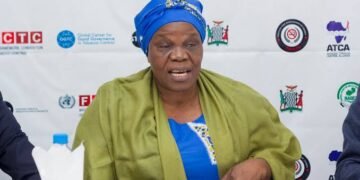
Ahead of this election, he has changed the nonpartisan character of ECZ in several ways. For instance, the president appointed his former personal lawyer Mwangala Zaloumis to the commission. He then proceeded to promote Zaloumis as the chairperson of the commission. Legally speaking, Zaloumis is qualified to hold the position, as Section 5 (2) of the Electoral Commission of Zambia Act of 2016 provides that “A person qualifies for appointment as the Chairperson or Vice-Chairperson if that person has held, or is qualified to hold, the office of judge of a superior court.”
Even though Zaloumis has never held judicial office, the minimum number of years of legal practice experience required for appointment as a superior court judge is ten, which she exceeds. What is highly problematic is her proximity to Hichilema. Before Hichilema, successive presidents only appointed independent individuals who had previously held judicial office to chair the electoral body because such individuals – whether retired or plucked from the courts –were perceived as impartial and apolitical. Unfortunately, the president has abandoned this established democratic norm that has undergirded elite and popular perceptions of legitimacy of the country’s democratic system over the last three decades.
As if Zaloumis was not enough, Hichilema further chose Mcdonald Chipenzi, another known supporter of the ruling UPND, as a commissioner on the electoral body. Currently, the ECZ has four commissioners, all of whom come from the region where Hichilema hails from. In addition, 50 percent of the commission’s leadership is made up of individuals with known ties to the sitting president or party in power. Combined, these factors may erode voter confidence in the election or trigger violent protests in the event of a narrow and disputed victory by Hichilema.
A partisan army commander who behaves like the ruling party’s head of security
The ability of the military to stay out of politics has been one of the crucial factors that have helped sustain Zambia’s democracy even in shaky moments and enabled peaceful transitions of power. In Zambia, the military did not emerge from a liberation army. This has shaped its nonpartisan character, in addition to having a crop of apolitical and professional military commanders appointed by successive presidents who exercised greater restraint in deploying their institutional prerogatives for partisan goals. Since the appointment of Kingsley Chinkuli, the country’s first indigenous army chief in December 1970, successive army commanders have gone to greater lengths to protect this identity of the army. This has included respectfully refusing to comply with unlawful orders of their commander-in-chief especially those relating to any attempt to getting soldiers to deal with domestic policing, to kill civilians, and to intervene in support of the incumbent when it dawns on the president that they have lost the election.
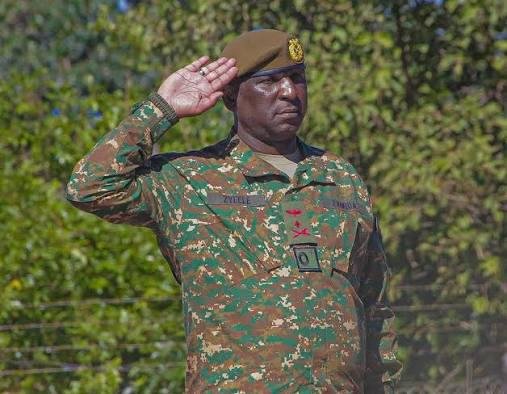
This professional and nonpartisan character of the Zambia Army endured until September 2024 when Hichilema dismissed the highly regarded Lieutenant General Sitali Alibuzwi from his post as army commander and hired corruption-accused Geoffrey Zyeele as his replacement. Zyeele had been retired ‘in the national interest’ in 2016 by then President Lungu for alleged partisan conduct in favour of the UPND. After the 2021 transfer of power, Hichilema recalled his co-ethnic from retirement, promoted him to the rank of Major General, and appointed him deputy army commander. To obscure the long-term political motives behind the appointment, the President chose Alibuzwi, the then deputy army commander who had been promoted to the position by Lungu in 2019, as the head of the military.
Although it was the first time that both the army and deputy army commanders came from the same region, the appointment of Alibuzwi was widely seen as merit-based owing to his professionalism, commitment to integrity, and the respect that he commanded among soldiers. The same could not be said about Zyeele, who was soon to be implicated in a major corruption scandal, one that forced the Anti-Corruption Commission to place the deputy army chief under investigations. Like most cases of corruption involving members of Hichilema’s inner circle, the case went nowhere. This murky history explains why opposition politicians rejected Zyeele’s promotion as army commander when Hichilema elevated him. In what has become his trademark response to public concerns, the president simply ignored these objections.
When removing Alibuzwi, the president gave no reason for the decision. However, his comments in the aftermath of the changes he made to the army’s leadership, alongside the public conduct of Zyeele since then, provide a clue: preparing the army to play a partisan role in politics and especially the conduct of the forthcoming election. In April 2025, Hichilema appropriated the country’s military as his fighters, ordered them to start dealing with civilians, and, when doing so, to be in a lethal mode. Speaking during the commissioning of 500 new soldiers and looking directly at Zyeele, the president said: “I want to see my soldiers who are polite in the communities, who know how to handle civilians but yet (sic) when duty calls for the lethal side, they mutate into that mode as well. I believe you have got my message”, he declared six months after the unexplained dismissal of Lieutenant General Alibuzwi.
Given that soldiers do not “handle civilians”, as the maintenance of law and order is the responsibility of the police, Hichilema’s remarks were generally seen as a veiled invitation for the army to deal decisively with any pre-election signs of political dissent and potential post-election unrest. It is a message that the new army commander has taken to heart since then. For instance, in November 2025, informal small-scale miners, whose hazardous trade Hichilema had promised to regularise when he was in opposition, pelted the president with stones at a public rally on the Copperbelt. Hichilema was forced to abandon his speech, flee to safety, and had his ego severely bruised. If this incident showed mounting public anger at the president’s failure to fulfil the campaign promises he made in the last election, it unsettled the corruption-accused Zyeele who described the disillusioned stone-throwing youths as insane, vowed to hunt them down, and promised to institute “corrective measures” to avoid a repeat.
“You cannot throw a stone at a commander-in-chief and hope to have peace”, the army commander said before adding that “All those individuals who threw stones at the commander-in-chief, we shall pick them one by one. Some of them are under custody already. Those who ran away, we will look for them and deal with them according to the law. There is no sane person who can throw a stone at a commander-in-chief.” Zyeele’s point was clear: the army had got Hichilema’s message and was now implementing it by assuming policing functions. Although the message was directed at informal miners, the targeted audience was much wider: general civilians in whom the army commander is instilling fear that any expression of dissent against the president would be met with lethal response from ‘Hichilema’s soldiers.’
Zyeele amplified this message earlier this month when he publicly threatened to use violence against another group of informal small-scale miners, this time from Mufumbwe in Northwestern Province, dubbed Zambia’s new Copperbelt. Like their counterparts on the Copperbelt, these miners have been disappointed by Hichilema’s failure to regularise their trade and there are growing fears that they too might embarrass the president, if left unchecked. There are also credible reports that some senior UPND figures and one or two individuals close to Hichilema have entered the trade and do not want competition from the informal miners. On 22 January, Zyeele told the media that the president had ordered the military to kill these “illegal miners”.
Dripping arrogance, the army commander further described the citizens as “targets” to be “flushed out” and on whom “lethal force will be applied without hesitation.” With beaming excitement, Zyeele disclosed that “The directive from the commander-in-chief was very straightforward: to exterminate illegal miners. We shall do this step by step. We do not intend to use force but obviously, when necessary, that is our business: to use force. And I do know there will be consequences in that direction, such as injuries, loss of life, but there is no [other] option available”.
The army commander added: “We are also reminded of the impunity to disobedience of law and order by the illegal miners. We will not allow that impunity to continue…. Illegal mining attracts illegal immigrants, and we are also interested in illegal immigrants. Starting this week, we shall be using force to exterminate and fumigate all illegal miners. Our next destination is Mpika [in Muchinga Province]. Obviously, the template of Mufumbwe maybe different from Mpika, but there will be similarities in the lines of operations. I know that this nuisance has been in Central Province for a long time… It is time we brought it to a dead end.”
Here, Zyeele’s objectives are twofold. First, by publicising this premeditated mass termination of the right to life of ordinary civilians as a mere fulfilment of presidential directives, the army commander is placing Hichilema above the Constitution and effectively acknowledging that he has no problem with carrying out any orders, however unlawful, a clear departure from his predecessors. This is another ingratiating response to the president’s earlier address. In effect, Zyeele is telling his commander-in-chief that “we have heard your message, and your soldiers are ready to mutate into the lethal mode.” Second, in framing the problem of illegal mining as a cross-province issue, the army chief is seeking to condition Zambians into accepting the possible deployment of soldiers onto the streets ahead of the election under the pretext of maintaining law and order even when the police have not admitted failure to discharge what is essentially their mandate. Placing soldiers on the streets will in turn intimidate citizens into submission in case of a rigged election and avert Tanzania-style mass protests.
The refusal to drag the country’s military in partisan politics increasingly appears to have been the reason behind the dismissal of the former army commander. After Hichilema appointed Zyeele as his successor, Alibuzwi publicly advised his successor to “ensure that the army does not engage in partisan politics, especially as the country heads towards the 2026 general elections”. Speaking at a farewell party hosted in his honour, the ex-military chief provided illuminating insights into behind-the-scenes dynamics that possibly contributed to his sacking: “Our army has always been known for its professionalism and now is not the time to drop the guard. The Zambia Army has its identity. I was sometimes misunderstood in trying to protect this identity. But let me mention that I have no regrets whatsoever because I had the responsibility to protect the army’s identity according to the military customs, practices, and internationally accepted continental system”.
Going by his conduct since assuming the role of army commander, Zyeele has shown that he is more than willing to drop the guard and change the army’s identity by ensuring that it engages in partisan politics ahead of the general election. The only positive thing so far is that Zyeele’s demonstrated partisanship is not widely shared by the rank and file of the military, who remain professional and are most probably repulsed by the grovelling attitude of their commander towards one political player. Were Hichilema to lose the election and refuse to concede defeat, the ability of the leadership and rank and file of the military to stay out of political processes, as they have historically done since the re-introduction of multiparty democracy in 1991, will be essential to electoral turnover and peaceful transition of power. So far, Hichilema has refused to provide any public assurance that he would peacefully concede defeat and hand over power if he lost the election. Conversely, any attempts by the army to intervene in favour of the incumbent if it becomes clear that he has lost the election will leave Zambia on the brink of a bloodbath and civil war.
The systematic destruction of democratic institutions
This year’s election is also like no other before it in relation to the overt and covert manoeuvres employed by an incumbent president to eliminate political competition through the deliberate destruction of democratic institutions. The police, judiciary, civil society, opposition parties, and, as already shown, electoral commission have all been targeted for capture by the executive arm of government in a manner that has never been witnessed since the era of one-party rule. In addition to co-opting previously independent media outlets such as News Diggers and appointing most of the experienced leadership of Zambia’s civil society movement into the government, Hichilema has used the police to target the remaining civic leader for arrest.
For instance, Brebner Changala, a prominent civil rights activist who played a significant role in exposing Lungu-era wrongs and contributed to the delegitimisation of the PF in a manner that paved the way for Hichilema’s election, has been saddled with an active court case since May 2024 after he criticised the presidency in comments that were deemed by the government as seditious. Archbishop Alick Banda, one of the country’s most prominent and outspoken religious leaders, is on the verge of arrest over a politically motivated case that is aimed at silencing him or getting the Vatican to remove him from his position. By the time of elections, both civic leaders might be in prison.
In addition to dusting off colonial-era statutes to arrest political opponents and critics, Hichilema has also devised anti-free speech laws such as the Cyber Crimes Act of 2025 to help curb online criticism of his leadership failures. This has created a general climate of fear that is reminiscent of Lungu’s last days in power. Political parties have also been targeted for destruction. Hichilema has sponsored confusion or instigated divisions in all three of Zambia’s former ruling parties using state institutions such as the police, the Registrar of Societies, and the courts.
The government has taken formal control of the PF and chosen its leader, created two factions in former president Kaunda’s United National Independence Party (with one supported by the State), and helped the Hichilema-supporting Nevers Mumba to avert any leadership challenge to his long-expired mandate over the Movement for Multiparty Democracy. This has weakened the state and viability of the opposition. The factional battles in these parties are easier to resolve, but Hichilema’s decision to pack the courts has compromised the judiciary and resulted in gymnastics on the part of judges, expressed through delayed delivery of judgments and the passing of verdicts that are so legally defective that they offend both reason and common sense.
Perhaps more blatant has been the capture of the police, an institution that Hichilema has repeatedly abused to suppress the right to peaceful public assembly of opposition parties whilst he himself continues to campaign unhindered. Over the last four years, the police have blocked nearly all public rallies called by opposition parties outside of by-elections, always citing unspecified security concerns or inadequate manpower. Yet whenever the opposition have threatened to proceed with their rallies, the government has dispatched hundreds of police officers to the designated venues to quash the meetings. The Inspector-General of police, Graphel Musamba, recently explained that “we don’t allow opposition rallies because the other side [the ruling party] is always ready to attack them [the opposition]”. This is damning and undeniable evidence of political suppression.
In addition to violating the right to peaceful public assembly, freedom of association (those denied permission to meet are members who associate with a given political party), and free speech (since people meet to talk), stopping the opposition from mobilising voters has prevented the raising of political temperature expressed through big-sized rallies that have historically served as a barometer of the public’s desire for change. Large-scale rallies of opposition parties show an incumbent president’s declining political support and serve as a source of courage for elites in formal institutions like the judiciary to do the right thing.
For instance, ahead of Zambia’s 1991, 2011, and 2021 elections, all of which resulted in the defeat of the sitting president and were preceded by well-attended opposition rallies, courts that had all along shown timidity and subservience to the executive suddenly sprang to life and made several decisions against the executive. Thanks to Hichilema, and for the first time in over three decades, opposition parties are heading into a general election campaign without the benefit of mobilising voters and selling their policy appeals through public rallies.
An incumbent president with a character that knows no restraint
This is also the first time since independence that the county is heading into a major election led by a leader with a character that knows no restraint. All previous competitive contests were mediated by the presence of a sitting president or acting president with a character that regulated their worst impulses. Not Hichilema. Such is his lack of restraint and demonstrated aversion to democratic norms that it is almost impossible to escape the conclusion that he is just a bad human being. His predecessors had boundaries that they could not cross.
For instance, faced with growing opposition to his rule, Zambia’s founding president Kenneth Kaunda listened to the people, cut short his five-year term, called for fresh elections, and, when he lost them, peacefully handed power. In contrast, Hichilema recently vowed never to easily give up power, saying the UPND did not spend over two decades in opposition only to return to opposition politics after five years. This lack of respect for voters emanates from his character.
Apart from the desire to continue accumulating using public office, Hichilema’s determination to remain in power is driven by historical grievances. The president, like many members of his ethnic group, believes that Tongas have always been short-changed. One term is not enough, and he considers it their entitlement to run the show for much longer, through him. It is worth briefly mentioning that this sense of unresolved grievance falls under scrutiny. Since independence, Tongas have occupied senior political leadership positions in the government. For instance, under Kaunda, Mainza Chona served as Zambia’s Vice-President while Kebby Musokotwane and Elijah Mudenda were appointed Prime Minister at different intervals. In the 1990s Chiluba’s cabinet included several Tonga-speaking ministers such as Baldwin Nkumbula, Bennie Mwiinga, Symukayumbu Syamujaye, Ackson Sejani, Samuel Miyanda, Vernon Mwaanga, Alfeyo Hambayi, Vincent Malambo, and countless deputy ministers.)
Chiluba therefore showed restraint in his inclusive appointments to public office. In fact, soon after his election in 1991, he came under increased pressure to elevate then Deputy Chief Justice Bonaventure Bweupe to the position of Chief Justice that had been vacated by the retiring Anel Silungwe. Chiluba refused to do so on the ground that ‘You cannot have two of three state institutions headed by individual from the same region.” In contrast, Hichilema, following his election, appointed two individuals from his region to lead the other two state institutions –the Judiciary and National Assembly.
Chiluba also bowed to public pressure when his plans to change the Constitution and seek a third term of office were opposed by civil society, the opposition, ordinary Zambians, members of his own party and even elements of the military. In contrast, Hichilema, only last year, ignored widespread opposition from civil society, opposition parties and citizens to bulldoze his way in pushing through changes to Zambia’s Constitution that are aimed at entrenching his party’s dominance even after the judiciary halted them.
Levy Mwanawasa showed restraint by respecting the limits imposed on him by the Constitution. In contrast, Hichilema has repeatedly shown that not even the law can stand in his way. For instance, when the country’s Auditor-General that he found in office began to expose the corruption of the Hichilema administration, the president hounded him out of office and appointed a pliant successor who was above the constitutionally prescribed age limit of 60 years and illegally remains in office to date.
Rupiah Banda showed considerable restraint in how he handled the funeral of President Mwanawasa. After Mwanawasa died in France, his widow, Maureen, told then acting president Banda that it was the wish of the family that the deceased’s body be flown across the country to enable Zambians pay their final respects to the late president. Banda did not personally support the family’s view. He also came under increased pressure from senior MMD officials who urged him to reject the family’s request on the ground that Maureen was trying to use her husband’s death to promote her own political agenda. In the end, and understanding the solemnity of the occasion, the acting president respected the family’s wishes and facilitated their expression, even though he himself did not accompany the body to the provincial capitals.
In contrast after Lungu died in South Africa, President Hichilema refused to publicly pledge that he would stay away from Lungu’s funeral out of respect for the grieving family’s disclosure that the deceased had told them that in the event of his death, and largely because of how poorly he felt Hichilema’s administration had treated him in life, he did not want his successor anywhere near his body or funeral. Instead of delegating the responsibility of officiating at the funeral to another official such as Vice-president Mutale Nalumango, Hichilema effectively insisted that the task should only be carried out by him and nobody else. In response, the family was forced to consider burying Lungu outside Zambia, but Hichilema was not done with them. Determined to get his way on the matter and acting as if he has undisclosed personal interest in the funeral of his predecessor, the president instructed the Attorney General to move South African courts to block the burial from taking place without him. As a result of this ongoing court process, the late former president remains in a Johannesburg morgue more than seven months after his demise, prolonging the anguish of his family.
Sata’s tenure was short (he was also sick for much of it) and divisive, but he had no ambition greater than being president. Lungu undermined democratic institutions in a manner that nearly makes Hichilema his ultimate legacy, but he too had boundaries. After arresting Hichilema on a trumped-up and non-bailable charge of treason, Lungu bowed to public pressure to have his political opponent released after spending four months in detention.
In contrast, Hichilema arrested Mumbi Phiri, a PF leader who had instigated his arrest, on a trumped-up and non-bailable charge of murder. In a clear act of revenge, Hichilema ignored public pressure to have Phiri freed until after she had cloaked over 12 months in detention. Lungu also appointed electoral commissioners who came from across the country. In contrast, all the current commissioners serving on the ECZ come from Hichilema’s region, demonstrating the extent to which he has polarised the country.
If all his predecessors were unwilling to compromise the country’s sovereignty to foreign interests, Hichilema has shown that he – like the African chiefs who sold their people into slavery and signed away their territories’ mineral wealth with a degree of short-sightedness that paved the way for formal colonialism by European powers – has no qualms with selling Zambia, literally. The president is reportedly on the verge of signing a highly problematic deal that would give the United States unlimited access to the country’s mineral wealth and the sensitive medical records of Zambians in exchange for health aid. This deal, which is as one-sided and horrible as the one that Kenya’s president recently signed with the US before the East African country’s more independent judiciary suspended its implementation over data privacy concerns, risks making Hichilema even more unpopular, although he may try to conceal its details from public view.
The irony of it all is that Hichilema is only the second president of Zambia to have been popularly elected with more than 50 percent of the total votes cast since 1991. But he is the only one who has squandered, within the first term, both the domestic and external goodwill that accompanied his election. A key reason for this unwanted record is Hichilema’s failure to deliver most of his election promises. This is complemented by his lack of humility to accept his shortcomings and his repulsive tendency to overly praise himself for supposed achievements, as part of creating a non-existent success story or painting a rosy picture of Zambia under his leadership to the outside world.
This unfavourable domestic context explains why he has progressively destroyed alternative sources of authority. What makes Hichilema extremely dangerous, however, is his reckless lack of restraint. Drunk on his own power and lost to the vanity of self-focused ambition, the current president appears increasingly unconstrained, pursuing policies that have deepened divisions in the country, and totally disconnected from consequence.
Zambia: a tinderbox on the verge of conflict?
In what turned out to be his last public interview, founding President Kaunda was asked in 2021 to name the one thing that he feared the most. The 97-year-old identified the possible election of Hichilema to the presidency as the foremost threat to Zambia’s future: “There is no other leader I can fear to run this country.” Spoken in the run-up to the last general election, Kaunda’s words were initially dismissed as the rumblings of an old man. However, the conduct of Hichilema in public office has since caused many people to reconsider that view and deem the former president as prescient. In a sense, Hichilema has set up the next general election as a matter of life and death, for him. So far, much of the preliminary evidence suggests that the country is headed for a disputed election outcome and possibly civil war.
All the ingredients are almost there: captured state institutions including a severely compromised judiciary that makes a mockery of the justice system; vandalism of the national constitution; selective arrests and prosecutions that appear to target people from certain ethnic groups and regions; the stifling of opposition parties and dissent; mass unemployment of a youthful national population; state-led frustrations of many people’s attempts to survive or escape death by eking out a living in the informal sector; mass poverty; a crippling cost-of-living crisis; an extremely intolerable load shedding that has badly affected production; and deepening ethnic-regional divisions exacerbated by the increasing politicisation of security forces. In this context, a poorly handled election may turn out to be the spark that sets ablaze the heap of inflammable material that has long accumulated.
Only the people can steer Zambia away from the perilous path that Hichilema has thrust the country upon. In other words, unless the electorate strategically identifies a credible presidential candidate, rallies behind that candidate to the exclusion of all others, and ensures that their vote is protected from manipulation, it is impossible to completely rule out the outbreak of large-scale chaos in the run-up to or the immediate aftermath of the August election. Will we Zambians avert a violent national disaster or walk into it with our eyes wide open? Time will tell. For now, Hichilema is holding a matchstick in his hands, moving towards the heap. Who, or what, will stop him from burning Zambia?
For feedback or comments, email ssishuwa@fas.harvard.edu