






Antonio doubts UPND’s 10,000MW target
By Ludia Ngwadzai
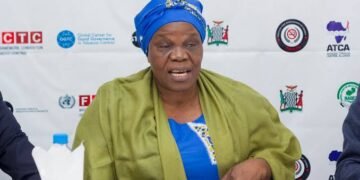
DEMOCRATIC Progressive Party (DPP) president Antonio Mwanza has questioned government’s ability to increase Zambia’s installed electricity generation capacity to 10,000 megawatts (MW) by 2031.
Mwanza said to meet the target, government would have to add at least 1,000MW each year.
He said government had added only about 840MW since 2021, meaning it should deliver more than five times that amount in the next five years to achieve its ambition.
In a statement issued yesterday, Mwanza said the target was a major undertaking requiring credible statistics, secured financing and a clear implementation programme.
“Using the ministry’s reported October 2026 figure of 4,722 MW, Zambia must add a further 5,278MW to reach 10,000MW. With approximately five years remaining, this requires an average addition of roughly 1,000 MW every year,” he said.
Mwanza cited Energy Regulation Board (ERB) figures showing that installed electricity generation capacity stood at 3,318.43MW in 2021 and increased to 3,885.86MW in 2024, while the Ministry of Energy reported 4,722MW in October 2026.
Mwanza questioned the ministry’s comparison of the 4,722MW figure with 3,777MW in 2024, noting that the ERB recorded the latter figure for 2022.
“National energy planning must be based on consistent and verifiable statistics. We call on government to publish a reconciled capacity record showing generating plants, commissioning dates and the figures used in its calculations,” Mwanza said.
He warned installed capacity did not guarantee actual electricity supply, pointing to a February 2026 ministerial statement which reported available domestic generation at just 1,635MW.
“Installed capacity cannot be equated with dependable electricity supply,” Mwanza said.
He said the water availability, plant performance, maintenance and fuel supply affected actual generation.
Mwanza wondered whether the country’s transmission and distribution infrastructure was adequate to support the planned expansion.
New power stations alone would not resolve Zambia’s electricity challenges.
Citing Zesco Limited’s 2025 Integrated Report, Mwanza said the utility recorded 53 system disturbances during the year, with 26 originating within its network.
He also highlighted distribution losses of 575.89 gigawatt-hours (GWh), representing 9.48 per cent of electricity purchased and estimated to have cost K1.071 billion.
“The issue is not whether Zambia should aspire to 10,000MW. The issue is whether government can demonstrate a credible pathway to achieve it by 2031- and ensure that the resulting electricity is reliable, accessible and affordable,” he said.