


Measuring democracy in Zambia by the book
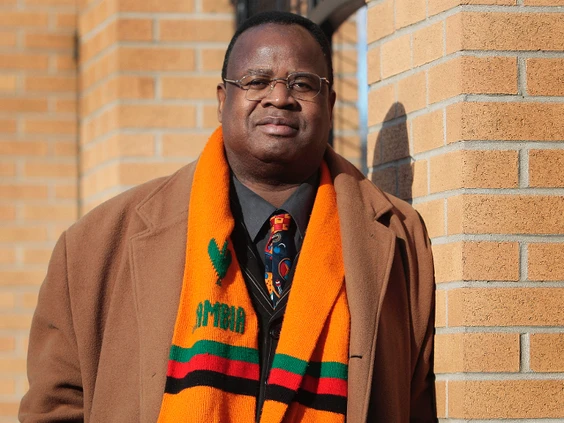
By Professor Munyonzwe Hamalengwa
THERE is a tendency in a fast moving world powered by social media to brandish like talismans that explains everything, terms like ‘rule of law’, ‘shrinking democratic space’ and related concepts. Those brandishing these apparent talismanic terms then cherry pick a few examples as evidence of the truth of their observations. But reality is more complex and nuanced than these analysts countenance if at all.
This article suggests a framework ‘by the book’to measure the state of democracy in a country, including Zambia in a short and long-term period, tendential and or rooted shifting sands of democracy.
The analyst’s we have in mind analyse Zambia in a vacuum and without context. They mistake what is happening to a few as evidence of the collapse of democracy. They forget to analyse what is happening to the majority of the people. They mistake what a few are saying or doing or is being done to them, as the yardstick for measuring democracy.
To measure the heartbeat of democracy requires robust analyses. It requires comparing what is happening under the current regime to what was happening under previous regimes concerning the same issues. Democracy is a continuing comparative exercise in theory and practice, in comparative experience and practice in real time, in comparing what the previous regimes would have done were the current acts taking place during that time.
The analysts we have in mind are oblivious to the practices of former regimes and what former regimes did it would have done under similar templates. This does not mean of course that current practices should be immune from scrutiny merely because previous regimes did worse on the same score. Or could have done worse if current events were happening during the reign of previous regimes. It simply means that awareness of the difference generates different reactions, commentaries and levels of tolerance. Even the template of criticism would be different. You would not expect someone who was for example tortured under the brutal repression of apartheid to have the same reaction to being teargassed under the post-Apartheid regime. He would expect not to be teargassed but he would not prefer to be tortured like he was under apartheid.
He would expect of course that while the new government should comply with the dictates of the new constitution and international best practices, that the new government would not be expected to commit suicide by letting itself be overthrown. Governments have to govern even those that overthrew apartheid and colonialism and one party repressive systems. As long as the analysts I have in mind do not compare the practices of the current regime with those of the previous regimes, as a starting point of their criticisms of the current regime, they will fall on death ears. It is not enough to simply say that they used to criticise the old regime or regimes as well. Their criticisms will be well received as grounded once they acknowledge the differences in the state of democracy between the new regime and the old regime.
Some of the analysts do not examine the state of democracy in America or Britain or France or Germany but expect Zambians to hero-worship these countries as models. Democracy entails as well comparing historical and contemporary practices between countries. It also requires comparisons and awareness of what America or Britain or France or Portugal etc have done historically and in contemporary terms to our aspirations and yearning for democracy, both politically and economically. Have they been facilitators or instructors to our claim to fully democratic aspirations.
What do these countries do when we want to exercise our full claim to democracy? It is time to know your history. The analysts we have in mind are totally oblivious to this comparative framework in analysing the state of democracy in Zambia. The countries they peach their concerns about shrinking democracy in Zambia may simply be interested in our critical minerals and military bases than about our democracy. How many of these countries are interested in democracy in the Democratic Republic of Congo (DRC) or about democracy in South Africa during Apartheid?
Democracy by the book requires the fashioning of democracy that is homegrown, democracy that is not based on the concerns or complaints of the elite alone or what is done to the vocal elite but what is in the best interests of the majority of society. Some elites are struggling only for their narrow interests as they did before. History is always the best teacher. There are many books that have examined what democracy for the majority really entails, democracy that is not limited to elite interests, even as some elites claim that they are democrats for the majority.
One of the best books on this is edited by Stephen Macedo and is entitled, ‘Democracy at risk: How political choices undermine citizen participation and what we can do about it’. The concept of the Rule of Law is waved like a magic wand by some of the analysts we have in mind. This concept has real deep explanatory meaning and practices about real democracy and it is historical and contextual. It is not a talisman. It has been written a lot about. One of the best books on this concept is by Lord Tom Bingham entitled, ‘The Rule of Law’.
Democracy is defined greatly by the unifying concept of the ‘Separation of Powers’ doctrine. And this concept is also contextual. It does not come down like manna from heaven. It was never brought in nor practised under slavery, colonialism or apartheid or under one party state systems. It is a work in progress and has to be fought for the fulfilment of a more prefect democracy.
The best set of books written in Africa and particularly applicable to Zambia are written by Professor Ben O. Nwabueze entitled: 1. “Presidentialism in Commonwealth Africa”, 2. “Constitutionalism in Emergent States” and 3. “Judicialism in Commonwealth Africa”. If anyone wants to measure the state of democracy in Zambia, you ought to assess it using the knowledge displayed in these three books, among others.
The judiciary has often taken the greatest hits in any measurement of the state of democracy in Zambia and elsewhere. The judiciary is the easiest target because it is presumed to have no tools with which to reply in comparison to the President and Presidency as well as the legislature. The President and Presidency and Legislature have full time employees or Ministers who can respond to any criticisms when accused of dictatorship or fostering shrinking democratic space. The judiciary can be accused of corruption, judicial capture, incompetence, and other descriptors but without guaranteed tools of effective reply. The analysts we have in mind prey on this lacunae. All boil down to the concepts of judicial independence, autonomy, accountability and transparency.
The Judiciary has an arsenal of tools to use in reply. It has been done in the US and South Africa and other countries. The judiciary can ably speak through its traditional tool and its decisions. Judges have always been allowed to give speeches in public forums. Judges have been able to write books while still on the bench and after leaving the bench. See the numerous books by Lord Denning, ‘The Due Process of the Law”, “The Discipline of the Law’, ‘What Next in the Law”, “Landmarks in the Law “among other books.
In Zambia Chief Justice Ernest Linesi Sakala wrote as of now an unequalled LLM Thesis on the meaning of Judicial Autonomy in Zambia, entitled, “Autonomy and Independence of the Judiciary in Zambia: Realities and Challenges”. That thesis must be required reading for all judges, lawyers and law students in Zambia.
Chief Justice Dr Mumba Malila, SC has also written a poignant book on the judiciary in Zambia, entitled, ‘Judicial Leadership’ indicating that the judiciary can come out and express its views as part of the judicial function. This is not the only book written by the current Chief Justice.
The Judiciary has a central role in seeing that democracy and the rule of law flourish since the presidency and legislature could be pre-occupied with stomping out bush fires that threaten to engulf their domain. This is ably analysed in the book by Oren Gross and Fionnuala Aolain entitled, “Law in times of crisis: Emergency powers in theory and practice”. This phenomena has been dealt with in Zambia as well in Dr Julius Bikoloni Sakala’s book entitled “The role of the judiciary in the enforcement of Human Rights in Zambia”.
The legal profession sometimes is known to not take into account broader societal interests or are concerned with narrow interests when the society is burning and needs to be saved. That is their role albeit that their greater duty is to the court and society in general. See Anthony Kronman in his book, “The lost lawyer: Failing ideals of the legal profession”.
Every citizen must be aiming at a more democratic Zambia. How can we as individuals promote and protect democracy in Zambia? We could start by reading Plato’s book entitled “The Laws” about when citizens and elites were really concerned about the greater good of society. We could also be familiar with our entire Constitution and how it could be reformed. This requires knowledge about Article 79 of our Constitution. Is that Article promotive of constitutional reform or not?
We could supplement our understanding of Article 79 by reading a very important book from Canada on the importance of referendums in promoting democracy, entitled, “The people’s mandate: Referendums and a more democratic Canada” by Patrick Boyer. The people and not the president or legislature or the judiciary must be at the heart of the democratic project. We the people must govern. The book by Barry Friedman entitled, “The will of the people; How public opinion has influenced the Supreme Court and shaped the meaning of the Constitution” must be our guiding mantra.
Professor Munyonzwe Hamalengwa is the Dean of the School of Law at Zambian Open University. He writes in his personal capacity.