




Last among our many names: Why the Zambian interest must come first
Tribe, village, province, church… and somewhere at the bottom of the list, Zambia
RECENTLY, I was in Kenya for a short training in human rights litigation. As expected of an event of that level, the formal sessions were useful, but as any lawyer will tell you, the real education at an international conference happens over tea, at the buffet queue and at late dinners where nobody is billing anybody. That is where lawyers from different African countries put procedure aside and start talking honestly about their respective homes.
So it came to pass that one evening, I sat with two colleagues from Nigeria. Over dinner, we talked about the problems we share: weak institutions, corruption, poverty in countries full of resources, and the distance between what our Constitutions promise and how our people actually live. One of them leaned back, smiled the sad smile of a man who has seen too much, and gave me a saying from his country:
“When all is said and done, it is the Nigerian interest that comes last.”
Naturally I was puzzled, but then he explained. In Nigeria, he said, a person introduces himself first by his ethnic group, then his town or village, then his region, then his religion. “Nigerian” comes at the very end, like the small print on a contract that nobody reads. And if you identify as a Nigerian last, then it is almost certain that Nigeria’s interest comes last too. Each group protects its own, and the shared national project gets whatever is left on the plate after everyone else has eaten.
We laughed, Nigerians, after all, can make even a crisis sound like a comedy sketch. But I kept thinking about it long after the plates were cleared, because I recognised my own country in that saying.
A familiar reflection
How often do we in Zambia introduce ourselves first by tribe, language, province or village? How often do we meet someone new and, before asking their name, quietly run their surname through our internal ethnic database? We hear “Mwansa” and decide they are from the North. We hear “Mudenda” or “Choongo” and place them in the South. We hear “Phiri” and the debate begins, because Phiri, as we all know, belongs to half of Eastern Province, a good part of Malawi and, it seems, everybody’s uncle.
We laugh at our tribal cousinship too, the friendly teasing between Bemba and Ngoni, Tonga and Lozi, that has eased tension for generations. That tradition is a gift, because it lets us joke about difference instead of fighting over it. The trouble starts when the joke stops being a joke: when the question “where are you from?” decides who gets the job, the contract, the promotion or the vote.
Zambia is home to more than 72 ethnic groups and many languages, that diversity is a blessing. The problem is not that we are different, the problem starts when our differences become the main way we see each other, and when they turn into suspicion, resentment and competing claims on the national cake. The problem my Nigerian friend described is not only Nigerian, it is a Zambian problem too.
The colonial inheritance
To understand how we got here, we need to look back.
The borders of the African states as we know them today were not drawn by Africans. At the Berlin Conference of 1884–85, European powers carved up the continent around a table, rather like relatives sharing out an inheritance before the owner has died. Communities were split, and peoples who had never been governed together were put under one flag. Nigeria was joined into a single colony in 1914. The territory we now call Zambia was first run by Cecil Rhodes’s British South Africa Company, a commercial enterprise that had the curious privilege of governing human beings, and then, from 1924, as the British Protectorate of Northern Rhodesia.
Colonial rule worked through the old method of “divide and rule”. Under this indirect rule, most closely associated with Lord Lugard in Nigeria and used across British Africa, people were governed through ethnic and traditional structures. Ethnic categories were recorded, formalised and sometimes simply invented. One tribal group was favoured for the army, another for clerical work, another for the labourers in the mines. The rivalry among tribal groupings that this created was no accident, it was deliberate. You see, a people busy suspecting and fighting one another is far easier to govern than a people united against its oppressors.
As if that was not enough, Missionary competition added another layer. Different Christian denominations divided the land into spheres of influence, so that a family’s church was often decided by which missionary’s bicycle reached their village first. Over time, loyalty to a particular church and loyalty to region have become tied together.
Our founding leaders understood this colonial inheritance. That is why, at independence in 1964, President Kenneth Kaunda and his generation gave us the motto “One Zambia, One Nation.” It was not a slogan for decoration on government letterheads, but was a deliberate attempt to counter a system that was designed to keep us apart. Kaunda’s careful balancing of cabinet posts across provinces was an imperfect answer to the same question: how do you make every citizen feel that the state belongs to them? Six decades later, we must ask whether we have kept that promise or slowly put it in a drawer with our independence souvenirs.
What the Constitution already says
As a lawyer, I would point out that our supreme law takes the danger of division seriously. The question is whether we, as individuals do.
Article 23 of the Constitution of Zambia, found in Part III, the Bill of Rights, is the core non-discrimination provision. Article 23(1) provides that “no law shall make any provision that is discriminatory either of itself or in its effect.” Article 23(2) provides that “no person shall be treated in a discriminatory manner by any person acting by virtue of any written law or in the performance of the functions of any public office or any public authority.” Article 23(3) then defines “discriminatory” as treating people differently “wholly or mainly” because of their “race, tribe, sex, place of origin, marital status, political opinions, colour or creed.” Article 11 adds the guarantee that every person in Zambia enjoys fundamental rights and freedoms whatever their race, place of origin, political opinions, colour, creed, sex or marital status.
The Constitution of Zambia (Amendment) Act No. 2 of 2016 went further. Article 8 lists our national values and principles, including “patriotism and national unity” and “human dignity, equity, social justice, equality and non-discrimination.” Article 60(3)(a) provides that a political party shall not “be founded on a religious, linguistic, racial, ethnic, tribal, gender, sectoral or provincial basis or engage in propaganda based on any of these factors.” And Article 266 defines “discrimination” broadly to include different treatment on the basis of tribe, language, religion, culture, origin and ethnic status.
In other words, the law has already said very clearly that Zambia stands above every part of it. But a constitution is not a magic wand. It can ban a tribal political party, but it cannot ban a tribal mindset. It can protect a citizen in a courtroom, but it has no jurisdiction over the family WhatsApp group, where the real cases are tried every evening without counsel, evidence or right of appeal. That work belongs to us as citizens.
Lessons from our neighbours
Africa offers examples on both sides, and this is where the humour must stop.
Rwanda showed in the most terrible way where ethnic categories hardened by colonial administration can lead. Belgian authorities issued identity cards recording people as Hutu, Tutsi or Twa and in 1994, those same cards helped decide who lived and who died. No Zambian should think such horrors belong only to other people. Every catastrophe of that kind began with words, stereotypes and a slow loss of trust between neighbours.
Closer home, Tanzania offers a more hopeful example. Under Julius Nyerere, the country deliberately built a national identity through a shared language, Kiswahili, through national service, and through a political culture that discouraged ethnic mobilisation. Tanzania has its own challenges, but it is widely seen as one of the African countries where national identity runs deepest. That did not happen by accident, it was built on purpose.
Nigeria itself, through my colleague’s honest saying, reminds us that a country can be rich in people, talent and oil and still be held back when its citizens put the nation last. More than 40 years ago, Chinua Achebe wrote in The Trouble with Nigeria that the country’s central problem was a failure of leadership. I would add that leaders grow from the soil of the society that produces them. Tribal leaders come from tribal communities, equally national leaders come from citizens who think nationally.
National healing begins at home
After every election season, we talk about national healing. We say it in press statements, from pulpits and on radio phone-in programmes, usually just after the same callers have spent the campaign season wounding the nation. But national healing cannot be announced from a podium, it has to start with the individual and the family.
So, let us ask ourselves some uncomfortable questions.
What do we teach our children at home? Do we tell them that people from another province are lazy, proud, stingy or “not like us”? Do we discourage friendships and marriages across ethnic or church lines? Many a Zambian romance has survived poverty and long distance only to face its greatest test at the family meeting, when an aunt asks, “But what tribe is he?” or “Which Church does she go to?” Children are not born with prejudice, they learn it at our tables as parents.
How do we treat our colleagues at work? Do we recommend and promote people because they are competent, or because they greet us in the right language? Do we see a talented colleague as a fellow Zambian, or as one of “them”?
How do we treat our neighbours? When a family from another region moves into our street, do we welcome them, or do we wait to see which church they attend before deciding whether to lend them a cup of sugar?
How do we talk online? Social media has become a factory for tribal insults, especially around elections. Every post that reduces a fellow citizen to their tribe or region does a little colonial work for free, and the colonialists did not even leave us a forwarding address to send the invoice.
And in our churches, do we preach a gospel that unites, or one that quietly ranks believers by denomination and political loyalty? Heaven, I am told, does not have provincial queues.
Choosing what unites us
As a country, we face a simple but serious choice: do we focus on what divides us or on what unites us?
What unites us is not small, we share one home, one Constitution, one flag and one national anthem. We share the same hopes for jobs, good schools, clean water, working hospitals and an honest public service. Load-shedding does not check our surnames before switching off the lights, neither does drought or flooding ask which church we attend. The price of mealie-meal hurts every household in every province equally. And when Chipolopolo scores, the whole country leaps off the couch together, and nobody stops to ask which province the goal scorer’s grandmother comes from. Our problems are national, and so are their solutions.
If we keep putting our divisions first and ignoring our common purpose, we will keep a colonial mentality alive long after the colonialists have gone. We will do to ourselves, for free, what others once did to us at great profit. And, to borrow my Nigerian colleague’s words, when all is said and done, the Zambian interest will come last.
The national interest first
I must say that there is a better way. The Grow Zambia Agenda is a national endeavour, it is not a regional agenda, a denominational agenda or a tribal agenda. A thriving Copperbelt benefits Western Province, a strong farming sector in Eastern Province feeds Lusaka and a good school in Luapula may produce the doctor who one day saves a life in Southern Province. We rise or fall together.
None of this requires us to give up who we are. I am proud of my heritage, my language and my faith, and I want every Zambian to be proud of theirs. Our identities enrich us but they should sit under the larger roof of our shared citizenship, not compete with it for the best seat in the house.
So let us change the order. Let us be Zambian first and after that, by all means, let us be proud of our village, our province, our language and our church. Put the national interest first, and the rest can follow.
My Nigerian friend’s saying was a warning wrapped in humour. Let us take the warning seriously before it becomes a description of us. “One Zambia, One Nation” was never meant to be a memory. It is a choice we make every day at home, at work and in our communities.
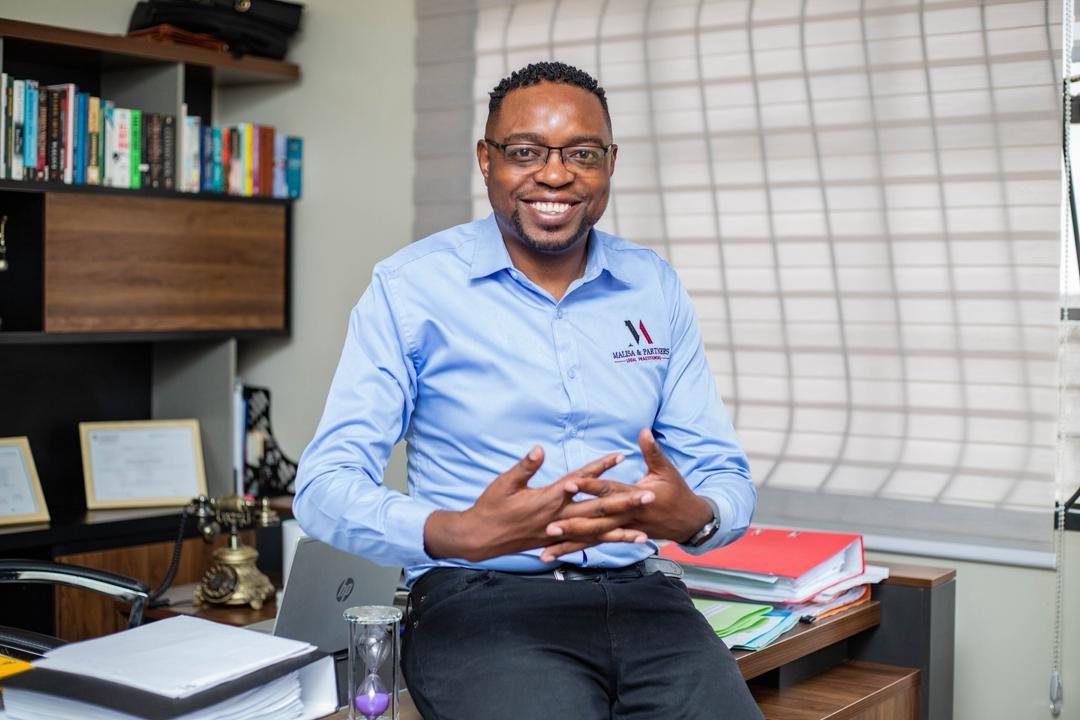
The author is a Constitutional Lawyer and Lecturer, he writes in his personal capacity as a civic education initiative.