






Let women drive Grow Zambia Agenda – Women for Change
By Ludia Ngwadzai
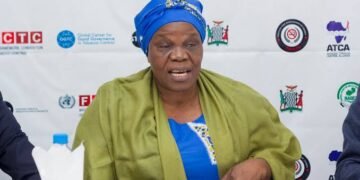
THE Women for Change has urged government to place women and girls at the centre of Zambia’s economic transformation agenda, warning that economic growth will only be meaningful if it is inclusive, equitable and gender-responsive.
In a statement seen by The Mast, Women for Change executive director Lumba Siyanga said the President Hakainde Hichilema’s recognition that citizens who voted differently were not enemies was an important message at a time when Zambia needed to strengthen social cohesion and rebuild trust.
She said the administration’s Grow Zambia Agenda should deliberately address the economic and social challenges affecting women, particularly those in rural and marginalised communities.
“Economic growth must be inclusive, equitable and deliberately gender-responsive,” Siyanga said.
“Women constitute a significant proportion of small-scale farmers, informal traders, entrepreneurs and caregivers. They are therefore not merely beneficiaries of economic development; they are economic actors whose contribution must be recognised, supported and invested in.”
Siyanga said while Women for Change welcomed the ambitious production targets outlined by Hichilema, the inaugural address did not make explicit commitments on several critical women’s issues.
She said these included women’s economic empowerment, access to land and finance, unpaid care work, gender-based violence, sexual and reproductive health and rights, as well as participation in political and economic decision-making at all levels.
“If Zambia is to achieve meaningful and sustainable growth, women and girls must be deliberately positioned at the centre of the development agenda,” Siyanga said.
She said government should establish clear and measurable gender targets within the Grow Zambia Agenda.
Siyanga called for equitable access to land, affordable finance, agricultural inputs, technology, markets, energy and climate-smart agricultural opportunities.
She urged government to recognise and invest in the care economy and address the disproportionate burden of unpaid care work carried by women and girls.
Rural women and girls should receive particular attention because economic growth should reach communities where poverty and inequality remained deeply entrenched.