






A look at petitions and justice delivery in Zambia
…One critical question should be answered: How many opposition presidential election petitions could have been filed if the court house doors were not closed on August 24th, 2026 and the court emails were functioning?
By Professor Munyonzwe Hamalengwa
ONE of the most important questions on the just-ended elections in Zambia that has not been asked is: How many opposition presidential election petitions could have been filed if the doors to the court houses were not closed on the deadline date of August 24, 2026 and if the electronic filing emails were functions?
It is important to deal with this question because of the volume albeit from a small vocal constituency both local and foreign based that the just ended elections were massively flawed. The key to unlocking the conundrum of the alleged massive election malpractices could be displayed in the portions that could have been filed on August 24, 2026.
In fact, given the unprecedented allegations about the irregularity of those elections, one would have expected the petitions to be filed days before the deadline, at least on a Friday August 21, 2026. Or the petitions could have been filed electronically during the weekend of August 22 and 23, 2026.
The facts of why it is crucially imperative to investigate and find out how many potions could have been filed up to and including August 24, 2026 encompass among others, the following:
during the year preceding the elections, a narrative was created that the forthcoming elections would be rigged.
The opposition had hugely prepared the electorate and the international community to accept the propagated tunnel vision that these elections would not be free and fair. The evidence of this evinced parallel universe is in the videos, postings, interviews, opposition newspapers, speeches and social media.
One would then have expected those peddling this alternative universe to capture the evidence for use in what would have been prepared petitions ready for filing up to the the deadline. During the actual election day the propagators of the alternative reality were expected to be vigilant in collecting and recording all the evidence of electoral malpractices for use in the petitions.
The evidence of electoral malpractices were so massive that the main opposition leader declared himself as having won the election even while the tabulation was going on. The evidence that the opposition had won even before the results were announced could have been put in the petition to show the fraudulent nature of the declared results.
There were so many reports of this malpractice after another all of which could have found themselves in the petitions ready for filing before or on the deadline.
A number of tragic events happened during the counting of the votes whose effect on the outcome of the elections could have been recounted in the petitions which should have been readied for filing. A house in Kabulonga alleged to have been harbouring a militia that was set on disrupting the electoral process was raided in which an opposition leader was killed under circumstances that are still not disclosed in a court of law.
A number of opposition leaders were arrested and are in custody charged with serious criminal offences of treason and sedition. Some leaders had fled into the United Nations offices to seek protection in an atmosphere where well researched petitions could have been drafted with a great deal of help by UN officials and many prominent lawyers who had access to them.
Many opposition leaders and civil society organisations were active monitoring the elections and gathering evidence of electoral malpractices including during the tabulation period which could have found their evidence in any petitions that could have been drafted for filing within the deadline period.
There were foreign originated election observer teams that had complied reports on the cogency of these elections whose evidence was available to everybody who desired to file a petition on the outcome of these elections. These elections even attracted the observations and commentaries of a few United States of America Senators , a former United States Ambassador to Zambia and a UN Rappateur ( not an employee of the UN).
There was so much evidence to choose to include in any complied petition that could have been filed to challenge the Presidential outcome. We are aware that there are so many petitions regarding the outcomes of elections pertaining to Members of Parliament. In this article, we are only concerned with the Presidential election petitions. How many could have been filed before the deadline and or on the deadline if the doors of the courthouses were not closed on August 24, 2026 and if the electronic filing emails were functioning?
Constitutional Law activist Linda Kasonde reportedly had indicated before the deadline that she was not going to file any election petition because the evidence she read from other stakeholders was that while there were some malpractices in the elections, those irregularities could not change the overall electoral outcome.
That in fact is the template precedent in many election petition decisions. Was there evidence beyond a balance of probabilities that had these irregularities not occurred that the result would be the same? The test is not on a balance of probabilities nor is it on the beyond a reasonable doubt scale. It is in between. Kasonde had reportedly instead resolved to use the evidence from the electoral data to argue for more robust electoral reforms post the election.
It is not clear whether the closure of the courts on the deadline date motivated Kasonde to change her resolve and attempt to file the ill-fated petition.
That I’ll fated petition developed many legs of its own but leaves unanswered the question that I have posed, that how many petitions from opposition leaders were ready for filing up to the date of the deadline. All presidential petitions in the known history of presidential petitions all over the world involved one or more of the presidential candidates challenging the outcome. And that history includes Zambia.
As of September 20, 2026, there is no evidence whatsoever that there was a petition or were petitions ready to be filed on the deadline date of August 24, 2026. And that the petition or petitions could have been filed if the courtroom doors were not closed and or the electronic filing emails were not disabled. Zero petition or petitions were intended to be filed at all despite the voluminous narrative that the elections were mired with potentially reversible irregularities.
The consequences of there being no petition or petitions ready for filing, are massive. The controlling seminal consequence is that despite any articulable irregularities, the outcome would have remained the same.
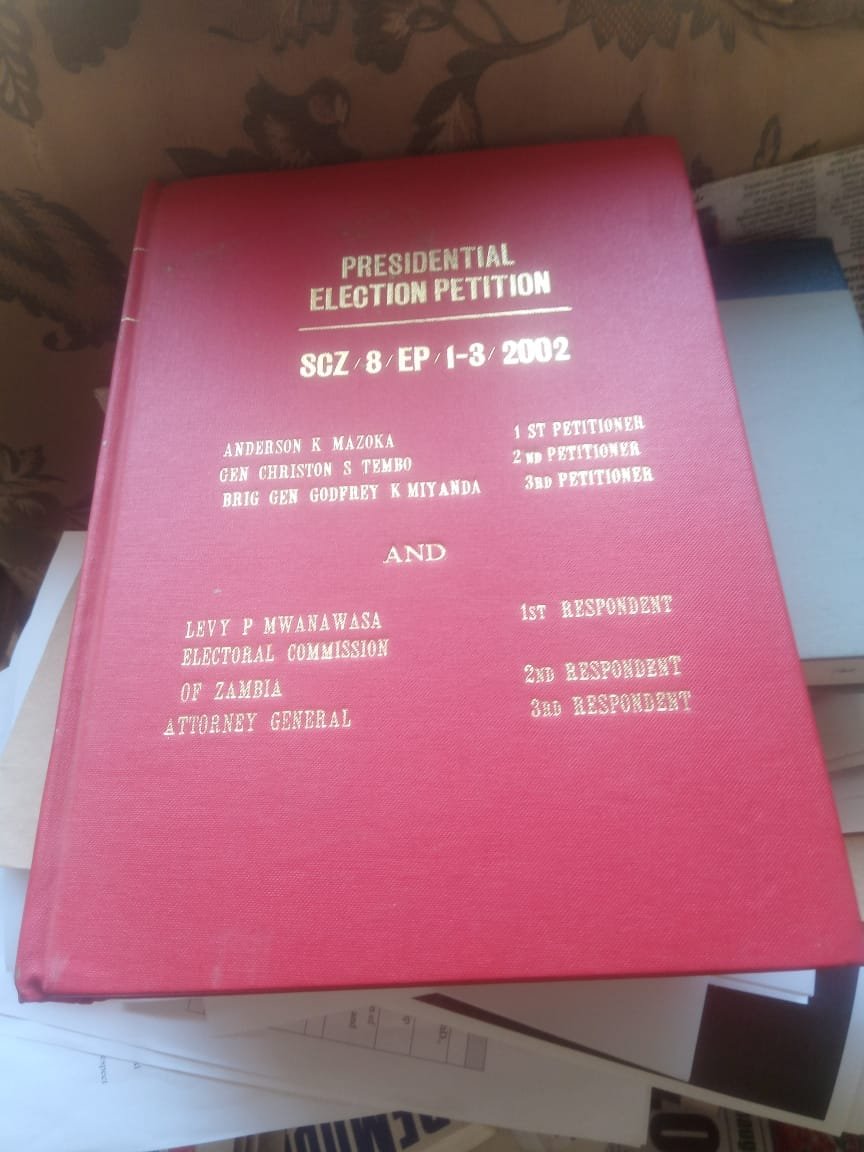
This is different from the Mazoka versus Mwanawasa decision of 2004 where the Supreme Court of Zambia ruled that despite the irregularities here and there, the outcome would have been the same, until Frederick Chiluba declared on the Shaka Ssali platform of Voice of Africa in Washington DC that the Chiluba government had rigged the election against Mazoka. That declaration against interest by Chiluba was admissible evidence in a court of law had it come in good time.
At least Mazoka had filed a petition. And that petition was litigated. This time around, no petition or petitions from an actual presidential candidate was or were ready for filing. If they were ready they could have been filed right up to the deadline or if the deadline was obstructed by the closure of the doors of the courts they could have been filed at the very first opportunity after the doors of the courts would have opened. Every lawyer worthy his or her salt knows very well that if a deadline is missed for any reason, including the inaccessibility to the courthouse, they would promptly attempt to file the same document upon the very first opportunity that presents itself with the necessary accompanying documents required seeking a remedy for the petition to be heard on its merits. In this case since it is the courthouse doors that were closed, the deadline was extended to the very next date when the courthouse doors opened. It does not matter whether the deadline is cast in stone or bronze. Justice calls for the extension of the deadline.
It is no answer to tell the litigant that they should have filed the petition before the deadline. The deadline is set in the constitution. It cannot be abridged. But it can be extended if it is the court itself that obstructs the deadline.
The consequence is that no ready petition was attempted to be filed when the courts opened after the as yet unexplained circumstances of the closure of the courts on August 24, 2026. The invocation of national security is too broad a blanket explanation or justification. Break it down to justifiable reasons in a free and democratic society.
Any justification that no petition or petitions were filed because the courtroom doors and electronic filing emails were closed on the deadline date but without any evidence that a petition or petitions from a presidential candidate or candidates, were ready for filing that day or soon afterwards, is much ado about nothing. All presidential candidates who could have filed petitions assessed that despite any irregularities, the outcome would have been the same. Unlike the unsatisfactory outcome of the the 2016 aborted presidential election petition whose reverberations continued up to December 10, 2024, the 2026 declaration is dead and buried and won’t raise its heard again. We are left with the monstrosity and weight and serious consequences of the treason and sedition charges arising out of the 2026 elections. The Judiciary was ready for the presidential elections petitions which never came. Are the prosecutors ready to tender evidence of treason and sedition before the judiciary? Is the Judiciary ready to adjudicate? The academy is ready to compile hypothetical questions like the one constituted of this article.
Prof Munyonzwe Hamalengwa is the Dean of Law at Zambian Open University.