




CLIMATE SMART AGRICULTURE
Dr. Oliver Kandela Bulaya, PhD
08/09/2026
2027 agriculture budget expectations: Zambia must invest where farmers produce
Adopt eco-friendly farming practices
Biodiversity & Environmental Protection is key to sustainable development. Stop deforestation and forest degradation
BEYOND FISP: Irrigation, extension, research and Climate Smart Agriculture must drive Zambia’s agricultural transformation. As Zambia prepares for the 2027 National Budget, the agriculture sector stands at a defining crossroads. The question is no longer whether agriculture matters to Zambia’s economy—the answer is obvious.
The real question is whether Government is prepared to invest sufficiently and strategically in the systems that will enable agriculture to become the engine of inclusive economic growth, employment, food security and rural transformation.
Our expectation is simple: the 2027 Agriculture Budget must be bigger, smarter and more focused on delivering services directly to farmers. For too long, agricultural financing has concentrated heavily on input distribution while critical productive infrastructure, extension services, research, irrigation and environmental management have received inadequate attention.
Zambia must now move beyond a model that largely supports farmers to plant and instead invest in a system that enables them to produce more, produce profitably and produce sustainably.
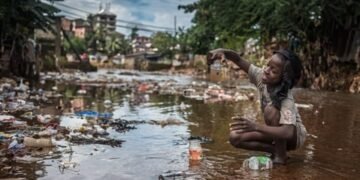
Climate variability has demonstrated the vulnerability of Zambia’s dependence on rain-fed agriculture. Erratic rainfall, prolonged dry spells and droughts are increasingly threatening household food security and farmer incomes. The 2027 Budget should therefore introduce targeted incentives to reduce the cost of sinking boreholes besides the establishing irrigation schemes.
Irrigation must not remain the preserve of large commercial farmers. Smallholder farmers should be supported to access affordable water infrastructure, enabling them to produce during the dry season, diversify into high-value crops, increase household incomes and supply markets throughout the year. If we want farmers to become commercially viable, we must first give them the means to produce consistently.
Government deserves commendation for attracting investment into domestic seed and fertiliser production. This is an important step towards building national agricultural self-sufficiency. However, local production has not yet translated into sufficiently affordable inputs for ordinary farmers.
The cost of seed, fertiliser, chemicals, mechanisation and transportation remains a major barrier to increased productivity. The 2027 Budget should therefore identify mechanisms for reducing the cost of agricultural inputs across the entire value chain.
The objective should not simply be to increase the number of farmers receiving subsidised inputs under FISP. The bigger ambition must be to create conditions in which farmers can eventually purchase quality inputs using income generated from their own production. FISP should be viewed as a transitional instrument—not the destination of Zambia’s agricultural development.
Rebuild the Extension System. No agricultural transformation can succeed without a strong extension system.
Government must provide adequate operational resources for Camp and Block Extension Officers, particularly transport, motorcycles and timely fuel allocations. District Agricultural Coordinators and Senior Agricultural Officers must similarly have reliable transport to supervise and support agricultural activities across their districts. The restructuring and expansion of agricultural camps must also be matched with the recruitment of sufficient numbers of qualified extension officers who are well equipped to operate effectively.
Farmers are confronting increasingly complex challenges—from climate change and declining soil fertility to pests, diseases, markets and new production technologies. They require more than occasional meetings. They need regular farm visits, demonstrations, technical advice, climate information and practical training.
It is difficult to expect an extension officer to effectively serve a rural community when the officer has no decent place to live. Many extension houses are in a deplorable condition, forcing officers to live in towns far away from the communities they are mandated to serve. If Government can provide accommodation for the police, teachers and health workers in rural areas, agricultural extension officers should receive the same attention.
The 2027 Budget should establish a dedicated programme for constructing modern extension houses, with Government working alongside the private sector and development partners. A farmer cannot have an effective extension service if the extension officer is physically absent from the farming community.
Agricultural research and development must also receive greater financial support. Zambia needs locally appropriate solutions to drought, declining soil fertility, water scarcity, pests, diseases and changing climatic conditions. Research institutions must therefore be adequately financed to develop and scale technologies that increase productivity while conserving natural resources.
The 2027 Budget should deliberately promote climate-smart and eco-friendly farming practices, biodiversity conservation, sustainable land management and protection of forests. The Ministry of Agriculture, Livestock and fisheries and Green Economy and Environment need attention and more budgetary allocation to effectively meet the demand of the Climate crisis and the sector.
The time to act is now. The 2027 Agriculture Budget presents an opportunity to fundamentally reposition agriculture as Zambia’s sleeping economic giant.
Let us invest not only in inputs, but also in water, people, knowledge, infrastructure, research, markets and the environment. Let us build an agricultural system in which farmers are not merely recipients of Government support but become productive entrepreneurs capable of generating sustainable incomes.
Our voice shall be heard. We live today to impact tomorrow. Stop deforestation and forest degradation. Act against climate change. Together, we can transform Zambia’s agriculture.
Arise Zambia Agriculture—A Sleeping Economic Giant Campaign
The author, Dr Oliver Kandela Bulaya, is an expert in Climate-Smart Agriculture, Climate Resilience, Organisational Leadership and Project Management. He is Projects & Communication Lead at the Conservation Farming Unit and Founding Executive Director of the Agriculture Climate Action Foundation. For feedback, email acafoundationzambia@gmail.com