





The army must defend the Republic,
not police its politics
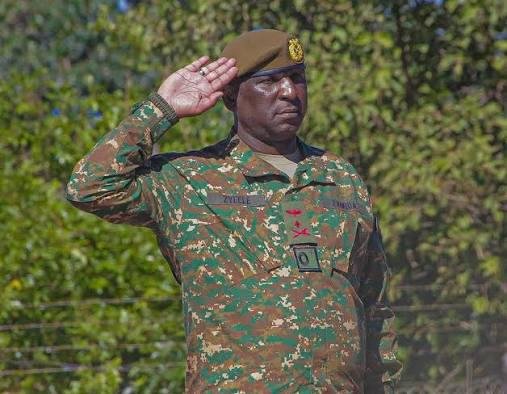
Lieutenant General Geoffrey Zyeele’s election remarks may have been intended as a warning against violence, but in a constitutional democracy words from an Army Commander carry institutional force. The country needs clarity: the police maintain law and order; the army defends the Republic and may support civilian authorities only in exceptional, lawful and transparent circumstances.
By
Professor Cephas Lumina
THE latest remarks attributed to Zambia Army Commander, Lieutenant General Geoffrey Choongo Zyeele — that the army will “ensure and enforce order” before, during and after the August 2026 elections — should worry every democrat, including those who support the government. The issue is not whether the country needs peaceful elections. It does. Nor is it whether political violence, hate speech and electoral misconduct should be tolerated. They should not. The issue is whether the army, through its commander, should publicly project itself as the institution that will police civilian political conduct.
The Constitution answers that question with unusual clarity. Article 1 makes the Constitution supreme and binding on all persons, State organs and State institutions. Article 190 requires the Defence Force and national security services to be professional, disciplined, competent and non-partisan. Article 191 makes them subordinate to civilian authority. Article 192 establishes the Defence Force and assigns it the duty to preserve and defend Zambia’s sovereignty and territorial integrity, foster harmony with society, and cooperate with State organs in times of public emergencies and national disasters. Article 193, by contrast, assigns the Zambia Police Service the duty to protect life and property, preserve peace, maintain law and order, ensure public security, prevent crime and uphold the Bill of Rights.
That distinction is not a constitutional nicety; it is a safeguard against the militarisation of civilian life and the architecture of civilian democracy. Soldiers are trained for national defence. Police are constitutionally responsible for civilian law enforcement. Elections are not a battlefield. They are the people’s mechanism for choosing leaders.
Has the police service failed?
This is the question government must answer honestly. If the Zambia Police Service has not failed in its Article 193 mandate, why is the Army Commander speaking as though the army will enforce order in the electoral arena? If the police have failed, when was that failure formally determined, by whom, and under what legal framework has the military been invited in?
Defence Permanent Secretary Maambo Hamaundu is correct only to this limited extent: the military may, in appropriate circumstances and under lawful authority, assist in maintaining order. Section 5 of the Defence Act states that the Defence Force is charged with the defence of Zambia and with such other duties as may from time to time be determined by the President. But that provision is not a blank cheque. It must be read subject to the Constitution, especially Articles 190, 191, 192 and 193.
Information Permanent Secretary, Thabo Kawana, has also argued that the Commander’s statement should be understood in its proper legal and institutional context, and that the army does not seek to supervise or manage elections. That clarification is welcome, but insufficient. The point is not merely whether the army intends to manage elections. The point is whether its commander should speak in a way that suggests military enforcement of civilian politics. Government was reported as saying the allegations were misleading and speculative, while confirming that the statement attributed to the Commander concerned order before, during and after elections.
A pattern, not an isolated remark
The latest remarks cannot be treated in isolation. Earlier this year, public concern arose after the Army Commander was reported to have used “exterminate” and “fumigate” language in relation to illegal miners. Defence Minister Ambrose Lufuma later clarified that the army was not engaged in indiscriminate action against miners, but was supporting police and regulatory authorities, and that the objective was not to physically eliminate individuals but to eradicate illegal mining activity. That clarification helped, but it also confirmed why language matters. In public life, words, especially when spoken by armed institutions, can frighten before a single soldier is deployed.
Then came the remarks after the Chingola incident involving alleged stone throwing at President Hakainde Hichilema. The Army Commander was reported as saying the army, as a strategic instrument of national power, would not stand by while people threw stones at the Commander-in-Chief, and that those involved would be apprehended and pursued. Nobody should defend violence against the President or any citizen. But suspects are not enemies. They are citizens subject to arrest, investigation, prosecution and trial under law. That is why the police, prosecutors and courts exist.
The Constitution protects life, liberty, security of the person and the protection of the law. It also protects due process and the presumption of innocence. Military rhetoric that appears to personalise law enforcement around the dignity of the Commander-in-Chief risks replacing the language of justice with the language of retaliation.
The CSOs were right to sound the alarm
The joint civil society statement signed by Advocates for Democratic Governance Foundation, ActionAid Zambia, Chapter One Foundation, LCK Freedom Foundation, Transparency International Zambia, NGOCC, PANOS Zambia and the Zambia Council for Social Development correctly warned against blurring the line between military and civilian law enforcement. The statement argued that the army’s honourable role is defence of the nation, not policing citizens, and called for the Army Commander to withdraw the remarks, for the President to clarify the army’s constitutional boundaries, for Home Affairs to reaffirm the police role, and for the Electoral Commission of Zambia to confirm that the army will not perform electoral law-enforcement functions.
There is a minor but important legal correction: the President’s status as Commander-in-Chief is found in Article 91(1), not Article 198, as the statement appears to suggest. Article 91 also requires the President to respect, uphold and safeguard the Constitution, promote democracy, protect rights and uphold the rule of law. The correction does not weaken the CSOs’ argument. It strengthens the need for precision on all sides.
The defenders are half-right — and dangerously casual
The Consortium of Civil Society Organisations for Good Governance and Constitutionalism, through Arthur Muyunda, reportedly argued that there is no law preventing the army from working alongside the police where such deployment is authorised and constitutional. In the abstract, that is correct. In substance, it misses the point.
The criticism is not that the army can never support the police. It is that such support must be exceptional, civilian-led, legally authorised, necessary, proportionate, time-bound, publicly explained and subject to oversight. It must complement, not replace, the police. It must never be announced in language that makes citizens feel that voting, campaigning or protesting peacefully may bring them face to face with soldiers.
This is why the Consortium’s defence is ill-informed. It treats legality as though it begins and ends with presidential assignment under the Defence Act. It does not. The Defence Act cannot override Article 193. It cannot dilute Article 45’s guarantee that elections must be free and fair, free from violence, intimidation and corruption, and administered independently, accountably, efficiently and transparently. And for a group already perceived by many as government-aligned because of its support for Bill 7, the burden was to offer sober constitutional analysis, not political cover.
International relations and security expert Lengwe Bwalya is also right that security institutions have a role in protecting peace. But describing legitimate concern as “manufactured panic” ignores Zambia’s history and Africa’s wider experience. Democracies do not collapse only through coups. They also erode when civilian spaces become militarised, when commanders speak more loudly than police commissioners, and when citizens begin to associate elections with force rather than freedom.
When may the army support internal security?
There are lawful circumstances in which military support may be justified. Article 192 allows the Defence Force to cooperate with State organs and State institutions in times of public emergencies and national disasters. Articles 30 and 31 provide for declarations of a public emergency or threatened emergency, but such declarations must be made by proclamation and approved by the National Assembly within seven days to remain in force; the Constitution also provides that the seven-day period does not run while Parliament is dissolved.
In practical terms, the army may support internal security where there is a genuine emergency, disaster or breakdown beyond police capacity; where the deployment is authorised by law; where the police remain the lead civilian law-enforcement agency; where the mission is limited; and where soldiers are bound by clear rules on necessity, proportionality and respect for rights. The legal threshold cannot be ordinary campaign disorder, vague political anxiety or the possibility that some people may misbehave.
No Parliament means more caution, not less
There is now a further complication: there is currently no sitting Parliament. Under Article 81(3), Parliament stands dissolved ninety days before the next general election. Article 81(8) then allows the President, where Parliament is dissolved, to continue performing executive functions until the president-elect assumes office. Article 81(10) also permits the President, after dissolution and before general elections, to recall the dissolved National Assembly due to a state of war, public emergency or threatened public emergency.
The absence of Parliament should not be treated as a licence for expansive executive or military action. On the contrary, it should produce greater caution. Where ordinary parliamentary oversight is absent, the public depends even more heavily on constitutional restraint, institutional clarity, judicial accountability, the Electoral Commission, civil society, the media, and the professionalism of the police and defence services.
This is crucial. If the situation is not serious enough to justify recalling the dissolved National Assembly or invoking the emergency provisions of the Constitution, then it is difficult to see how it is serious enough to justify military language suggesting that the army will “ensure and enforce order” in the electoral environment.
Contract Commanders and constitutional loyalty
There is also a deeper institutional issue: the increasing practice of appointing defence chiefs on contract. In 2024, State House said President Hichilema elected not to renew Lieutenant General Sitali Dennis Alibuzwi’s contract of appointment as Army Commander, and appointed Geoffrey Zyeele in his place. The legality of that appointment is not the point. The concern is the incentive structure.
A defence chief whose tenure depends on presidential renewal may gradually come to see loyalty to the appointing authority as professionally safer than loyalty to the constitutional order. Each incoming Commander-in-Chief may then feel free to appoint preferred commanders, turning national defence leadership into an extension of political transition.
That is unhealthy.
We should compare ourselves with systems that preserve civilian control but insist on transparency and oversight. South Africa’s Constitution requires security services to act in accordance with the Constitution and law, prohibits security services from furthering partisan interests, and requires the President to inform Parliament promptly and in appropriate detail when the defence force is employed, including in cooperation with the police. Kenya’s Constitution allows the Defence Forces to assist in emergencies and disasters, but deployment to restore peace in areas affected by unrest or instability requires National Assembly approval.
Zambia need not copy either model wholesale. But it should rethink renewable-contract command appointments. Fixed, non-renewable terms; transparent appointment criteria; parliamentary notification or ratification when Parliament exists; removal only for defined cause; and a stronger Defence Council process would better protect commanders from personal political dependence. Civilian control is essential, but civilian control must mean constitutional control, not personal presidential control.
The army must defend the Republic, not discipline voters
The President should publicly clarify that the army will not police the elections. The Inspector-General of Police should set out a rights-respecting election security plan grounded in Article 193. The Electoral Commission should confirm that no arrangement exists for the army to perform law-enforcement or order-maintenance functions in the electoral process, unless strictly authorised by law. Because Parliament is dissolved, any exceptional step must be accompanied by maximum public transparency, clear legal authority, defined limits and accountability.
The country does not need a timid army. It needs a constitutional army. It does not need weak policing. It needs professional policing. And it does not need citizens to fear election day. It needs voters to know that the ballot belongs to them, not to men and women with guns.