





Farewell to a guardian of heritage
… UNIP honours Inkosi Yama Nkhosi IV as a custodian of culture, tradition and national unity.
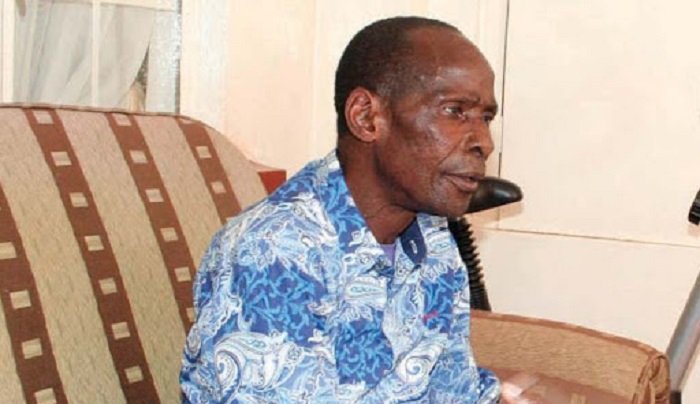
IT IS with profound sorrow, deep reverence, and a heart heavy with national grief that the United National Independence Party (UNIP), the party that gave birth to the Republic of Zambia , joins the Ngoni Royal Establishment, the people of Eastern Province, and all Zambians in mourning the passing of His Royal Highness Inkosi Yama Nkhosi IV, Senior Chief Mpezeni — a giant of culture, a guardian of heritage, and a pillar of our national identity.
To the Ngoni Royal Establishment at Ephendukeni Palace, to the bereaved royal family, to the chiefs, indunas, and subjects of the Ngoni Kingdom: UNIP stands with you in this hour of profound loss. Your sorrow is Zambia’s sorrow. Your King was not only yours — he belonged to the nation.
A kingdom that shaped a nation
The ngoni people are not merely one of Zambia’s many ethnic communities. They are a living testament to the unconquerable spirit of African civilisation. Descending from the great Jele clan of the Zulu nation, the Ngoni embarked on one of the most remarkable migrations in African history — crossing the Limpopo, traversing vast territories, crossing the mighty Zambezi River, and establishing a sovereign kingdom in what is now Eastern Zambia in the mid-19th century.
Under the founding leadership of Inkhosi Mpezeni I, the Ngoni Kingdom flourished — developing its own systems of governance, military organisation, cultural expression, and customary law. When the British South Africa Company sought to subjugate the Ngoni in 1898, Chief Mpezeni I took up arms in defense of his people — one of the most courageous acts of African resistance against colonial encroachment in the history of this region.
That spirit of dignity, courage, and cultural pride did not die with the colonial encounter. It was passed down — generation to generation — through every Inkosi Yama Nkhosi who followed, including His Royal Highness Inkosi Yama Nkhosi IV, Senior Chief Mpezeni, whom we mourn today.
UNIP and the Ngoni: An honest reckoning
The United National Independence Party carries a deep and historically complex connection to the Ngoni people and to Eastern Province — and it is precisely because we believe in the maturity of our democracy and the dignity of this moment that we choose to speak honestly.
Our relationship as a party with the people of Eastern Province has not always been without tension or complexity. History demands we acknowledge that honestly. The political contest between UNIP and other nationalist movements in Eastern Province was, at times, fierce and painful. The era of the one-party state brought impositions that many communities — including the Ngoni — experienced as a narrowing of their political voice and identity. We do not seek to erase those chapters. We carry them with us as reminders of how power, when unchecked, can wound even the people it claims to serve.
But it is precisely through that complex shared journey — of nation-building, of reconciliation, of learning — that we have come to understand the depth and irreplaceable value of what the Ngoni Royal Establishment represents to our national fabric. Our founding President, Dr Kenneth David Kaunda, understood that true independence required honoring the custodians of pre-colonial heritage. He recognised that the traditional leaders of Zambia — among them the Paramount Chiefs of the Ngoni — were not relics of the past. They were the living roots of our national identity. And when Dr Kaunda passed in June 2021, it was Paramount Chief Mpezeni himself who described KK as one who unified the country despite its ethnic diversity — a tribute that speaks to the enduring bond between these two great institutions, forged through all its complexity.
That bond endures. UNIP does not forget its history — the good, the difficult, and the lessons in between.
A legacy carved in cultural gold
His Royal Highness Inkosi Yama Nkhosi IV leaves behind a legacy that no obituary can fully contain. Under his stewardship, the Ngoni Kingdom preserved and celebrated its rich cultural heritage — its distinctive regalia, its warrior traditions, the thunderous rhythms of the Nc’wala Ceremony, the sacred protocols of royal succession, and the communal practices of mourning and remembrance that have connected the Ngoni people to their ancestors for nearly two centuries.
The Nc’wala First Fruits Ceremony — that extraordinary annual gathering in which the Ngoni people give thanks to their ancestors and celebrate the harvest — is recognised as one of Zambia’s greatest cultural treasures, attracting visitors from across Africa and the world. It is a monument to what His Royal Highness and his forebears built and protected. That monument stands, and it will endure.
His Royal Highness governed with a quiet authority that commanded both love and respect — not merely as a ceremonial figurehead, but as a living repository of Ngoni history, values, and communal wisdom. He was a King in the fullest sense of the word.
A call to honour
As we mourn, UNIP calls upon all Zambians — regardless of political affiliation, region, or ethnicity — to recognise that the passing of a Paramount Chief is not merely the loss of one man. It is a moment that calls the entire nation to reflect on who we are, where we came from, and what we owe to the custodians of our cultural foundations.
We call on the Government of the Republic of Zambia to ensure that the funeral proceedings are conducted with the full dignity, cultural authenticity, and royal honor that Inkosi Yama Nkhosi IV deserves — in accordance with Ngoni royal customs and protocols, as determined by the Ngoni Royal Establishment itself.
The culture of the Ngoni people is sovereign. It does not require the instruction or supervision of any government office to be valid, sacred, or properly observed.
We call on all Zambians to observe this period of mourning with reverence — to learn the history of the Ngoni people, to teach it to their children, and to carry forward the understanding that our diversity is not our weakness — it is the very architecture of our national greatness.
Final words
You walked among us as a bridge between our ancestors and our future. You carried the weight of a kingdom on your shoulders with grace, dignity, and unwavering pride. The Ngoni drums that have beaten since the days of Mpezeni I will beat again — not in mourning alone, but in celebration of a life that honored every rhythm they ever carried.
UNIP salutes you. Zambia salutes you. Africa salutes you.
We commend your soul to God to rest in eternal peace and rise in glory.
Bishop Musonda Trevor Selwyn Mwamba President, United National Independence Party (UNIP)