







Will Mwangala Zaloumis allow perception of bias to undermine electoral credibility?

By Dr Lawrence Mwelwa
THERE are moments in a democracy when scrutiny becomes more important than certainty. Zambia may be approaching such a moment, where institutional integrity and public confidence require careful, honest examination.
Last year, the Basic Education Teachers Union of Zambia (BETUZ) reaffirmed its non-partisan character. That assurance carried weight because teachers occupy a uniquely sensitive role in administering elections and shaping democratic outcomes.
Teachers are not only educators within classrooms; they are also frontline managers of electoral processes. They preside over polling stations, handle ballots, and ensure procedures are followed with consistency, accuracy, and credibility.
This dual responsibility creates a higher standard. It is not enough for teachers to act impartially; they must also be seen to be impartial by all citizens participating in the democratic process.
Recent developments from Livingstone have complicated that expectation. Reports indicate that teachers openly endorsed President Hakainde Hichilema, raising legitimate concerns about whether neutrality, both real and perceived, is being maintained.
This issue is not about denying teachers their rights as citizens. They are entitled to political views. However, the concern arises when those views intersect with their official electoral responsibilities.
Democracy depends not only on fairness but also on the perception of fairness. Once that perception begins to weaken, public trust erodes, and the legitimacy of electoral outcomes becomes increasingly fragile.
As political theorist Larry Diamond once observed, “Without trust, elections become hollow rituals.” The credibility of democratic systems rests as much on perception as it does on procedural correctness.
Historical examples reinforce this point. Kenya’s 2007 elections descended into crisis largely because of a breakdown in trust in electoral institutions, despite the existence of formal electoral procedures.
Similarly, Zimbabwe’s contested elections have often revolved around perceptions of institutional bias. The absence of visible neutrality has repeatedly undermined confidence in outcomes, regardless of legal frameworks in place.
Zambia has long been regarded as a beacon of peaceful democratic transitions in Africa. This reputation, however, is not permanent. It must be continuously protected through discipline, transparency, and visible neutrality.
Key actors in Zambia’s elections include teachers, head teachers, council secretaries, and town clerks. These individuals form the operational backbone of Election Day and carry significant responsibility for credibility.
By practice and expectation, these actors are required to remain impartial. Their conduct before, during, and after elections influences how citizens perceive the legitimacy of the entire democratic process.
Reports suggesting that some schools are now influenced by political structures raise deeper questions. In certain instances, head teachers are allegedly linked to partisan coordination at local levels.
If such patterns are accurate, they represent more than isolated incidents. They signal a gradual erosion of the boundary between public administration and political participation within sensitive democratic processes.
The Livingstone endorsement must therefore not be dismissed lightly. It represents a visible and amplified signal that neutrality may be under strain within institutions expected to uphold democratic integrity.
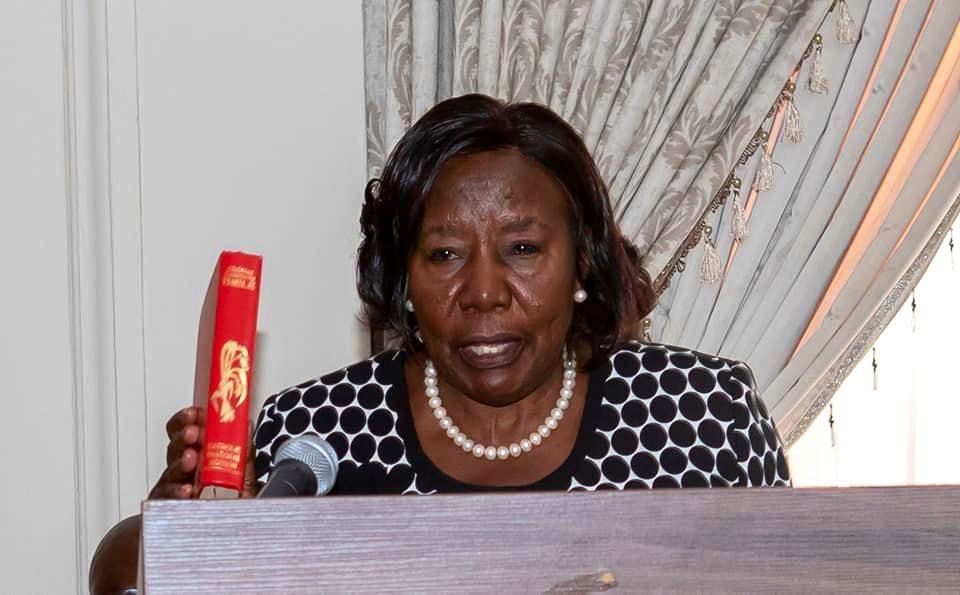
This brings the Electoral Commission of Zambia (ECZ) into sharp focus. Under the leadership of Chairperson Mwangala Zaloumis, the Commission carries the responsibility of safeguarding both procedural integrity and public confidence.
Can the Commission confidently assure citizens that individuals who openly declare political preferences will not preside over polling stations? Or will this issue be treated as inconsequential expression?
Will there be clear guidelines to separate political expression from electoral administration? Or will the system rely on assumptions that professionalism alone will override visible and declared biases?
Silence in such situations is not neutral. It shapes perception, invites speculation, and risks amplifying doubts that could otherwise be addressed through clear communication and decisive institutional action.
Equally concerning are remarks attributed to some officials suggesting that electoral outcomes may already be predictable. Such statements, whether formal or informal, undermine the credibility of democratic competition.
Elections, by their nature, are uncertain. Their outcomes must be determined by voters through a credible process, not anticipated or suggested by those associated with administering the system.
Even within political parties, democratic processes remain ongoing. Party conventions must determine candidates. If such processes appear predetermined, it raises broader concerns about internal democratic integrity.
When doubts within party structures begin to mirror concerns within national systems, the implications become wider. Public confidence in democracy itself begins to weaken, extending beyond individual institutions.
At its core, this issue is not about individuals or political parties. It is about whether Zambia can maintain a system where those entrusted with elections are trusted by all sides.
Trust is the invisible currency of democracy. Once it begins to decline, even well-managed processes struggle to command legitimacy among citizens with differing political perspectives and expectations.
When electoral administrators are perceived to have taken sides, the process itself becomes suspect. And when the process becomes suspect, outcomes—regardless of accuracy—face questions of legitimacy.
The role of institutions, therefore, is not merely technical. It is deeply symbolic. They must demonstrate neutrality not only through action but through visible distance from partisan engagement.
The Livingstone incident should be treated as an early warning. It provides an opportunity for institutions to reaffirm principles, clarify expectations, and restore confidence before doubts become entrenched.
If ignored, such signals risk evolving into systemic challenges. Over time, repeated incidents can normalise perceptions of bias, making it increasingly difficult to restore trust in electoral processes.
Zambia’s democratic strength has always rested on its ability to manage political competition peacefully and credibly. That strength must now be reinforced through deliberate and visible institutional action.
The responsibility lies not only with teachers or administrators, but with the systems that guide them. Clear rules, consistent enforcement, and transparent communication are essential to maintaining credibility.
Ultimately, democracy depends on belief—the belief that every vote counts, every process is fair, and every institution acts without bias. Without that belief, even the strongest systems begin to weaken.
The questions raised today are not accusations; they are safeguards. They are necessary inquiries aimed at preserving the integrity of a system that millions of Zambians depend on.
Because once public confidence is lost, it is difficult to rebuild. And a democracy that loses confidence does not fail immediately—it declines gradually, often unnoticed until the damage is profound.
Zambia stands at a point where vigilance is required. Not to alarm, but to protect. Not to accuse, but to ensure that the principles guiding elections remain strong and unquestioned.
In the end, democracy is not defined only by elections. It is defined by trust in those elections. And that trust must be earned, protected, and renewed with every electoral cycle.