






Why Zambians must fund their own democracy
For too long political power has been shaped by those who finance elections rather than those who vote. A citizen-funded democracy is essential for true accountability.
IN response to a recent video in which I called on Zambians to begin funding their own democracy, Chris observed on X (formerly Twitter) that I may have failed to “read the room temperature” of Zambian politics. Others have also stated that I am misguided in calling on Zambians to support the Movement for National Renewal (MNR) through financial contributions. The argument advanced is that ordinary citizens do not wish to fund political causes and instead expect to receive money from politics. It is further suggested that the political approach the MNR advocates may be too idealistic for a political environment where votes can be influenced by a bottle of beer or a piece of chitenge.
The reality described in those observations is not unfamiliar to me. Indeed, it is precisely the reason I made the difficult decision to leave legal practice and enter the political arena. I cannot therefore leave my professional career to simply replicate what has been tried and failed in the last three and a half decades. I did not take that step in order to continue the same politics that has characterised Zambia for the past thirty-five years. I took it because I believe our country must begin to pursue a different and more progressive path.
After nearly six decades of missed opportunities, fixing Zambia must begin with identifying the structural factors that have undermined our progress and confronting them honestly. One of those foundational problems is the way political power is financed.
I have had the privilege of observing Zambian politics for several decades. When one-party rule ended in 1990, many of us were filled with optimism. We believed that Zambia had opened a new chapter, one that would be characterised by democratic consolidation, accountable governance, and economic growth. Yet more than thirty-five years later, it is difficult to argue that this promise has been realised.
The transition of 1991 was one of the most important moments in Zambia’s political history. It demonstrated that power ultimately resides with the people and that citizens can peacefully change the direction of their country. However, while we succeeded in changing the system of government, we did not fundamentally address the way politics itself was to be financed. As a result, political competition gradually became dependent on private financiers rather than the collective will of citizens. The unfinished task of Zambia’s democratic transition is to ensure that the power of money does not replace the power of the people.
There are many factors that explain the difficulties our country faces. One of the most significant, however, lies in the manner in which political power is financed.
During the period of one-party rule, political funding was largely a non-issue. Political activities and elections were financed by the state and, in effect, by taxpayers. With the return of multiparty democracy in 1991, the landscape changed dramatically. Political competition increasingly came to depend on funding from foreign actors and powerful business interests.
When political power is financed by private interests, those interests inevitably expect influence in return. Governments then become responsive not primarily to citizens, but to those who financed their ascent to power. Public policy is shaped less by national priorities and more by the expectations of political financiers.
At the grassroots level, this dynamic has produced a transactional culture in which voters are offered small inducements, a bottle of beer, a piece of chitenge, or some cash, in exchange for political support. Once that transaction occurs, both parties consider the exchange complete. The voter has been paid, and the politician believes the vote has been secured.
This practice may appear ordinary because it has become widespread. Yet its consequences for democracy are profound. When votes are effectively purchased, the true owners of political power are not citizens but those who financed the election campaign.
It would make little sense for me to leave a professional career and enter politics merely to perpetuate this same system. Logic dictates that if Zambia is to move forward, we must change the direction of our political practices. Citizens themselves must become the primary financiers of their democracy so that they retain the authority to influence the policies that government pursues.
It is also dangerous to assume that the majority of Zambians are opposed to funding their own democracy. During my travels across the country, I have had numerous opportunities to share this message with ordinary citizens. In many of these interactions, people readily recognise the logic behind the idea that a democracy funded by its citizens is more likely to remain accountable to them.
The experience of the Movement for National Renewal (MNR) provides practical evidence of this. When we set ourselves the test that the movement would not transition into a political party until we had gathered one million signatures from citizens across the country, many people expressed similar doubts. Some argued that it was unrealistic and that ordinary Zambians would never mobilise themselves in such numbers without financial inducement. Yet, relying solely on volunteers and the goodwill of citizens, we were able to achieve that goal. That experience reinforced our faith in the Zambian people and demonstrated that when citizens believe in a cause, they are capable of organising themselves to support it.
If citizens could voluntarily mobilise one million signatures to build a political movement, it is difficult to argue that those same citizens are incapable of contributing to sustain the democracy they seek to build.
Since launching the initiative encouraging citizens to fund their own democracy, we have also begun receiving voluntary contributions from individuals who believe in this vision. These contributions may not yet be large, but they represent something far more important, the beginning of a new culture of civic responsibility in our politics.
For my part, I cannot engage in vote-buying for two fundamental reasons.
First, as a lawyer I have taken an oath to defend and protect the Constitution. Any form of vote buying undermines the constitutional principles upon which democratic governance rests.
Second, a vote is sacred. It has no monetary value. It is a symbol of citizenship and the right of every Zambian to participate in shaping the direction of our country.
It was in recognition of the unique role that political parties play in democratic governance that Article 60 of the Constitution as amended in 2016, elevated political parties from informal associations or “clubs” into constitutional institutions. The Constitution further requires Parliament to enact legislation regulating political parties, including the establishment of a Political Parties’ Fund, transparency in party accounts, disclosure of the sources of political funding, and limits on campaign expenditure.
These provisions recognise that political financing must be transparent, regulated, and ultimately accountable to citizens. However, regrettably, neither the Patriotic Front government, which initiated the constitutional amendment, nor the current government has taken steps to enact the Political Parties Act. The proposed legislation has remained on the shelf as a Bill since 2017. The reason is not difficult to discern: compliance with the Constitution would require political parties to disclose the true sources of their funding.
As a lawyer, I do not have the luxury of ignoring the Constitution. Even though the legislation contemplated under Article 60 has not yet been enacted, I remain bound to give effect to the spirit and intent of the Constitution.
It is also important to recognise that much of the money used in election campaigns is distributed in cash. This practice exposes those involved to potential allegations of financial impropriety, including money laundering. As a legal practitioner, these are risks I cannot ignore.
For that reason, even if I personally possessed vast financial resources, I would not finance my own political campaign. Our movement has instead adopted a principled approach: a monthly contribution limit of ZMW 20,000 per person. Like every other member of the Movement for National Renewal (MNR), I have paid this amount into the party account.
Zambia will not solve its challenges overnight. But meaningful change begins when we confront the structural weaknesses in our political system. If citizens finance their own democracy, they retain ownership of it. Governments will then be compelled to serve those who elected them rather than those who funded them.
Ultimately, democracy is not sustained by elections alone, but by the willingness of citizens to invest in the system that protects their voice.
Democracy must belong to the people.
Political power must be accountable to the people.
And that accountability can only begin when Zambians fund their own democracy.
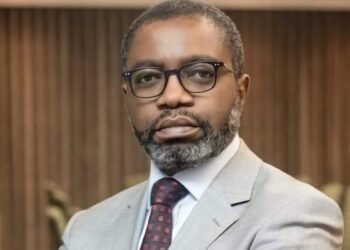
John Sangwa, SC, is a member of the Movement for National Renewal (MNR).