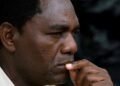








Nakacinda before the courts charged for speaking the truth
By Thandiwe Ketiš Ngoma
HONOURABLE Raphael Mangani Nakacinda was once again before the Lusaka Magistrates’ Court this week, answering to a charge rooted in a video he released at the height of Zambia’s aflatoxin scare in 2024.
Let me remind you how it all began. Back in the middle of 2024, the country woke up to a disturbing veterinary and public health crisis. Over 400 domestic dogs reportedly died in suspicious circumstances. The issue was first reported by Diamond TV, and panic began to ripple through the nation.
On 21 August 2024, Nakacinda stepped forward. In a widely circulated broadcast, he alleged that mealie-meal contaminated with aflatoxins was finding its way into circulation. He accused the government of negligence at best, and at worst, presiding over a system that was poisoning its own citizens.
Aflatoxins are toxic compounds produced by certain fungi that contaminate maize and other crops. They are linked to liver failure, immune suppression, and long-term cancer risks in both animals and human beings. This was a real health catastrophe on the hands of the State.
And shortly after Honourable Nakacinda’s public alarm, senior government officials, including Ministry of Information Permanent Secretary Thabo Kawana, as well as Minister of Health Elijah Muchima, confirmed elevated levels of aflatoxins in certain batches of mealie-meal and stock feed. Public recalls were announced. Thousands of contaminated bags were destroyed, and the Zambia National Broadcasting Corporation (ZNBC) ran the news item at prime time.
In other words, the danger was real. But instead of this becoming a moment of national accountability and reform in food safety oversight, the focus shifted to the man who raised the alarm. Nakacinda was arrested and charged under Section 60 of the Penal Code for Seditious Practices, a relic from 1931. The argument from the prosecution is that by publicly accusing the government during a period of drought and food insecurity, he sought to bring the government into hatred or contempt and to raise disaffection.
During the court session this week, the court heard from the Digital forensics officers who extracted and preserved the video in which Nakachinda spoke as evidence of sedition. Observers across the legal and civic space insist that this is a mere abuse of the courts. The justice system should be left to dispense justice instead of being used to settle political scores.
Pause and reflect. When a citizen warns that contaminated food is circulating and laboratory results later confirm contamination, and government officials also confirm this on national television, what exactly is the crime? Is it the contamination, or the warning?
Observers see this not as an isolated prosecution but as part of a pattern. Nakacinda is currently serving an 18-month jail sentence for defamation of the President, under a provision that has since been repealed. He has faced multiple arrests in relation to political speech. Others in the opposition have faced similar brushes with sedition related charges.
The deeper constitutional question lingers in the background. In 2014, the High Court struck down the offence of publication of false news as unconstitutional because it offended freedom of expression. Legal scholars now quietly debate whether the continued reliance on a colonial-era sedition provision serves as a workaround to that earlier constitutional protection.
We must be careful here. Governments have a duty to maintain order. False alarms can cause panic. Reckless speech can inflame tensions. That is true.
But accountability cuts both ways. If there was contamination, if recalls were made, if products were destroyed, then the matter cannot be reduced to mere political agitation. It becomes a question of oversight, of regulation, of competence, of transparency.
A democracy matures when it can withstand scrutiny without resorting to handcuffs. What is before the court now is not merely a video clip. It is the tension between state authority and civic warning. Between power and speech. Between a government that insists on looking good even when things are bad, and an opposition that insists on treating the political, health, and economic sickness in the nation.
History has a long memory. As far as this matter is concerned, we know that Nakacinda was speaking for all the people who eat nshima in Zambia — including the judges, the prosecutor, the police officers, the citizens of this country, and even their dogs. Yet the system is using this opportunity to silence a voice that speaks for them.