



The state of education: A “glass half full/half empty” scenario
To improve access and reduce inequality, Zambia has implemented free education from primary to secondary school. This is a commendable and revolutionary strategy.
However, it has run short of interrelated, severe systemic limitations, such as overcrowding in classrooms and a severe teacher shortage. This has led to a series of problems that risk the policy’s sustainability and quality.
The education system in our nation is currently under tremendous strain and undergoing an ambitious transformation, marked by increased access but ongoing quality issues, infrastructure deficiencies, and budgetary limitations.
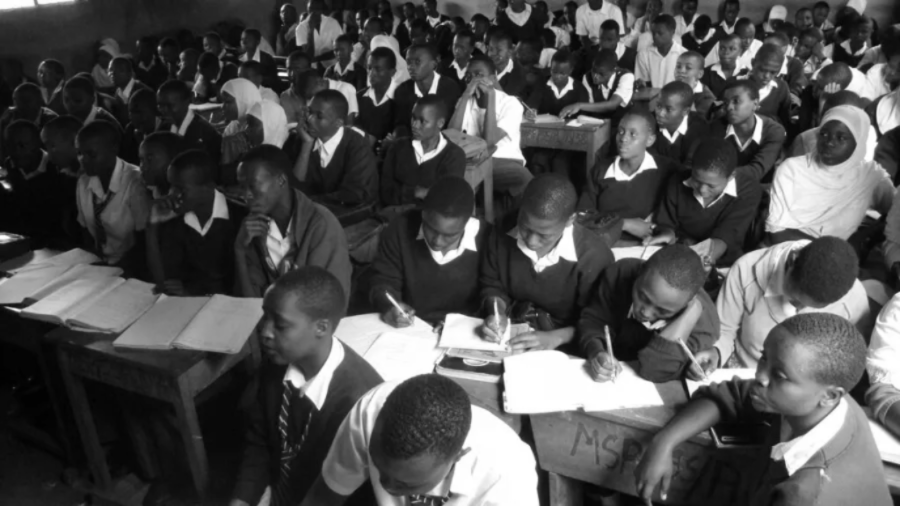
In strict observation, there have been both positive developments and progress as well as persistent and severe challenges. Since fees were eliminated, enrollment has increased sharply, resulting in a flood of pupils. Nowadays, classrooms designed to accommodate 40–50 pupils sometimes accommodate 80–120 or more.
The increase in enrollment exceeds the capacity for teacher deployment and recruitment. In some extreme cases, ratios exceed 150:1. The pupil-qualified teacher ratio (PQTR) has declined sharply. Some teachers are overworked, and many are newly hired and may not have the required expertise. This has led to Impossible Classroom Management, meaning interactive, learner-centered methods (group work, individual attention) have become impossible. Teaching in this case reverts to chalk-and-talk lecturing to the crowd, and marking assignments and exams for hundreds of pupils is unsustainable, delaying crucial feedback for learning.
This compromises learning environments due to overcrowding, resulting in noise, poor ventilation, and physical discomfort, all of which inhibit concentration and contribute to teacher burnout and demotivation. Once excessive workloads and stressful conditions creep in, a sense of ineffectiveness leads to low morale, high absenteeism, and attrition.
It becomes challenging for lesson planning or collaboration with colleagues. Even the most dedicated teachers struggle to make a meaningful impact, undermining professional satisfaction.
Many learners sit outside, on windows, or on the floor. The key areas that are overstretched include water points, desks, classrooms, and restrooms. With a pupil-to-book ratio as high as 10:1, textbooks and teaching materials are severely insufficient, requiring sharing and restricting homework.
Despite universal access, children with impairments, those in need of remedial assistance, or those from low-income families suffer the most because they get lost in the crowd and may widen the learning gaps.
What Brought Us Here?
The free education program led to a significant increase in the budget and funding allocation. Still, funding remains inadequate for the massive infrastructure expansion and teacher recruitment needed. Another reason is the slow processes in teacher recruitment, deployment, and the procurement of materials, worsening the situation.
Most of these shortages are acute in rural and peri-urban areas, exacerbating geographic inequalities. The crisis is the result of decades of under-investment in education infrastructure and teacher-training colleges, now exposed by the policy’s success in boosting access.
The Free Education Policy is caught up in a classic quantity-quality dilemma. The success in achieving access (Sustainable Development Goal 4.1) has severely strained the ability to deliver quality education (SDG 4.1.1 & 4.1.2). The strategy risks producing a generation of learners who attend school but learn very little if there are no swift, substantial, and continuous investments in teachers and classrooms.
The policy itself is not the problem; rather, it is the speed and scope of the system’s response to its successes. To overcome such obstacles, we need creative fiscal and political commitments, and a consistent focus on the classroom as the unit of change.
History of free education
The Free Education Policy in Zambia did not start with the UPND Government. It is deeply intertwined with the country’s political evolution, economic fortunes, and social aspirations. It is a set of phases with multiple justifications and outcomes rather than a single policy.
The Kaunda (UNIP) era
After independence, President Kenneth Kaunda and UNIP adopted “Zambian Humanism” as a state philosophy, emphasising collective welfare and equity. While not explicitly “free,” education was heavily subsidised by the state. The government invested massively in building schools, especially in rural areas, and training teachers.
Primary education was treated as a public good and a right. Fees were minimal or non-existent for many. This move led to a dramatic expansion of access and literacy. However, it was sustained by the booming copper revenues. When the economy began to falter in the mid-1970s, the financial burden grew unsustainable.
With the collapse of copper prices, oil shocks, and structural adjustment programs (SAPs) imposed by the IMF/World Bank in the 1980s/90s, this led to drastic cuts in public spending.
To mitigate deficits, the government officially introduced “user fees” or “cost-sharing” in the late 1980s/early 1990s. For school operations, desks, and textbooks, our parents had to pay levies. This was a clear retreat from the post-independence welfare agenda, and as a result of inadequate finance, education quality declined. This era left a lasting mark on the nation’s conscience, producing a “lost generation” with restricted access and entrenched disparities.
The Chiluba (MMD) Era
During the Movement for Multi-Party Democracy (MMD), the Fredrick Chiluba government was influenced by global Millennium Development Goals (MDGs) and domestic pressure, and sought to reverse the decline. So, in 2002, during President Levy Mwanawasa’s government, free basic education was reintroduced for Grades 1-7. This meant abolishing tuition fees and Parent-Teacher Association (PTA) levies. The government provided a small per-learner grant to schools.
This once again saw primary school enrollment surge dramatically, helping us achieve near-universal primary enrollment and gender parity on paper. However, the policy was chronically underfunded. Grants were frequently insufficient or delayed, resulting in overcrowded classrooms, a shortage of teachers and supplies, and a deterioration in quality, problems that persist today.
The Sata (PF) era
The Patriotic Front (PF), under Michael Chilufya Sata and later Edgar Chagwa Lungu, came to power with a pro-poor ideology, and education was a key campaign issue.
Initially, the PF focused on building more infrastructure (schools, universities). In a significant election-year move in January 2021, President Edgar Lungu declared free secondary education (Grades 8-12). This was implemented hastily just months before the 2021 general elections.
The strategy added to an already overwhelmed system, causing a massive, unplanned increase in enrollment. It exposed and exacerbated institutional weaknesses, including extremely crowded classrooms, a teacher shortage, and outdated facilities. Opponents perceived it as an unfunded campaign promise that put access above sustainability and quality.
The Hichilema (UPND) era
The UPND government chose to continue the free education policy from Grade 1 to 12, arguing it was a right. However, they have framed it with a focus on “quality and equity” and better planning.
They are attempting a more systematic response: increasing the education budget, accelerating teacher recruitment (though still inadequate), using increased Constituency Development Fund (CDF) for school infrastructure, and partnering with donors for support.
However, the fundamental challenge of balancing mass access, quality, and financial sustainability remains. The defining crises are learning deprivation (more than 90% of children cannot read effectively by the age of ten) and overcrowding.
The story of free education in Zambia is ultimately a roller coaster: lofty ideals colliding with harsh economic realities, and the ongoing struggle to fulfill a social contract written at the dawn of independence.
The policy has cycled between expansion driven by ideologies and retrenchment driven by economic crisis. The initial success was funded by copper wealth, and every subsequent attempt has struggled with fiscal constraints, showing the policy’s vulnerability to economic cycles.
As we can see from the trajectory, pushes for free education have successfully boosted access but have consistently failed to plan for concurrent investments in quality (teachers, classrooms, materials), leading to a perpetual crisis of learning outcomes.
But Politics being what they are, free education has become a non-negotiable campaign promise since the 1990s. Political parties have no choice but to promise it despite financial constraints, since any attempt to eliminate it is politically poisonous.
Established at independence, the objective of education as a free public benefit remains a crucial national aspiration that all administrations are judged by.
The post-2026 elections, whichever government is in place, will be crucial in assessing the country’s ability to turn increased access into genuine learning for all, a key requirement for its demographic dividend and economic development.
Author:
Jack Kampole
MA / International Relations & Cultural Diplomacy
Hochschule Furtwangen University
PhD Scholar – International Relations
Email: jackkampole@gmail.com