






Report sextortion culprits, Saboi urges women
By Ludia Ngwadzai
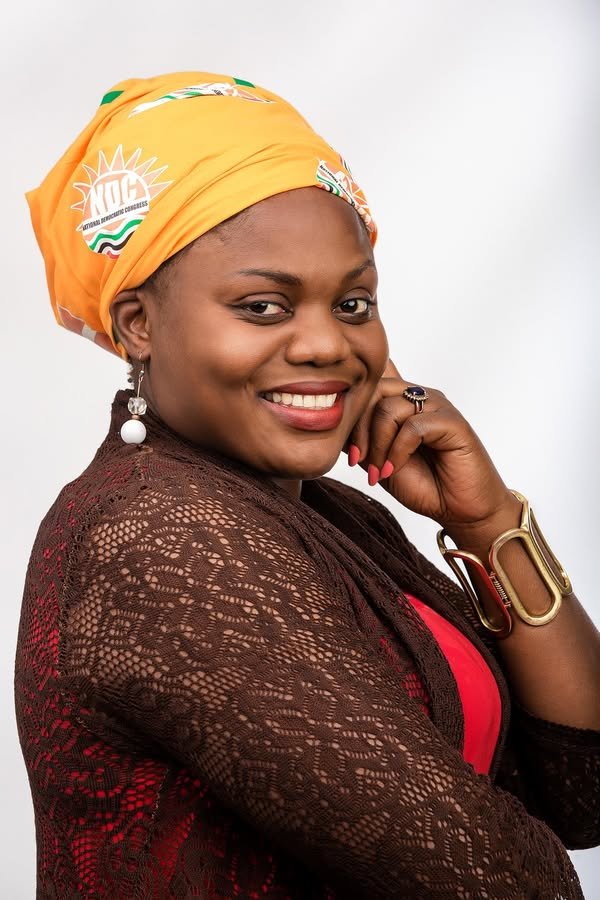
SABOI Imboela, president of the National Democratic Congress (NDC), has urged women who face sextortion in politics to report culprits to the police and women’s movement.
And Imboela says women were scared to speak out on sextortion in politics because they fear being expelled from parties.
In an interview with The Mast, Imboela condemned the rampant sextortion in Zambian politics, colleges, workplaces and universities.
She said sextortion compromised the quality of leadership people elect in government.
“It’s so sad to note that Zambia has high levels of sextortion. Zambia has very high levels of sextortion in almost all fields, be it schools, colleges, universities,” Imboela said.
She said women in politics were not spared, urging them to reject and report any form of sextortion to the police or any women’s movement.
“Women in politics have not been left out of sextortion. Sadly, the levels of sextortion are very, very high in politics. There must be good reporting mechanisms for women to report and be supported,” Imboela said.
Most women in politics were against reporting such cases because they did not want their political parties to be exposed and embarrassed.
“The reason why women don’t report sextortion cases is that when they report, they are looked at as if they are reporting against their party as a whole and not just that perpetrator of the crime,” Imboela said.
She urged political parties to protect women in politics ahead of the August 13 elections by denouncing sextortion.
“Political parties need to have proper sexual harassment or sextortion policies to protect women because we know that the power of political parties mostly lies in the hands of men. For example, when women want to get adoptions, they must go through certain committees and the people manning those committees begin to ask for sexual favors,” Imboela said.
She expressed gratitude that the women’s movement had come up to expose people involved in sextortion.
“The good thing is that we have been having meetings with the NGOCC from last year every month and we came up with a sextortion committee. We have hotlines for women who are sexually harassed to report and be supported. Women need to know that there is help out there. Like any other issues of sex in nature, it’s embarrassing. Women fear reporting because they are ashamed of what transpired, and that they may face victimisation from other members of political parties,” Imboela said.
She said sextortion reduces the quality of candidates, as those willing to compromise themselves get adopted for elections as leaders, councilors, mayors and members of Parliament.
“No wonder we should fight sextortion with all we have. It compromises leadership. We are talking with the Women’s Lobby Group, where we said we would form a generic sexual harassment policy, which a good number of political parties that I have been working with can now implement in their political parties,” Imboela said.
Meanwhile, Imboela says the Non-Governmental Coordinating Committee (NGOCC) has established a sextortion committee.
“It’s not only women who suffer sextortion; women are the biggest victims, yes, but men too face sextortion and need to report. What we have done now through the NGOCC, we have also partnered with the NGO Code Lifeline, which has a number those women can call or visit Lifeline, which is the one that visits law enforcement agencies, and we engage these law enforcement agencies on our committees,” Imboela said.