







VIEWS FROM ROME
PF in freefall: Many camps, one crisis
THE unfolding events in the Patriotic Front (PF) no longer come as a surprise to those who understand the party’s internal culture and historical trajectory. What we are witnessing was predictable.
The leadership contest was always likely to fragment into factions, with each side positioning itself as the authentic custodian of late former president Edgar Chagwa Lungu’s political legacy. That script has now fully emerged.
Predictably, the succession struggle has produced three distinct centres of power. Each faction is working persistently to project proximity to Lungu as its principal source of acceptability. In the absence of a clear, uncontested succession framework, symbolic association has become the currency of authority.
The argument is simple, whoever was closest to Lungu is best placed to inherit the mantle of leadership. Yet closeness, whether real or perceived, does not automatically translate into structural control or electoral capability.
Of late, the country has observed sustained drama. Brian Mundubile has effectively branched off to pursue his own presidential bid, operating outside what is widely regarded as the PF Given Lubinda-led mainstream.
The Makebi Zulu camp has also been active, articulating its vision for the party while asserting its claim as the rightful successor bloc. In the meantime, Lubinda has maintained that he was left to act as party president by Lungu, and therefore holds the institutional authority to steer the party and call the shots. All three sides are relentless and unapologetic in advancing their respective agendas.
However, what stands out is the forcefulness of the Mundubile faction. It appears to have adopted an aggressive strategy aimed at commandeering PF structures, much to the alarm of the Lubinda-aligned camp. The approach is confrontational and expansionist, suggesting an attempt to reconfigure and takeover PF structures altogether.
Mundubile’s faction is relentless in pursuing other political formations like Binwell Mpundu’s Ichabaice. They are desperate to grow the numbers regardless of the methods applied. The signs indicate a group operating with desperation and little regard for preserving internal cohesion.
But this method is not new within PF’s political history. It mirrors the post-Sata transition period, when Edgar Lungu consolidated power after Michael Chilufya Sata’s death. That transition was characterised by intense internal contestation, mobilisation of loyal cadres, and the forceful assertion of dominance over rival claimants.
Those familiar with that episode will recognise parallels in the current maneuvers of the Mundubile group. Indeed, it is whispered that some architects of Lungu’s earlier consolidation like Davies Mwila are now central to Mundubile’s strategy, operating on the assumption that tactics which once succeeded can be replicated.
The problem, however, is that the political environment has fundamentally changed.
First, the PF brand itself faces structural uncertainty, including serious questions about whether it will even feature meaningfully on the ballot in the forthcoming election cycle. That reality alone significantly changes the strategic calculus.
Second, there is no incumbency advantage. When Lungu ascended, PF was in government and retained state power, and the machinery of government, which provided leverage. That advantage is absent today.
Third, the sympathy wave that followed Sata’s death, the emotional factor that lifted Lungu cannot be automatically substituted.
Some may argue that a Lungu sympathy factor will fill that void. But such reasoning overlooks a crucial complication, which is fragmentation. The reality is, a divided PF cannot effectively consolidate sympathy into a single electoral vehicle.
Three competing factions, each invoking Lungu’s name, inevitably dilute the emotional and political capital attached to it. Rather than unify the support base, the fight risks confusing and demoralising it.
Clearly, voters, including loyalists, may struggle to discern which faction represents continuity and which represents opportunism. In such a scenario, the fragmentation does not strengthen the PF, it actually weakens it.
Confusion is rarely an asset in electoral politics. It often pushes undecided or fatigued voters toward alternative political formations perceived as more stable or coherent, for instance, in our case, it’s formations like the Socialist Party (SP) and Citizen’s First (CF).
What is unfolding in PF resembles institutional self-cannibalisation. Energy that should be directed outward toward rebuilding credibility and mounting a competitive national campaign is instead being consumed by internal power struggles.
Without a credible unification strategy, the party’s negotiating power, ballot strategy, and grassroots mobilisation capacity will be severely compromised. This is what the leadership should recognize.
Further, with Mundubile charting an independent path, and other factions entrenched in their respective positions, the pressing question is no longer who was closest to Lungu. The real question is structural. How will any of these factions secure a workable path onto the ballot and present a coherent alternative to the electorate?
Unless this chaos is managed with urgency and discipline, PF risks learning, perhaps too late, that internal dominance does not automatically translate into national relevance.
In fact, the ongoing turmoil within PF may inadvertently boost and strengthen other opposition parties like SP and CF which exhibit structural discipline, organisational coherence, and political stability. In politics, disunity in one camp often renders into opportunity for another. Where one formation appears fragmented and preoccupied with internal battles, competitors who project order and clarity naturally become more attractive to both voters and political actors.
If the current chaos persists, the SP and CF stand to gain significantly since the fatigued voters will view them as alternatives. Political operatives, grassroots mobilisers, and local structures that once operated under the PF banner may begin, if they haven’t started already, to reassess their strategic positioning.
Politics is ultimately pragmatic. Structures on the ground like ward coordinators, constituency organisers, and regional influencers, tend to migrate toward platforms that offer certainty, viability, and a clear electoral pathway. A party that appears unable to resolve its internal leadership question risks losing not just elite figures, but the very machinery that sustains electoral competitiveness.
Moreover, prolonged instability within PF has created fertile ground for the emergence and strengthening of a completely new opposition formations in SP and CF. Truth is, political vacuums rarely remain unoccupied. When an established party becomes paralysed by factionalism, space opens up for new actors to present themselves as the disciplined, forward-looking alternative.
In this case, the SP and CF are likely to attract disgruntled PF members, undecided voters, and even elements from other opposition groups seeking a more structured vehicle.
What is increasingly clear is the SP and CF stand to benefit from PF’s internal disarray. The fragmentation does not simply weaken PF in isolation; it redistributes political capital across the broader opposition landscape.
If PF structures begin to curve or more accurately, drift, into other parties like SP and CF, the cumulative effect could be a significant reconfiguration of opposition politics. This is where the PF is headed. It’s time both its leadership and membership started looking at SP and CF as viable alternatives or electoral partners to defeat the UPND.
In that scenario, the central contest may no longer revolve around which PF faction prevails internally, but rather which external formation will they fairly and successfully integrate into and direct its energy, networks, and support base in the right direction.
At this stage, the PF must consider alliances with SP or CF, and channel its remaining organisational assets into a single goal of defeating the UPND, thereby totally reshaping the opposition architecture ahead of the elections.
Political history demonstrates that unity consolidates power, while fragmentation redistributes it.
In conclusion, PF’s internal crisis is no longer a temporary leadership dispute, it has evolved into a structural threat to the party’s political survival. What began as a succession contest has morphed into fragmentation that weakens institutional authority, confuses the support base, and erodes strategic clarity.
Unless the party urgently resolves to team up with either SP or CF, it risks accelerating its own relegation and obliteration. The longer the factions entrench themselves, the greater the likelihood that PF structures, influence, and political capital will disperse into confusion. In politics, vacuums do not remain empty, they are swiftly occupied by those prepared and organised enough to fill them.
Ultimately, the decisive question is not who inherits the PF mantle, but whether there will be enough of the mantle left to inherit. If the present trajectory continues unchecked, PF may find itself absorbed in an irretrievable decline.
It is time for the leadership of the PF, the SP, and the CF to sit together, rise above personal ambition, and rally behind a single presidential candidate. These three formations are the only opposition parties with real presence on the ground, measurable influence, and functional political structures across the country.
The rest, much as they may enjoy media attention, remain largely talking shops and political gamblers, loud in rhetoric but absent in organisation, numbers, and electoral reach. They neither command serious grassroots loyalty nor possess the machinery required to mount a credible national challenge.
The moment calls for maturity, sacrifice, and strategic clarity. If the PF, the SP, and the CF are truly committed to offering Zambians a viable alternative, then the path is clear. Let them consolidate, compromise, and present one formidable candidate backed by strong, nationwide structures. That way, victory is certain.
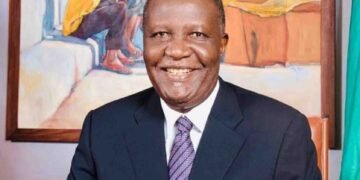
Author: Albrecht Chinyama is a Zambian based in Rome, Italy.