






M’membe slams inflation propaganda
By Thandizo Banda
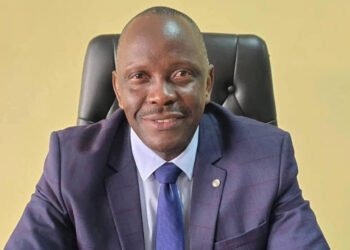
CLAIMS of inflation reduction by the United Party for National Development (UPND) government and its “friendly” economists do not make sense because many suffering ordinary citizens cannot feel the benefits, People’s Pact Movement (PPM) 2026 presidential candidate Dr Fred M’membe has said.
Dr M’membe, who is Socialist Party (SP) president, said there was a glaring gap between official claims and personal economic reality.
He said to expect commodity prices to fall under the current regime was either economic illiteracy or deliberate deception.
“The repeated official declarations that inflation is ‘falling’ have become a ritual of self-congratulation by economic managers who appear increasingly detached from the lived reality of ordinary Zambians,” Dr M’membe said.
It was an insult to Zambians for government to celebrate numbers on graphs while households drown under escalating cost of living, stressing that inflation without relief was toothless.
“The assertion by Dr Denny Kalyalya, the Governor of the Bank of Zambia, that inflation is on a sustained downward path and will settle within six to eight per cent may be comforting in boardrooms and policy presentations. It is meaningless in markets, townships, farms and workplaces where the cost of survival continues to rise at an alarming pace,” said Dr M’membe said.
“Inflation is not an abstract statistic. It is not a curve on a chart. It is the daily struggle to afford mealie meal, transport, rent, electricity, school requirements and healthcare. When electricity tariffs rise dramatically, when fuel prices remain elevated, and when basic commodities continue to climb, the claim that inflation is ‘falling’ becomes a cruel joke,” Dr M’membe said.
He argued that government cannot, in the same breath, proclaim declining inflation and justify massive increases in electricity tariffs.
Dr M’membe said power was a foundational input across the entire economy because it affected manufacturing, mining, agriculture, transport, services and households.
“When electricity becomes unaffordable, production costs rise, jobs are threatened and prices inevitable increase. The contradiction is glaring. If inflation were genuinely easing in a way that matters, Zambians would feel it. Prices would stabilise. Purchasing power would recover. Businesses would breathe. Households would plan with confidence. None of this is happening. Instead, people are cutting meals, defaulting on rent, accumulating debt, and abandoning small enterprises crushed by overheads they can no longer meet,” he said.
Dr M’membe said while officials pointed to the appreciation of the kwacha, improved maize supply and lower fuel prices as evidence of progress, the explanations collapsed under the weight of scrutiny.
“Currency movements have been volatile and largely disconnected from retail pricing behaviour. Any marginal relief from maize supply has been offset by rising costs in energy, transport and inputs. Fuel prices, even when adjusted downward, remain far above levels that would meaningfully lower the cost of living,” Dr M’membe said.
“The same disconnect is evident in revenue and employment statistics. Zambia Revenue Authority boasts of exceeding its revenue targets. Unemployment figures are said to be improving. Yet the informal sector is expanding not because opportunity is growing but because desperation is,” he said.
Dr M’membe said majority employees worked in precarious, low-income activities that barely sustained survival.
“This is not dignified employment. It is economic coping. Revenue growth driven by taxes on consumption, electricity, fuel and imports is not a sign of prosperity. It is a sign of a state extracting more from a population already stretched to breaking point,” he said.
“When government revenue rises while living standards fall, something is fundamentally wrong with policy priorities. True inflation control is not about congratulatory press statements. It is about structural affordability.” It was about wages that kept pace with costs, energy pricing that supported production rather than strangling it.
“It is about transport, housing and food policies that reduce household burdens. It is about an economy organised around people, not spreadsheets,” Dr M’membe said.
He said an economy can not be managed by selective statistics and public relations optimism.
“Zambians do not eat percentages. They eat food whose prices they know intimately. They do not power their homes with projections. They pay electricity bills they can not escape. They do not commute on macroeconomic narratives,” he said.