



ZAMBIA–US ‘DEAL’ RAISES ALARM
…America to access copper, other minerals in exchange for aid
By George Zulu
ZAMBIA is on the verge of signing a secretive memorandum of understanding (MoU) with the United States (US) government, which will give the Donald Trump administration unfettered access to the country’s mineral resources.
Sources monitoring the events surrounding the high-stakes negotiations say the Zambia-US Health Deal had been concluded and the main beneficiary would be the US government through access to natural resources such as copper, gold, cobalt and other minerals of high value.
The source close to the talks described the deal, which is expected to be signed tomorrow, as blackmail and a total betrayal of the people of Zambia.
“This MoU, the Zambia-US Health Deal stinks of corruption and blackmail. This deal addresses the interests of the US government and not Zambia’s. This deal puts the US interests first, and we should not sign it,” the source said.
The source said it was deeply concerning that both the Zambian and US governments were carrying out secret negotiations that would have direct life-and-death consequences for the people of Zambia without any form of accountability and transparency.
“There is no assurance that the outcome of the MoU will represent the best for our people, who experience immense preventable suffering and preventable death because of these health crises,” the source said.
Some of the yet-to-be unveiled details of the MoU are that the US government and private companies should have access to the wealth and natural resources of Zambia in exchange for health aid.
“These negotiations over access by the US government and US companies to our vast and rich mineral wealth are being used as leverage to shape the terms of the negotiations over Zambia’s health MoU,” the source said.
Other details suggest that the MoU is a blackmail on Zambia, as it threatens the health of Zambians with TB, HIV and other health conditions.
“Quite simply, we are being blackmailed with threats to our health, unless Zambia hands over our copper, rare earth and other mineral wealth to the US administration. This is scandalous; we should not accept these terms in that MoU,” the source said.
The source said instead Zambians should demand that the deadly funding cuts be reversed.
“For instance, in November, President Hakainde Hichilema announced that Zambia would receive US$1.5 billion over a period of five years. But that is not the case. In the MoU, Zambia will only receive US$1.02 billion. Furthermore, Baseline FY25 total USG external financing to Zambia’s health sector, from the State Department’s official budget document, is US$439,903,000. However, the five-year MoU total for US external financing, according to Appendix 1, Table 1, on page 35, is only US$1,012,415,735. The total difference in USG funding over five years against the baseline annual amount is therefore US$1.187 billion, or an average reduction of US$237 million per year. Zambia’s envelope should be restored to a minimum of US$1.5 billion,” the source said.
The source said it was troubling that government agreed to the US government’s demands for access to data and pathogen sharing.
“From the MoU, the United States and Zambia shall negotiate a specimen sharing arrangement that includes the elements set out in Appendix 4 for the purpose of sharing physical specimens and related data, including genetic sequence data of detected pathogens with epidemic potential for either country within five days of detection,” the source said.
“Both participants intend this specimen sharing arrangement and agreed upon benefits to continue for 25 years, and the US government and the GRZ agree to negotiate a data sharing arrangement that includes the elements set out in Appendix 5 for the purpose of exchanging data on the long-term performance of this MoU and for accountability to the United States Congress for appropriated funds. Both participants expect this data-sharing arrangement to continue for 10 years.”
The source said the one-sided extraction of highly valuable data for extremely long periods was ill-intended, as was the case in Uganda and Kenya.
The source said the timeframe attached by the US government to the signing of the MoU was also suspicious as it did not give Zambia enough time to consult.
“The MoU states on 6.2 Conditionality ‘This MoU will be immediately terminated, and all funding associated with it immediately discontinued, if the participants fail to reach agreement by April 1, 2026, to the Bilateral Compact proposed by the US Secretary of State to President Hichilema on November 17, 2025 or if, at any point, the parties terminate negotiations or implementation of such a Bilateral Compact due to non-compliance’,” the source said.
The details of the Bilateral Compact are being kept a secret as they include data about all of Zambia’s foreign aid, as well as mining interests.
“Zambians should not accept these resources being held hostage in the name of US business interests, and support for life-saving health service delivery being used to blackmail us and exploit our wealth,” the source said.
According to Mining Focus (December 15, 2025) the US government has delayed the signing of the US$1.5 billion health aid agreement with Zambia, making the release of funds contingent on new terms for collaboration in the mining sector and broader business reforms.
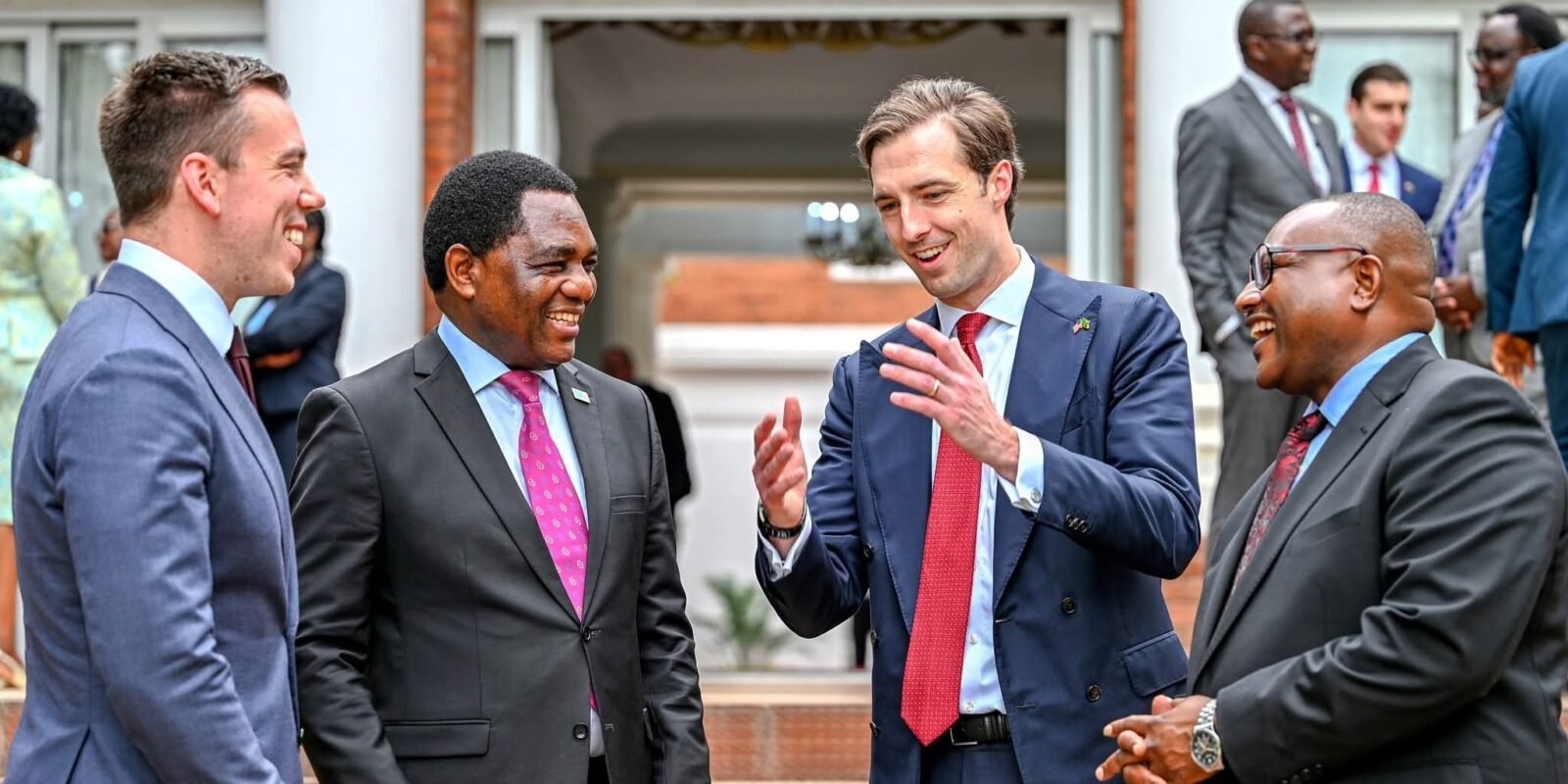
“The MoU, originally scheduled to be signed on December 11, 2025, was abruptly postponed surprising officials and other stakeholders who were waiting for the announcements. Instead, Caleb Orr, a senior department for state responsible for energy and business development, travelled to Lusaka to meet President Hakainde Hichilema,” it reports.
Mining Focus reported after the meeting with Hichilema, Orr announced that going forward, economic cooperation would take precedence and serve as a prerequisite for any health funding package.
Minister of Justice Princess Kasune referred all queries to Attorney General Mulilo Kabesha whose phone was constantly busy.