



Mark Simuuwe, UPND wake up and smell the coffee
By Moses Haalwiindi
CHAWAMA did not merely elect a Member of Parliament. It exposed, with uncomfortable clarity, where Zambian politics now stand and where they must go.
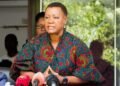
It is therefore deeply disappointing to see senior UPND figures respond to this moment with triumphal language that borders on arrogance and political amnesia. Mark Sumuuwe’s message – “Congratulations Hon. Bright Nundwe for winning the Chawama Constituency by-election. Congratulations FDD!” – mirrors the tone of the President’s official statement: polite, polished, and strategically dismissive of the real political forces that shaped the result.
The President’s message congratulates FDD and its candidate, applauds UPND, thanks institutions, and speaks broadly about democracy and peace. On the surface, it reads statesmanlike. Politically, it sends a troubling signal. It downplays the Tonse Alliance dynamic and continues to promote the illusion that the Patriotic Front (PF) has been politically neutralised.
Truth be told, without PF’s influence, mobilisation, and organisational muscle, the Chawama seat would not have been won by FDD. That is not an insult to FDD. It is political reality. Bright Nundwe is a PF product. His candidature under the FDD ticket was a tactical response to legal obstruction, not a conversion of political identity. Voters understood this clearly. Pretending otherwise insults their intelligence.
PF did not contest this by-election on its own ticket not because it is dead, but because the courts have been turned into political playgrounds. Any PF candidate would have been dragged into endless litigation. So PF adapted, as living political movements always do, and supported a candidate under a different banner. Zambians understood exactly what that meant. They were not voting for a logo. They were voting for a political movement that refuses to disappear simply because documents are contested at the Registrar of Societies.
A political party is not ink on paper. It is people in wards, polling districts, compounds, markets, and churches. In Chawama, PF did not merely survive. It asserted continued relevance.
For UPND figures to posture as if this result represents the burial of PF is therefore reckless. The ruling party has actively meddled in PF internal affairs and extended that interference across the broader opposition space. To now suggest political extinction is to tell Zambians, straight to their faces, that PF is finished. That narrative may comfort party strategists, but it does not align with reality on the ground.
Even the repeated celebration of “peaceful campaigns” demands honesty. The relative calm in Chawama was not the product of superior leadership or a transformed political culture. It was restraint. History shows that during the PF era, UPND often positioned itself as the aggressor, initiating confrontations it could not sustain, frequently to paint PF as violent. From exaggerated gassing claims to amplified narratives of chaos, mudslinging has long been part of the strategy. That approach did not work in Chawama. The response now appears to be denial rather than reflection.
UPND also poured money into this election. Votes were openly courted with gifts. That is a reality of Zambian politics. People accepted those gifts. But when the ballot was cast, arithmetic delivered its verdict. Money was not enough. Those bought were not enough. Even against a fragmented opposition, UPND still lost just to borrow from my opposition colleague Brian Matambo’s write up.
That fact alone should trouble anyone who believes political dominance can be purchased.
The deeper story is unavoidable. FDD, backed by PF, secured 8,085 votes. CF obtained 1,534. Independent candidates collectively garnered 894. NCP recorded 319. EPPP had 239. LM secured 100. NDC posted 93. Combined, opposition candidates amassed 11,264 votes. UPND managed 6,542.
This means a fragmented, uncoordinated opposition defeated UPND by 4,722 votes. In percentage terms, over sixty-two percent of participating voters voted against the ruling party. Had the opposition rallied behind a single candidate, this would not have been competitive. It would have been a landslide. Fragmentation did not cost the opposition Chawama. It saved UPND from embarrassment.
Yet even in defeat, another warning emerges. Out of 93,124 registered voters, only 18,096 turned out. More than eighty percent stayed away. That is not apathy. It is political withdrawal. A silent referendum on the circumstances under which this by-election was forced upon the country.
The seat was declared vacant while the Lungu family was still in mourning and while litigation initiated by the Zambian government in South Africa remained unresolved. Many citizens did not view this by-election as a democratic necessity. They saw it as political pursuit. Staying away became protest.
When the ballot box feels partisan, democracy loses participation.
Chawama has therefore delivered more than a result. It has delivered a warning. UPND has lost a seat. More dangerously, it has lost moral ground in an urban constituency. FDD has won a seat, but within a protest environment that speaks more about resistance than celebration.
Now comes the 2026 reality check. UPND enters the election cycle with Southern Province effectively secured a head start of over one million votes. That is not speculation. It is arithmetic. The opposition begins already trailing.
Such a deficit is not overcome with pride. Not with parallel egos. Not with multiple candidates. It is overcome with unity.
Chawama has shown the formula. A fragmented opposition still defeated UPND. A united opposition would have crushed it.
This is why the roles played by Given Lubinda, Miles Sampa, Lawrence Sichalwe, and Chishimba Kambwili matter. They did not lead with slogans. They led with organisation. They went into the ground. They understood the voter. And they delivered a result. Once again, PF demonstrated it still possesses political heavyweights who know how to win elections, not debates.
Their leadership was not symbolic. It was effective. That reality must now force a national conversation – not about who is bigger, not about entitlement, but about what Zambia needs.
Chawama has made one thing painfully clear: UPND cannot defeat the opposition. Only the opposition can defeat itself. If it continues to do so, 2026 will belong to UPND by default not because UPND is invincible, but because its opponents refused to unite.
But if the lesson of Chawama is taken seriously, if egos are subordinated to strategy and ambition disciplined by purpose, then 2026 is not a dream. It is achievable.
Chawama has written the opening paragraph.
The rest is now up to us.
Moses Hakulipa Haalwiindi is a member of the UPND
Source: Lusaka Times