






New data shows fiscal space remains tight – NGO
By Ludia Ngwadzai
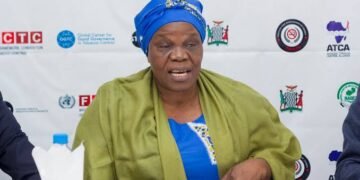
THE Civil Society for Poverty Reduction (CSPR) says Zambia’s K16.1 billion August treasury release reflects responsible short-term fiscal management but also highlights the continued constraints facing the country’s fiscal space.
CSPR executive director Isabel Mukelabai says while government’s efforts to meet essential obligations were commendable, the composition of the treasury release showed a significant portion of available resources continued to be absorbed by debt servicing and arrears.
“From the Civil Society for Poverty Reduction’s standpoint, the August treasury release reflects both responsible short-term fiscal management and continuing limitations in Zambia’s fiscal space,” Mukelabai said.
She said nearly half of the K16.1 billion released went towards debt and arrears while only K1.7 billion, representing about 10.5 per cent was allocated to transfers, subsidies and social benefits.
Mukelabai said notable beneficiaries under the latter category included the Social Cash Transfer programme, which provides income support to vulnerable households, as well as grant-aided institutions such as hospitals.
“It is our position that timely debt payments and arrears clearance can strengthen fiscal credibility, improve liquidity for suppliers and protect financial-system stability,” she said.
“Continued funding for social protection, health institutions and infrastructure is also important for protecting vulnerable households and sustaining service delivery,” Mukelabai said.
She warned the allocation should not be interpreted as evidence that Zambia now had enough fiscal room to finance development priorities.
Mukelabai said debt service and arrears accounted for approximately 47 per cent of the August allocation, while capital expenditure received only about 5.6 per cent.
“This means that a substantial share of available cash is being committed to past and mandatory obligations, leaving less room for new investments and frontline services,” she said.
Mukelabai said the trend was consistent with CSPR’s mid-year analysis, which found that K34.9 billion out of the K49.1 billion released in June – about 71 percent – went towards debt service and arrears.
She said a high headline treasury release therefore did not necessarily translate into a similar increase in resources reaching schools, health facilities, local authorities and development projects.
She noted that Zambia’s original fiscal framework had come under pressure, with first-quarter tax revenue, non-tax revenue and grants falling below projections while expenditure exceeded its quarterly target.
The K26.3 billion supplementary budget, equivalent to 10.4 per cent of the original budget, included K7.5 billion in additional domestic financing.
Mukelabai said this could raise indicative domestic borrowing from K21.62 billion to K29.12 billion, or approximately 3.15 per cent of the original GDP base, above the 2.3 per cent target.
She also pointed to the Bank of Zambia’s projected fiscal deficit of 3.5 per cent of GDP, compared with the original target of 2.1 per cent, as further evidence of pressure on the fiscal position.
She urged stakeholders to view the August treasury release within the broader context of Zambia’s fiscal challenges.
Mukelabai said CSPR would not describe the allocation as irresponsible merely because a large share went towards debt obligations.
“Meeting debt-service commitments and clearing verified arrears are necessary elements of responsible fiscal management,” she said.
“Nevertheless, the allocation should not be interpreted as evidence that Zambia has adequate fiscal space. Rather, it demonstrates that the government is managing immediate obligations within a constrained fiscal environment.”