



Weaponising words: Misinformation, disinformation, and Zambia’s 2026 general elections
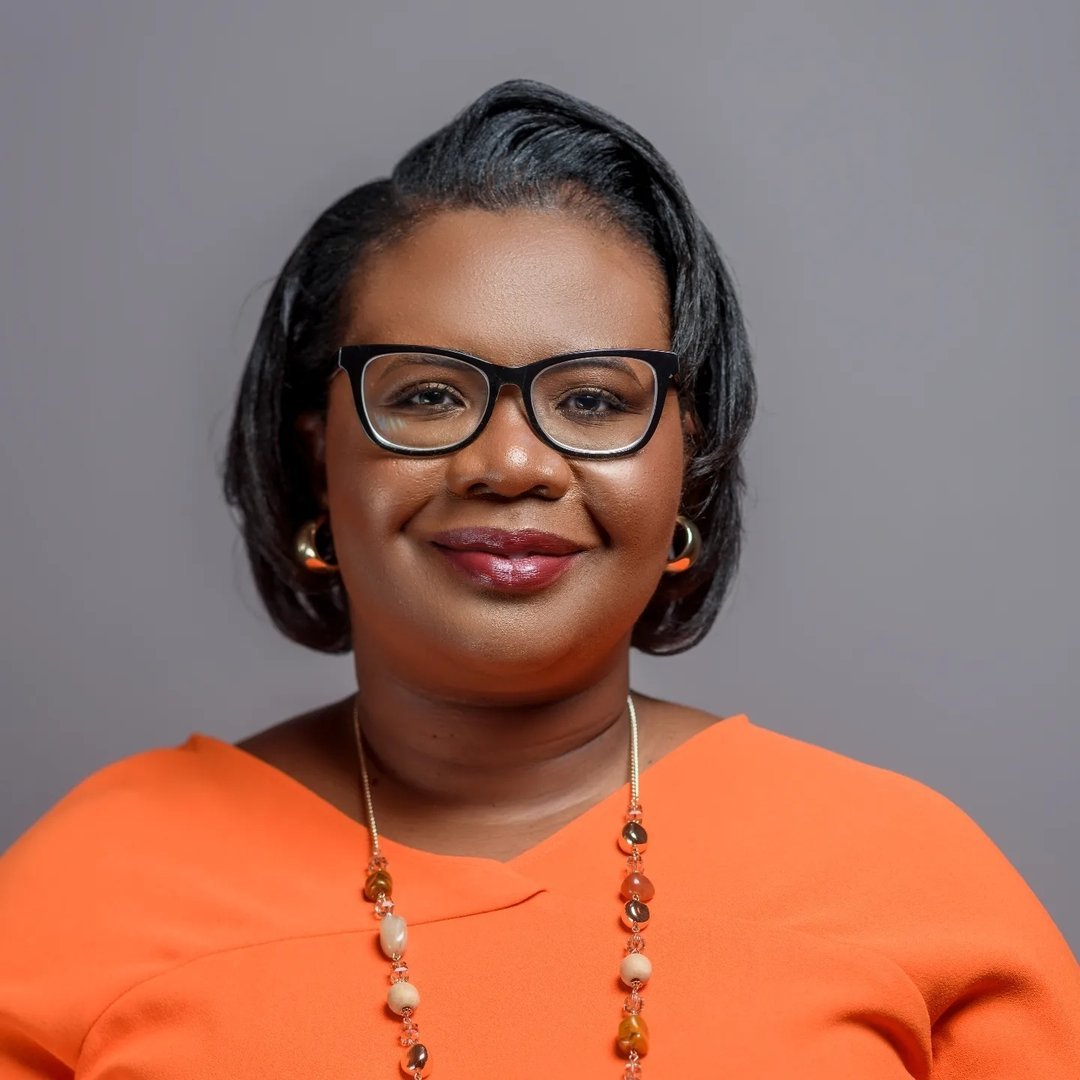
By Linda Kasonde
I WANT to begin not with statistics or policy recommendations, but with a poet. When Maya Angelou reflected on the power of language, she returned to the opening of the book of Genesis — “In the beginning was the Word, and the Word was with God, and the Word was God” — to make a point that has stayed with me since I first encountered it: that words are not merely symbolic. They are things. Tangible. Consequential. They can heal or destroy, illuminate or obscure, unite or fracture. I wrote about this a decade ago in the context of a MISA Zambia event that I attended on protecting social media from political interference ahead of the 2016 general elections. I return to it now because the insight has not aged — it has only deepened in urgency.
In 2016, I warned that social media could be “a place where hateful, bigoted, deceitful and ignorant people hide behind anonymity” and that the run-up to that year’s elections had made it “impossible to discern fact from fiction and truth from deceit,” sowing seeds of division that threatened the very “One Zambia, One Nation” narrative. Ten years on, we are weeks from another general election on August 13, 2026, and the word — fabricated, weaponised, made viral before breakfast — has never been more powerful, nor more dangerous.
The scale and nature of the challenge
Let me be direct: misinformation and disinformation constitute one of the most serious and underappreciated threats to Zambia’s democratic process this election season. The challenge is acute, multidimensional, and accelerating.
The most visible vector is social media. Social media platforms are increasingly being used to spread misinformation and hate speech aimed at discrediting political opponents. We are already seeing this play out in real time. iVerify Zambia, the country’s leading electoral fact-checking platform, has in recent weeks alone debunked fabricated videos purporting to show opposition leaders making inflammatory statements about election rigging, false claims about permit requirements for church events involving political figures, and fictitious IBA directives targeting specific broadcasters. These are not isolated incidents. They reflect a systematic pattern of manufactured content designed to inflame, mislead, and suppress.
The UN Special Rapporteur on Freedom of Expression, Irene Khan, following her official visit to Zambia in January 2025, observed that Zambia faces a high level of online information manipulation by political actors, describing herself as disturbed by the rising tide of disinformation and smear campaigns — generated by politicians across the political divide — seeking to manipulate public opinion, heighten tensions, and create confusion. This is important to note: disinformation is a cross-cutting pathology in our political culture, not the exclusive sin of any one party.
Several structural factors amplify the problem in Zambia’s specific context. The rapid expansion of mobile internet access and WhatsApp group networks means that false content circulates widely in communities before any verification is possible. Transparency gaps, whether around the voter register, results management, candidate selection, or campaign financing, create information vacuums that breed suspicion, rumour, and social tension. Where institutions are not proactively communicating, disinformation rushes in to fill the silence. This is especially troubling in the wake of the enactment of the Access to Information Act No. 24 of 2023. Low levels of digital and media literacy among significant portions of the electorate mean that fabricated content finds fertile ground, particularly in peri-urban and rural communities where formal media penetration remains limited.
What has changed since 2016 is scale, sophistication, and speed. Artificial intelligence (AI) tools can now manufacture convincing audio, video, and documentary evidence of things that never happened. The tangibility of the word that Maya Angelou warned us about has become the tangibility of the deepfake video, the synthetic voice, the fabricated press release. The African Commission on Human and Peoples’ Rights acknowledged as much in its 2026 Resolution on Elections in Africa, noting with concern the rise in misinformation and disinformation, particularly with the emergence of AI tools, which make elections more vulnerable to disruption and manipulation.
The impacts: Electoral, political, and institutional
The harms are felt across at least four interconnected domains.
Electoral process integrity
False narratives about electoral administration directly undermine confidence in the mechanics of voting. Only swift fact-checking intervention can prevent that disinformation from escalating into electoral violence. With political tensions higher in 2026, the risk of a uncontainable incidents is real and present.
Political participation and voter behaviour
Disinformation suppresses meaningful political participation in two ways. It creates fear – particularly among potential first-time voters, women, and young people who encounter threatening or alarmist content online and may choose to disengage. It also distorts voter choice by manufacturing false narratives about candidates’ records, positions, or statements. When voters cannot reliably distinguish fact from fabrication, they cannot make genuinely informed choices, and the integrity of democratic participation is fundamentally compromised. This strikes at the core of what Article 13 of the African Charter on Human and Peoples’ Rights protects as every citizen’s right to participate freely in government.
Public trust in institutions
Sustained disinformation campaigns targeting institutions such as the Electoral Commission of Zambia (ECZ), the judiciary, the Human Rights Commission (HRC), the IBA, corrode the institutional trust that democratic governance depends upon. When citizens believe, on the basis of false information, that the entities responsible for administering or adjudicating elections are captured or corrupt, it becomes extraordinarily difficult to secure acceptance of electoral outcomes regardless of how credible the actual process may have been. This is the environment in which post-election conflict festers.
The political violence nexus
This is perhaps the gravest impact. As civil society organisations, including LCK Freedom Foundation, have documented through our joint statements this election season, political violence in Zambia’s 2026 campaign environment is real and escalating. Disinformation functions as an accelerant: fabricated accounts of attacks, misattributed statements, and deliberately provocative content can trigger retaliatory violence before the truth has time to catch up. The consequences, once ignited, can be irreversible.
A necessary tension: Freedom and responsibility
I want to pause here, because any honest engagement with this subject from my position requires me to name a tension that I have carried since I first wrote about social media freedoms in 2016.
My foundational commitment to freedom of expression is unreserved. I have litigated for it, advocated for it, and built institutions in its service. In 2016, I argued, and I still believe, that “the marketplace of ideas should be allowed to flourish,” that the benefits of social media far outweigh its deficiencies, and that restricting the voice of the people risks “denying our people the freedom to dare to dream of, and thereby realise, a better future for us all.” I resist any attempt by the state to weaponise the regulation of disinformation as a pretext for suppressing legitimate political speech. That danger is alive in 2026, and every recommendation I make must be read against that backdrop. On 12th August 2021, the day of the last election, Chapter One Foundation had to challenge an internet shutdown that had the effect of stifling the free flow of information in the country, specifically amongst voters. The 2024 African Commission Resolution calls on all State Parties to the African Charter to refrain from ordering internet shutdowns during election periods in upholding the right to freedom of expression and digital rights.
But the 2026 context compels me to be more precise about what we mean when we invoke the marketplace of ideas. A marketplace only functions fairly when participants enter it on broadly equal terms. When one actor: a well-resourced political party, a foreign-linked influence operation, or a coordinated network of inauthentic accounts – can flood that marketplace with fabricated content at scale, the market is rigged. The remedy is not censorship. It is the integrity of the marketplace itself.
There is one further point I must make. Disinformation is itself a form of restriction on imagination. I have long invoked the Bemba proverb umwana ashenda atasha nyina uku naya – the child who never leaves home thinks their mother’s cooking is the best – to argue that restricted information means a restricted imagination, and a restricted democracy. But when citizens cannot trust any information, when every source is suspect and every institution is alleged to be compromised, the result is not a richer marketplace of ideas. It is paralysis, cynicism, and withdrawal from public life. The enemy of democratic imagination is not only censorship; it is the deliberate poisoning of the information well that makes genuine discourse impossible. Censorship and disinformation are twin enemies of a free society, and we must resist both simultaneously.
What must be done: Recommendations by stakeholders
Effective response requires coordinated action across all sectors simultaneously. I offer the following:
Government institutions and the Electoral Commission of Zambia.
Proactive, timely, and accessible communication is the single most powerful antidote to disinformation. Institutions must not wait for formal requests before releasing non-classified information; they should disclose proactively, making access to information easier, faster, and more meaningful for all citizens. The ECZ in particular must publish regular, plain-language updates on voter registration, candidate nominations, logistics, and results management. The Access to Information Act, now law, after years of civil society advocacy, creates both a legal obligation and an opportunity: institutions that embrace it will starve disinformation of the vacuums it exploits. Prosecutors and law enforcement, for their part, must apply existing laws against hate speech and incitement consistently and without political bias. Selective prosecution is itself a form of institutional disinformation.
Political parties
All parties must adopt and publicly commit to an information ethics pledge: a commitment not to knowingly generate, commission, or amplify disinformation about electoral administration, opponents, or voters. The UN Special Rapporteur on Freedom of Expression was right to remind us that while political speech enjoys strong protection as a human right, politicians have a special responsibility to inform rather than mislead the public, and to refrain from advocacy that incites violence, hostility, or discrimination. Party leadership must enforce this standard among their own supporters, not merely demand it of others.
Civil society organisations
The CSO community has a critical role in monitoring, documenting, and publicly rebutting disinformation, as well as in voter and civic education. Platforms like iVerify Zambia must be adequately resourced and actively promoted. CSOs should also prioritise digital literacy programming in communities, helping citizens develop the habit of verification before sharing.
The media
Zambia’s media houses – print, broadcast, and digital, bear particular responsibility. Editors must resist the temptation to amplify unverified viral content in pursuit of traffic or clicks. Newsrooms should invest in basic verification protocols and build or strengthen partnerships with fact-checking organisations. I would also urge the media to report on disinformation campaigns as stories in their own right; naming and exposing the sources and patterns of manipulation, not merely the false content.
Citizens
Every Zambian voter is both a potential victim and a potential vector of disinformation. The message that civic education campaigns must drive home is simple: verify before you share. The question to ask before forwarding any political content is whether you actually know it to be true or simply want it to be. Emotional resonance is not evidence. Citizens should also actively report disinformation to fact-checking platforms and hold their community leaders, ward councillors, church leaders, traditional chiefs, accountable for the content they share with their networks.
Technology platforms
Social media platforms that profit from the engagement that sensational and inflammatory content generates must be pressed by government, civil society, and the ECZ to deploy meaningful content moderation in Zambian languages, to reduce the algorithmic amplification of unverified political content, and to cooperate with legitimate electoral authorities during the pre-election and election periods. Their absence from this conversation is itself a governance failure.
Conclusion: What is in a word?
A decade ago, I asked, “What’s in a word?” The answer in 2026 is: everything. A word can be fabricated, weaponized, and made viral before breakfast. It can also be verified, corrected, and redeemed, but only if we build the institutions, habits, and commitments necessary to do so.
Zambia has navigated elections before under difficult information conditions. The 2021 elections demonstrated both the severity of the disinformation threat and the power of organised, rapid response fact checking to contain it. What 2026 requires is those same lessons applied at greater scale, with greater urgency, and with all stakeholders genuinely pulling in the same direction.
Maya Angelou urged us to be careful with words, because they are things. The fabricated video is a thing. The false election result rumour shared on platforms like WhatsApp is a thing. But so is the verified fact, the responsible broadcast, the courageous editorial, the citizen who pauses before forwarding. We have a choice, as we always have, about which things we put into the world. For the sake of Zambia’s democracy, and for the sake of every citizen whose voice depends on a credible electoral process, I urge us all to choose wisely.
Linda Kasonde is the current Executive Director of LCK Freedom Foundation Limited, Founder and Inaugural Executive Director of Chapter One Foundation, and an Archbishop Desmond Tutu Fellow.