





Hakainde Hichilema has lost the plot
…as he demeans Zambian MPs
By Christine Phiri
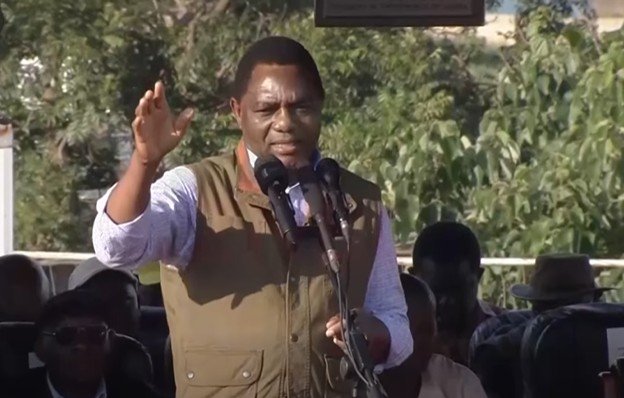
PRESIDENT Hakainde Hichilema’s recent remarks in Choma may have revealed more about his leadership style than he intended. In a statement that has since generated widespread debate, the President reportedly told supporters that no member of Parliament can bring development and that he alone is responsible for delivering development to the people, citing free education as an example.
If these remarks accurately reflect his position, then Zambia should be deeply concerned.
A president is expected to unite institutions, empower elected leaders and inspire collective responsibility. Instead, what many heard was a leader diminishing the very people whom citizens elected to represent them. To suggest that MPs have no meaningful role in development is not only inaccurate but also undermines the foundations of representative democracy.
The reality is that development is not the work of one individual. It is the result of cooperation between government, local authorities, civil servants, MPs, traditional leaders, businesses and citizens. Any leader who believes that development begins and ends with himself risks creating a dangerous cult of personality around public administration. It is precisely because of such statements that alternative political voices such as Brian Mundubile are becoming increasingly relevant in Zambia’s political landscape. Whether one agrees with his politics or not, Mundubile’s message of collective leadership, institutional respect and inclusive governance is beginning to resonate with citizens who are growing uncomfortable with the notion that national development can be attributed to a single individual.
If MPs are irrelevant to development, then why does government allocate Constituency Development Fund (CDF) resources through constituencies? Why are MPs expected to monitor projects, engage communities and represent local interests in Parliament? The answer is simple. They matter. They are a critical part of the democratic process and serve as the bridge between citizens and government.
What is perhaps more troubling is the arrogance that such statements project. Zambia has had many presidents since independence. None built roads alone. None built schools alone. None constructed hospitals alone. Every achievement was the product of taxpayers’ money, public institutions and the efforts of countless citizens.
Free education, important as it may be, was not financed from President Hichilema’s personal resources. It was financed by the Zambian people through taxes. The policy was implemented by teachers, education officials, Parliament and government institutions. To suggest otherwise is to ignore the collective effort that makes government work.
It is therefore not surprising that the UPND is now witnessing an unprecedented wave of independent candidates emerging from its own ranks. Across the country, former loyal members have chosen to challenge the party from outside its official structures. Such a development does not happen in a healthy political environment.
When party members feel ignored, undermined or treated as though they are insignificant, frustration inevitably follows. Many of those now contesting as independents are not opposition politicians. They are individuals who once believed in President Hichilema’s leadership but have become disillusioned by what they perceive as centralisation of power and exclusion from decision-making.
The growing rebellion within UPND is perhaps the clearest indication that something is fundamentally wrong. Political parties are strongest when leaders empower others. They become weakest when everything revolves around one individual.
History offers many lessons. Leaders who begin believing they alone possess wisdom, vision and solutions often find themselves isolated from reality. They stop listening. They dismiss criticism. They surround themselves with praise singers. Eventually, they lose touch with the people who put them in office.
The President would be well advised to remember that Zambia is larger than any single individual. The office he occupies is important, but it is not more important than the institutions that sustain democracy. MPs matter. Councillors matter. Civil servants matter. Citizens matter. True leadership is not demonstrated by claiming all the credit. It is demonstrated by empowering others to succeed.
The remarks from Choma may have been intended to discourage independent candidates. Instead, they have reinforced a growing perception that President Hichilema increasingly sees himself as the centre of every achievement in the country.
In contrast, political figures such as Brian Mundubile are gaining attention because they are presenting themselves as advocates of broader participation, institutional balance and inclusive governance. If that perception continues to grow, the political consequences may be far greater than many within State House currently appreciate.
A President who believes only he can deliver development may soon discover that democracy is ultimately about the people, and the people always have the final word.