






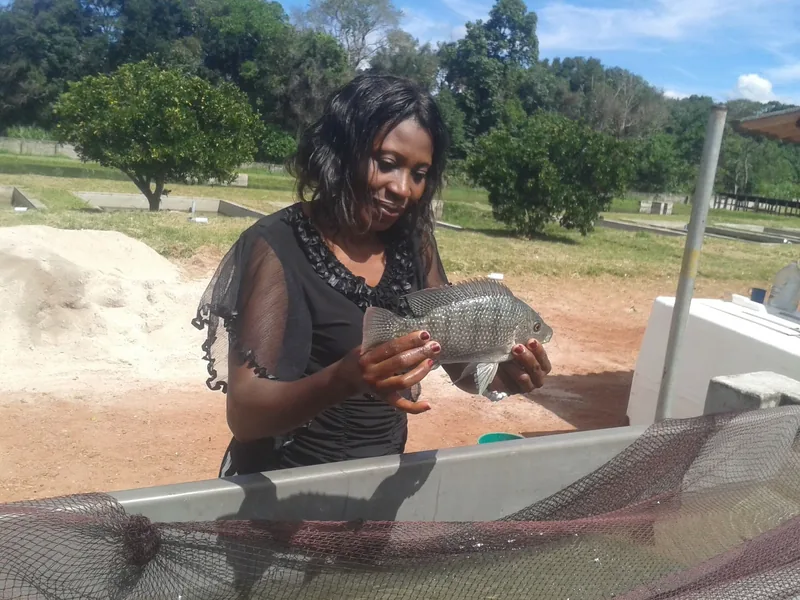
Local feed blues scaring fish farmers – scientist
By a Correspondent
THE non-availability of local fish feed ingredients is scaring farmers away from venturing into fish farming, a scientist has said.
Dr Mary Lundeba, a scientist at WorldFish, said in an interview locally available fish feed ingredients would help reduce the cost of fish farming.
This would encourage more farmers to venture into aquaculture.
Dr Lundeba said the challenges in growing maize and soya beans and failure to channel their value chain to fish feed production made the importation of fish feed more expensive for farmers.
“The thing that causes feed to be expensive, number one, is the ingredients. Some of the major ingredients like soybeans and maize are very important in feed production.
But you find that normally, they are not channeled towards the production of fish feed, or livestock feed in general. If we have challenges growing soybeans and maize, it means its value chain is going to affect even the production of fish feed, and also the cost of fish feed,” she said.
Dr Lundeba said fish farmers were finding it difficult to manage the sector as it requires intensive capital.
“…number two, it’s the protein source ingredients, like fish meal itself, which is being imported, most of it, from outside of Zambia, into Zambia. And so, this makes the feed too expensive. This requires a huge capital and management,” Dr Lundeba said.
She said despite the northern part of the country having more water bodies and potential for aquatic farming, it was expensive for the farmers to transport fish feed, particularly from Lusaka where factories were concentrated.
Dr Lundeba called for a shift from subsistence aquatic farming to commercial farming to make the sector viable.
“…so that it can contribute to the gross domestic product of the country. They are still at subsistence level, but we need to start moving from there. We need to continue innovating, so that we can reach our full potential. Actually, the most important is partnerships and collaborations,” Dr Lundeba said.
She urged the government to partner with various organisations to make the aquaculture sector viable.
“The government is trying, but as you know, one organisation, the government alone, cannot solve all these challenges. So, it’s to continue collaborating, continue partnering together, so that we can keep on solving these challenges,” she said.
Dr Lundeba said research plays a critical role in ultimately helping solve real problems in the aquaculture sector and ensure that the aquatic food systems contribute to healthy people, resilient livelihoods and sustainable food systems.
She said the country had significant freshwater resources, a growing aquaculture sector, and communities whose livelihoods were connected to fisheries and fish farming.
“…which allows Zambia to look at aquatic foods not only as a source of income, but also as a source of better nutrition for the population,” she said.