






China-Zambia ties to drive Grow Zambia agenda
By Jerry Munthali
CHINESE Ambassador to Zambia Han Jing says growing cooperation between the two countries will be key to the Grow Zambia Agenda and deliver tangible benefits to citizens of both nations.
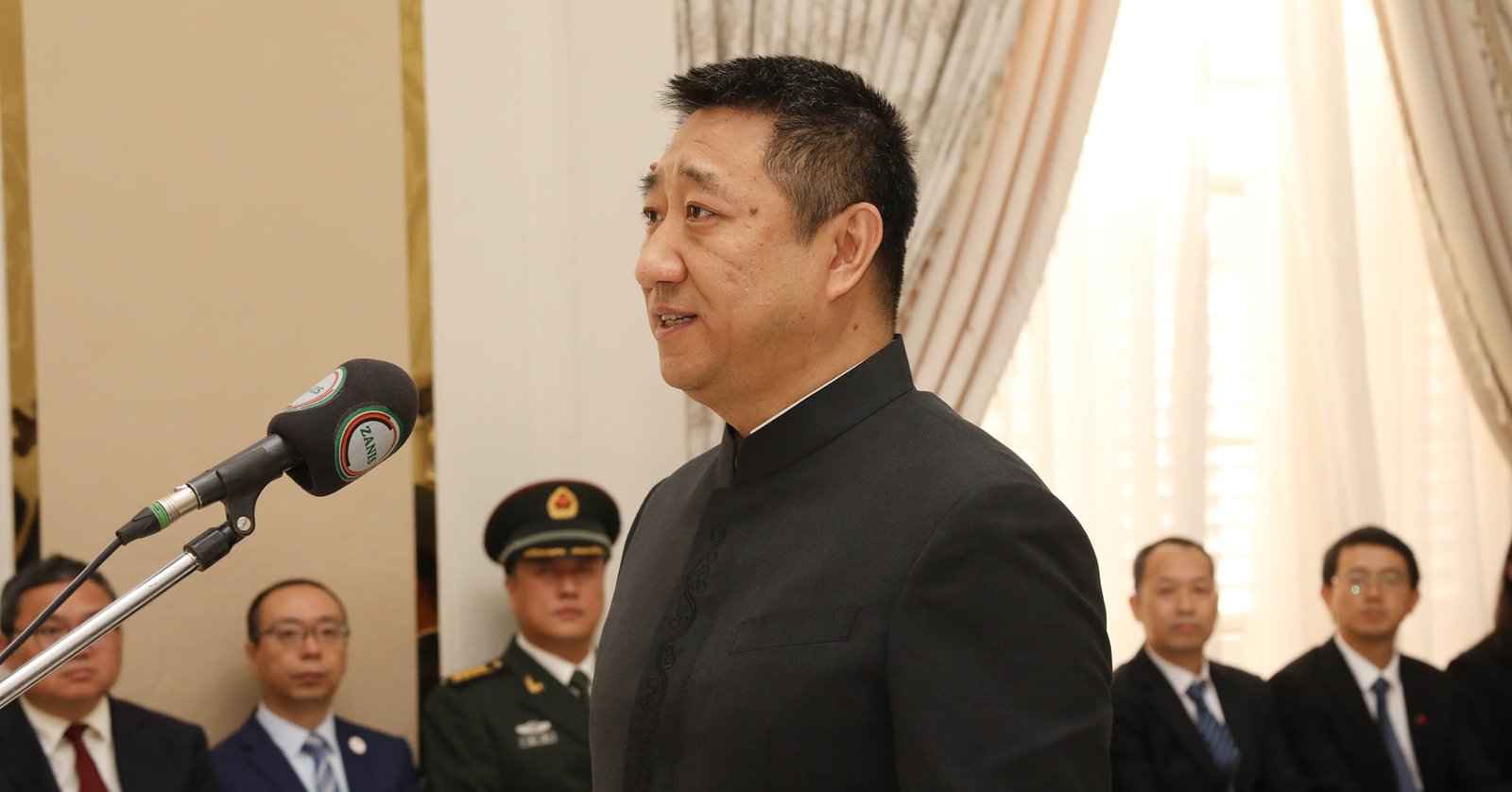
Speaking at a reception to mark the 77th anniversary of the founding of the People’s Republic of China in Lusaka on Tuesday, Han said China was ready to strengthen practical cooperation with Zambia across various sectors.
“I’m deeply convinced that thriving China-Zambia cooperation will serve as a key driving force as Zambia advances its Grow Zambia Agenda, delivering greater tangible benefits to the peoples of our two countries,” he said.
Han said the partnership between the two countries evolved from traditional infrastructure cooperation to other areas including agriculture, energy, mining, digital technology and artificial intelligence (AI).
He said the cooperation between the two countries was already producing tangible outcomes, citing the TAZARA revitalisation project, the 136-megawatt (MW) Itimpi Solar Power Plant, the Zambia Petrochemical Energy Company refinery project and the deployment of Africa’s first mining tunnel boring machine at NFC Africa Mining in Chambishi on the Copperbelt.
“These are far more than standalone infrastructure initiatives. They vividly exemplify how Chinese technology, investment and expertise bolster Zambia’s energy security, industrialisation and economic diversification, while generating ample local jobs and fostering professional skill development for the Zambian workforce,” Han said.
He said the TAZARA revitalisation project, which was advancing steadily, was designed to substantially increase freight capacity, reduce transportation and logistics costs and unlock new economic opportunities along the railway corridor.
Han said this year marks the 50th anniversary of TAZARA’s official handover and operation.
He described TAZARA as a powerful symbol of China-Africa solidarity and South-South cooperation.
Han said cooperation in agriculture was also expanding, with China and Zambia working to increase Zambian agricultural exports to the Chinese market and strengthen agricultural technology cooperation.
Han cited the maiden shipment of Zambian heat-processed silkworm cocoons to China as an example of how China’s zero-tariff policy for African countries could create new development opportunities for Zambia.
He said China expected more Zambian agricultural products, including soybeans, citrus fruits and avocados, to gradually gain access to the Chinese market.
Han said emerging cooperation in the digital economy and frontier technologies, noting that Zambia joined the World Artificial Intelligence Cooperation Organization (WAICO) in July as a founding member.
He said this had created a platform for the two countries to deepen cooperation in digital infrastructure, artificial intelligence applications, talent training and intelligent governance.
Han also congratulated President Hakainde Hichilema on his re-election and said China was ready to work with his administration to implement the outcomes of the Beijing Summit of the Forum on China-Africa Cooperation (FOCAC).
Ministry of Defence Permanent Secretary Maambo Hamaundu said President Hakainde Hichilema had put forward the Grow Zambia Agenda, whose objective was to transform Zambia into a productive, industrialised and export-oriented economy.
Hamaundu said the new agenda was aimed at promoting sustainable growth and development.
“As a Government, we strongly believe that enhanced cooperation with China in investment, technology, infrastructure, human capital development and value addition will be instrumental in achieving this agenda through inclusive growth, jobs for our citizens and improved quality of life for all Zambians,” he said.